dw2

16 April 2014

The future of healthy longevity life extension

There’s a great deal of news these days about potential developments to increase healthy longevity. How can we decide which are the most promising initiatives? What can we do to support faster development and deployment of new treatments? If we want to enable significant increases in healthy longevity for ourselves and our loved ones, what steps should we be taking?

This whole subject – healthy longevity – is complicated by the fact that it’s clouded by a great deal of wishful thinking and misinformation (some deliberate, some unintentional). Companies have products and services they wish to promote. Whole industries have worldviews that they want to maintain. People have engrained personal habits that they wish to justify and rationalise.

And did I mention wish-fulfilment? Here’s an evocative picture posted recently by Vincent Ocasla, a healthy longevity advocate:

Anti-aging

(This picture has an interesting provenance. See the footnote at the end of this blogpost.)

Who, if they were honest, would not like to grasp the possibility of the kind of healthy age-reversal depicted here, if it could be provided ethically, for them and their loved ones? But what steps should we take, that would be most likely to accelerate the enablement of such a transformation?

Back in September last year, I organised a London Futurists “Hangout On Air” video event on that topic. This featured as panellists a number life extension activists from around the world – Franco Cortese, Ilia Stambler, Maria Konovalenko, and Aubrey de Grey. You can see the outcome here:

That ninety minute discussion covered a lot of important topics, but it’s far from providing the last word on the matter. To help continue the discussion, I’m holding an “in real life” London Futurists meetup on the afternoon of Saturday 26th April in Birkbeck College, central London. There will be a number of TED-style talks, followed by extended audience Q&A and discussion.

See here for more details about this event – and to RSVP if you’re planning to attend (this helps me to organise it smoothly) .

Meeting Image

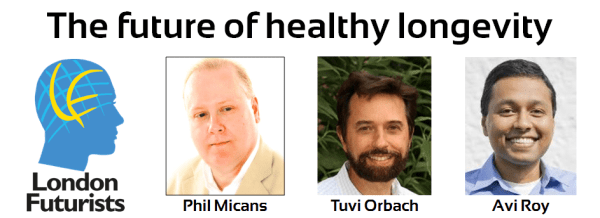
The speakers are Phil MicansTuvi Orbach, and Avi Roy. They each have fascinating and well-informed things to say about the subject. I expect those of us in the audience will all be individually challenged and inspired, at various times in this meetup, to rethink our own personal health strategies, and/or to alter our thinking about how to change society’s presently inadequate approach to this topic.

Phil Micans is Founder and Vice President of International Antiaging Systems and Assistant Director at the British Longevity Society.

Phil has been actively involved in the antiaging field since the late 1980’s. He is currently the Editor-in-Chief of the Aging Matters™ Magazine, Chairman of the Monte Carlo Antiaging Congress, and Assistant Editor to the Lifespan Medicine Journal. He holds a masters degree in biochemistry from Canterbury.

Phil will talk about why orthodox medicine must change its approach to longevity, and the need for preventative and regenerative medicine.

His lecture will review data as issued by the US, UK and WHO authorities. It will become clear that ‘orthodox’ medicine cannot continue as-is for much longer and that a different path will need to be taken soon. The talk will also introduce the concept of the optimal health pyramid.

Tuvi Orbach is the chairman of Mindlife UK, and Managing Trustee of HELP Trust – a charity with the purpose to help and inspire people to enhance their lives.

Tuvi has a background as an entrepreneur who has established several companies integrating software, technology and “lifeware”. Products and services provided  by his companies include:

  • An interactive self-help application to cure anxiety and depression
  • Computerised health screening and prevention for long-term conditions.

Tuvi will address combining the use of technology for self-help with better internal (mind-body, optimism etc) and external lifestyle modification. He’ll also talk about the integration of new science with traditional wisdom.

Avi Roy is is a PhD student researching biomarkers of aging, mitochondria, and regenerative medicine at the Institute of Translational Medicine, Buckingham.

Avi currently writes for The Conversation and has previously written for The Guardian. His articles have also been published in the New Statesman and Business Insider.

Avi also heads up the Oxford University Scientific Society, the Oxford Transhumanism and Emerging Technologies society, and organizes talks at the British Science Association Oxford branch.

Footnotes:

The above 2014->2063 transformation picture has been adapted from (you guessed it) a similar one which portrayed the transformation in the opposite direction, 1963->2014. That earlier version was published in the Twitter stream for “History in Pictures”. So there’s at least one round of “cosmetic retouching” that has taken place. The online comments for the earlier picture suggest that it has been “faked” too.

Of course, the whole point is to find out what kind of rejuvenation technology (sometimes called “rejuveneering”) is possible, without the subterfuge of Photoshop or similar. I’ll be picking up that theme in a talk I’m giving at the Symposium of the Society of Cosmetic Scientists on May 1st. That Symposium has the theme “Face the future”. My  talk there is the closing keynote, ‘More than skin deep: radical options for human transformation, 2015-2045’:

Vision: Within 30 years, those of us still alive will have the potential to experience profound human enhancement. Detox and rejuvenation therapies that clean out internal biological damage will be able to revitalise us in far-reaching ways. Smartphone technology will be miniaturised and ready for incorporation deep inside our bodies and brains. We’ll be living alongside enchanting, witty robots and other forms of super AIs and virtual companions, who will have deprived most of us of gainful employment. We might even be on the point of merger: human with robot, biology with technology.

But which elements of this vision are science fiction, and which science fact? What factors influence the acceleration of technology? And how can we collectively mould the trajectories ahead, so that human values flourish, rather than us bitterly regretting what we allowed to happen?

2 April 2014

Anticipating London in 2025

The following short essay about the possible future of London was prompted by some questions posed to me by Nicolas Bérubé, a journalist based in Montreal.

PredictionsFuturists seek, not to give cast-iron predictions about what is most likely to happen in the future, but, instead, to highlight potential scenarios that deserve fuller study – threats and opportunities that need addressing in advance, before the threats become too severe, or the opportunities slip outside our grasp.

Given this framework, which trends are the most significant for the future of London, by, say, 2025?

London has a great deal going for it: an entrepreneurial spirit, a cosmopolitan mix of people of all ages, fine universities (both in the city and nearby), a strong financial hub, the “mother of parliaments”, a fascinating history, and rich traditions in entertainment, the arts, the sciences, and commerce. London’s successful hosting of the 2012 Olympics shows what the city can accomplish. It’s no surprise that London is ranked as one of only two “Alpha++ cities” in the world.

Other things being equal, the ongoing trend of major cities becoming even more dominant is going to benefit London. There are many economies of scale with large cities that have good infrastructure. Success attracts success.

Second Machine AgeHowever, there are potential counter-trends. One is the risk of greater inequality and societal alienation. Even as mean income continues to rise, median income falls. Work that previously required skilled humans will increasingly become capable of being done by smart automatons – robots, AIs, or other algorithms. The “technological unemployment” predicted by John Maynard Keynes as long ago as the 1930s is finally becoming a significant factor. The book “The second machine age” by MIT professors Brynjolfsson and McAfee, gives us reasons to think this trend will intensify. So whilst a smaller proportion of London citizens may become increasingly wealthy, the majority of its inhabitants may become poorer. That in turn could threaten the social cohesion, well before 2025, making London a much less pleasant place to live.

One reaction to the perception of loss of work opportunity is to blame outsiders, especially immigrants. The present populist trend against free movement of people from the EU into the UK, typified by the rise of UKIP, could accelerate, and then backfire, as young Europeans decamp en masse to more open, welcoming cities.

A similar trend towards social unpleasantness could happen if, as seems likely, there is further turmoil in the financial markets. The “great crash of 2008” may come to be seen as a small tremor, compared to the potential cataclysmic devastation that lies ahead, with the failures of trading systems that are poorly understood, overly complex, overly connected, poorly regulated, and subject to many perverse incentives. Many people whose livelihoods depends, directly or indirectly, on the financial city of London, could find themselves thrown into jeopardy. One way London can hedge against this risk is to ensure that alternative commercial sectors are thriving. What’s needed is wise investment in next generation technology areas, such as stem cells, nanotechnology, green energy, artificial intelligence, synthetic biology, neuro enhancement, and driverless cars. Another response is to urgently improve our collective understanding and oversight of the pervasive interconnections in our monetary systems.

The fact that, with modern medical treatments, people are living longer and longer, increases the pressures on social welfare systems. Ailments that previously would (sadly) have killed sufferers fairly quickly, can now linger on for years and even decades, in chronic sickness. This demographic change poses all sorts of challenge, including the need to plan much longer periods of time when people will be dependent on their pension plans. One important counter-measure is accelerated development of rejuvenation biotechnology, that gives people new leases of life (and renewed potential for productive employment) before they are afflicted with the diseases of middle-age and old-age.

Cities depend in major ways on their transport infrastructure. By 2025, there will be huge strides in the capabilities of driverless cars. This could usher in an era of transport that is much safer, less expensive, and greener (in part because cars that don’t crash can be built with much lighter materials). Cities that are quick to adopt this new technological infrastructure, and who do it well, could quickly gain in comparative popularity. It’s encouraging that Oxford, near to London, is conducting state-of-the-art research and development of low-cost driverless cars. And alongside driverless surface vehicles, there’s far-reaching potential for positive adoption of a vast network of autonomous flying drones (sometimes dubbed the “Matternet” by analogy with the “Internet”). But unless London acts smartly, these opportunities could pass it by.

Three other trends are harder to predict, but are worth bearing in mind.

  1. First, the wider distribution of complex technology – aided by the Internet and by the rise of 3D printing, among other things – potentially puts much more destructive capability in the hands of angry young men (and angry middle-aged men). People who feel themselves dispossessed and alienated might react in ways that far outscale previous terrorist outrages (even the horrors of 9-11). Some of these potential next-generation mega-terrorists are home-grown in London, but others come from troublespots around the world where they have imbibed fantasy fundamentalist ideologies. Some of these people might imagine it as their holy destiny, in some perverted thinking, to cause huge damage to “the great Satan” of London. Their actions – as well as the intense reactions of the authorities to prevent future misdeeds – could drastically change the culture of London.
  2. Second, fuller use of telecommuting, virtual presence, and remote video conferencing, coupled with advanced augmented reality, could lessen people’s needs to be living close together. The millennia-long trend towards greater centralisation and greater cosmopolitanism may reverse, quicker than we imagine. This fits with the emerging trend towards localism, self-sufficiency, and autonomous structures. London’s population could therefore shrink, abetted by faster broadband connectivity, and the growth of 3D printing for improved local manufacturing.
  3. Finally, the floods and storms experienced in the south of England over the last few months might be a harbinger of worse to come. No one can be sure how the increases in global temperature are restructuring atmospheric and ocean heat distribution patterns. London’s long dependence on the mighty river Thames might prove, in a new world of unpredictable nastier weather, to be a curse rather than a blessing. It’s another reason, in addition to those listed earlier, for investment in next-generation technology, so we can re-establish good relations between man and nature (and between city and environs).

What’s the most important aspect missing from this vision?

17 September 2013

When faith gets in the way of progress

Is it good that we grow old, weak, disease-prone, and eventually succumb, dead, to the ravages of aging?

The rise and fall of our health and vigour is depicted in this sketch from leading biogerontology researcher Alex Zhavoronkov:

Aging Decline

This diagram is taken from the presentation Alex made at a London Futurists event on 31st August. Alex used the same slide in his presentation, several days later, to the SENS6 conference “Reimage aging” at Queens’ College, Cambridge.

conf-page-banner

My impression from the attendees at SENS6 that I met, over the four days I spent at the conference, is that the vast majority of them would give a resounding ‘No’ as the answer to the question,

Is it good that we grow old, weak, disease-prone, and eventually succumb, dead, to the ravages of aging?

What’s more, they shared a commitment that action should be taken to change this state of affairs. In various ways, they described themselves as “fighters against aging”, “healthy longevity activists”, and as “campaigners for negligible senescence”. They share an interest in the declaration made on the page on the SENS Research Foundation website describing the conference:

The purpose of the SENS conference series, like all the SENS initiatives, is to expedite the development of truly effective therapies to postpone and treat human aging by tackling it as an engineering problem: not seeking elusive and probably illusory magic bullets, but instead enumerating the accumulating molecular and cellular changes that eventually kill us and identifying ways to repair – to reverse – those changes, rather than merely to slow down their further accumulation.

This broadly defined regenerative medicine – which includes the repair of living cells and extracellular material in situ – applied to damage of aging, is what we refer to as rejuvenation biotechnologies.

This “interventionist” approach, if successful, would lead to a line, on the chart of performance against age, similar to that shown in the bright green colour: we would retain our youthful vigour indefinitely. Mechanisms supporting this outcome were explored in considerable technical details in the SENS6 presentations. The SENS6 audience collectively posed some probing questions to the individual presenters, but the overall direction was agreed. Rejuvenation biotechnologies ought to be developed, as soon as possible.

But not everyone sees things like this. SENS6 attendees agreed on that point too. Over informal discussions throughout the event, people time and again shared anecdotes about their personal acquaintances being opposed to the goals of SENS. You can easily see the same kind of negative reactions, in the online comments pages of newspapers, whenever a newspaper reports some promising news about potential techniques to overcome aging.

For example, the Daily Mail in the UK recently published a well-researched article, “Do lobsters hold the key to eternal life? Forget gastronomic indulgence, the crustacean can defy the aging process”. The article starts as follows:

They are usually associated with a life of gastronomic indulgence and heart-stopping excess. But away from the dinner table, lobsters may actually hold the secret to a long, healthy — and possibly even eternal — life.

For this crustacean is one of a handful of bizarre animals that appear to defy the normal aging process.

While the passing years bring arthritis, muscle loss, memory problems and illness to humans, lobsters seem to be immune to the ravages of time. They can be injured, of course. They can pick up diseases. They can be caught and thrown into a pot, then smothered in béchamel sauce.

But rather than getting weaker and more vulnerable over the years, they become stronger and more fertile each time they shed their shells.

The typical lobster weighs 1 to 2 lb. But in 2009, a Maine fisherman landed a colossus of 20 lb, which was estimated to be 140 years old. And that isn’t even the oldest lobster found so far. According to Guinness World Records, a 44 lb leviathan was caught in 1977, with claws powerful enough to snap a man’s arm.

The species belongs to an elite group that appears to be ‘biologically immortal’. Away from predators, injury or disease, these astonishing creatures’ cells don’t deteriorate with age…

For healthy longevity activists, there was lots of good news in the article. This information, however, was too much for some readers to contemplate. Some of the online comments make for fascinating (but depressing) reading. Here are four examples, quoted directly from the comments:

  1. How would humankind cope with tens of millions of extremely old and incredibly crabby people?
  2. People have to die and they’re not dying quickly enough. Soon the earth will run out of water and food for the ever increasing masses.
  3. These “researchers” should watch Death Becomes Her
  4. The only guarantee of eternal life is to read your Bibles. Though even if you don’t, eternal life of another kind exists, though it’s not particularly appealing: “And the smoke of their torment ascendeth up for ever and ever” (Rev 14:11).

To be clear, the goal of project such as those in the SENS umbrella is to extend healthy lifespans (sometimes known as “healthspans”) rather than simply extending lifespans themselves. Rejuvenation technologies are envisioned to undo tendencies towards unwelcome decrepitude, crabbiness, and so on.

As for the reference to the 1992 Hollywood film “Death Becomes Her” featuring Meryl Streep and Goldie Hawn in a frightful “living dead” immortality, I’ll get back to that later.

Infinite ResourceThe question of potential over-population has a bit more substance. However, the worry isn’t so much the number of people on the earth, but the rate at which everyone is consuming and polluting. With potential forthcoming improvements in harnessing solar energy, we’ll have more than enough energy available to look after a planet with 10 billion people. Arguably the planet could sustain at least 100 billion people. (That argument is made, in a well-balanced way, by Ramez Naam in his recent book “The infinite resource” – a book I thoroughly recommend. I’ve also covered this question from time to time in earlier blogposts – see e.g. “Achieving a 130-fold improvement in 40 years”.)

However, I believe that there are deeper roots to the opposition that many people have to the idea of extending healthy lifespans. They may offer intellectual rationalisations for their opposition (e.g. “How would humankind cope with tens of millions of extremely old and incredibly crabby people?”) but these rationalisations are not the drivers for the position they hold.

Instead, their opposition to extending healthy lifespans comes from what we can call faith.

This thought crystallised in my mind as I reflected on the very last presentation from SENS6. The speaker was Thomas Pyszczynski of the University of Colorado, and his topic was “Understanding the paradox of opposition to long-term extension of the human lifespan: fear of death, cultural worldviews, and the illusion of objectivity”.

The presentation title was long, but the content was clear and vivid. The speaker outlined some conclusions from decades of research he had conducted into “Terror Management Theory (TMT)”. I’ve since discovered that the subject of “Terror Management Theory” has its own article in Wikipedia:

Terror management theory (TMT), in social psychology, proposes a basic psychological conflict that results from having a desire to live but realizing that death is inevitable. This conflict produces terror, and is believed to be unique to humans. Moreover, the solution to the conflict is also generally unique to humans: culture. According to TMT, cultures are symbolic systems that act to provide life with meaning and value. If life is thought meaningful, death is less terrifying. Cultural values therefore serve to manage the terror of death by providing life with meaning…

pyszczynski

Here’s the “paradox” to which Pyszczynski (pictured) referred: people oppose the idea that we could have longer healthy lives, because of the operation of a set of culture and philosophical ideas, which were themselves an adaptive response to the underlying fact that we deeply desire indefinitely long healthy lives. So the opposition is self-contradictory, but the people involved don’t see it like that.

For all of history up until the present age, the idea of having an indefinitely long healthy life was at stark variance to everything else that we saw around ourselves. Death seemed inevitable. In order to avoid collapsing into terror, we needed to develop rationalisations and techniques that prevented us from thinking seriously about our own finitude and mortality. That’s where key aspects of our culture arose. These aspects of our culture became deeply rooted.

Our culture operates, in many cases, below the level of conscious awareness. We find ourselves being driven by various underlying beliefs, without being aware of the set of causes and effects. However, we find comfort in these beliefs. This faith (belief in the absence of sufficient reason) helps to keep us mentally sane, and keeps society functional, even as it prepares us, as individuals, to grow infirm and die.

In case any new ideas challenge this faith, we find ourselves compelled to lash out against these ideas, even without taking the time to analyse them. Our motivation, here, is to preserve our core culture and faith, since that’s what provides the foundation of meaning in our lives. We fight the new ideas, even if these new ideas would be a better solution to our underlying desire to live an indefinitely long, healthy life. The new ideas leave us with a feeling of alienation, even though we don’t see the actual connections between ideas. Our faith causes us to lose our rationality.

Incidentally, similar factors apply, of course, when other things that have profound importance to us are challenged. For example, when we think we may lose a cherished romantic partner, we can all too easily become crazy. When your heart’s on fire, smoke gets in your eyes.

Ending AgingIt turns out that Aubrey de Grey, the chief science officer of SENS, has already written on this same topic. In chapter two of his 2007 book “Ending aging”, he notes the following:

There is a very simple reason why so many people defend aging so strongly – a reason that is now invalid, but until quite recently was entirely reasonable. Until recently, no one has had any coherent idea how to defeat aging, so it has been effectively inevitable. And when one is faced with a fate that is as ghastly as aging and about which one can do absolutely nothing, either for oneself or even for others, it makes perfect psychological sense to put it out of one’s mind – to make one’s peace with it, you might say – rather than to spend one’s miserably short life preoccupied by it. The fact that, in order to sustain this state of mind, one has to abandon all semblance of rationality on the subject – and, inevitably, to engage in embarrassingly unreasonable conversational tactics to shore up that irrationality – is a small price to pay….

Aubrey continues this theme at the start of chapter three:

We’ve recently reached the point where we can engage in the rational design of therapies to defeat aging: most of the rest of this book is an account of my favoured approach to that design. But in order to ensure that you can read that account with an open mind, I need to dispose beforehand of a particularly insidious aspect of the pro-aging trance: the fact that most people already know, in their heart of hearts, that there is a possibility that aging will eventually be defeated.

Why is this a problem? Indeed, at first sight you might think that it would make my job easier, since surely it means that the pro-aging trance is not particularly deep. Unfortunately, however, self-sustained delusions don’t work like that. Just as it’s rational to be irrational about the desirability of aging in order to make your peace with it, it’s also rational to be irrational about the feasibility of defeating aging while the chance of defeating it any time soon remains low. If you think there’s even a 1 percent chance of defeating aging within your lifetime (or within the lifetime of someone you love), that sliver of hope will prey on your mind and keep your pro-aging trance uncomfortably fragile, however hard you’ve worked to convince yourself that aging is actually not such a bad thing after all. If you’re completely convinced that aging is immutable, by contrast, you can sleep more soundly.

Underwood_Mair_2013_smallAnother speaker from the final session of SENS6, Mair Underwood of the University of Queensland, provided some timely advice to the SENS6 community, that dovetails well with the discussion above. Underwood’s presentation was entitled “What reassurances do the community need regarding life extension? Evidence from studies of community attitudes and an analysis of film portrayals”. The presentation pointed out the many ways in which popular films (such as “Death Becomes Her”, mentioned above) portray would-be life extensionists in a bad light. These people, the films imply, are emotionally immature, selfish, frustrated, obstructive, and generally unattractive. This is the pro-death culture at work.

To counteract these impressions, and to help free the broader community from its faith that aging and death are actually good things, Underwood gave the following advice:

  1. Assure that life extension science, and the distribution of life extension technologies, are ethical and regulated, and seen to be so
  2. Assuage community concerns about life extension as unnatural or playing god
  3. Assure that life extension would involve an extension of healthy lifespan
  4. Assure that life extension does not mean a loss of fertility
  5. Assure the community that life extension will not exacerbate social divides, and that those with extended lives will not be a burden on society
  6. Create a new cultural framework for understanding life extension.

This advice is all good, but I suspect that the new few years may see a growing “battle of faiths”, as representatives of the old culture fight harder in opposition to the emerging evidence that we we are on the point of possessing the technological means to extend human healthspans very significantly. This is a battle that may need more tools, to influence the outcome, than mere hard-honed rationality. At the very least, we’ll need to keep in mind how culture works, and the ways in which faith draws strength.

Follow ups: Several forthcoming London Futurists meetups address topics that are directly relevant to the above line of thinking:

  • Futurism, Spirituality, and Faith, in Birkbeck College on Saturday 21st September, discusses ways in which committed technoprogressives can best interact with faith-based movements, without these interactions leading to fruitless irrationality and loss of direction
  • Projects to accelerate radical healthy longevity, a Google Hangout On Air (HOA) on Sunday 29th September, features a panel discussion on the question, “What are the most important ongoing projects to accelerate radical healthy longevity?”
  • Futurists discuss The Transhumanist Wager, with Zoltan Istvan, another Google HOA, on Sunday 20th September, reviews a recently published novel about a possible near-future scenario of a growing battle between the old human culture and an emerging new culture that favours indefinitely long healthspans.
  • Finally, if you’re interested in the question of whether solar energy will be able, as I implied above, to address pending shortages in global energy supplies, even as human population continues to increase, you should make it a priority to attend the London Futurists event on Saturday 5th October, The Energy of Nations, with Jeremy Leggett. The speaker on this occasion is one of the world’s foremost authorities on solar energy, oil depletion, climate change, and dysfunctional investment. The topic of the best energy systems for the decades ahead is, alas, another one in which faith tends to subvert reason, and in which we need to be smart to prevent our thinking being hijacked by adverse factors.

For more information about the evolution of London Futurists, you can take a peek at a new website which is in the process of being implemented, at http://londonfuturists.com/.

19 August 2013

Longevity and the looming financial meltdown

Filed under: aging, books, challenge, converged medicine, Economics, futurist, healthcare, rejuveneering, SENS — David Wood @ 2:12 pm

What kind of transformational infrastructure investment projects should governments prioritise?

In the UK, government seems committed to spending a whopping £42 billion between now and 2032 on a lengthy infrastructure project, namely the “HS2” High Speed rail link which could see trains travelling between London, Birmingham, and six other cities, at up to 250 miles per hour. The scheme has many critics. As Nigel Morris notes in The Independent,

In an analysis published today (Monday), the IEA (Institute for Economic Affairs ) says the scheme’s cost has been vastly underestimated and had failed to take into account changes to routes and extra tunnelling because of local opposition.

Richard Wellings, its author, said: “The evidence is now overwhelming that this will be unbelievably costly to the taxpayer while delivering incredibly poor value for money.”

Supporters of this investment claim that the improved infrastructure will be a boon for business in the UK. Multi-year infrastructure improvement projects are something that the private sector tends not to attempt. Unless there’s coordination from government, this kind of project will not happen.

The BBC news website (here and here) helpfully listed ten alternative infrastructure improvement projects that might be better recipients of portions of the £42B earmarked for HS2. Suggestions include:

  • A new road motorway for the east of Britain
  • A bridge to the Isle of Wight
  • A new Channel tunnel, directly accessible to car drivers
  • Tram systems for Liverpool and Leeds
  • A tunnel between Great Britain and Ireland
  • Aerial cycle highways for London

If it were my decision, I would reallocate a large chunk of this funding to a different kind of multi-year infrastructure improvement project. This is in the area of health rather than the area of transport. The idea is to significantly promote research and deployment of treatments in preventive and regenerative medicine.

Ageless CoverThe argument for this kind of sustained investment is laid out in the book The Ageless Generation: How Advances in Biomedicine Will Transform the Global Economy, by Alex Zhavoronkov, which I’ve just finished reading. It’s a compelling analysis.

Alex will be sharing his views at a forthcoming meeting of the London Futurists, on Saturday 31st July. There are more details of this meeting here. (Note that a number of copies of the speaker’s book will be available free of charge to attendees of this meeting.)

The book contains many eye-opening pointers to peer-reviewed research. This covers the accelerating pace of medical breakthroughs, in areas such as bioartificial organs, stem cell therapies, repairing damaged tissues, fortifying the immune system, and autophagy. The research also covers financial and economic matters.

For example, here’s a snippet from the 2009 report “The Burden of Chronic Disease” (PDF) – which is written from a US point of view, though the implications apply for other countries too:

Our current economic reality reminds us that now more than ever, we need to invest in the backbone of our economy: the American workforce. Without question, the single biggest force threatening U.S. workforce productivity, as well as health care affordability and quality of life, is the rise in chronic conditions…

Further into that report, data is quoted from the Milken Institute report “The Economic Burden of Chronic Disease” (PDF)

By our calculations, the most common chronic diseases are costing the economy more than $1 trillion annually—and that figure threatens to reach $6 trillion by the middle of the century.

The costs include lost of productivity, as well as absenteeism:

The potential savings on treatment represents just the tip of the proverbial iceberg. Chronically ill workers take sick days, reducing the supply of labor—and, in the process, the GDP. When they do show up for work to avoid losing wages, they perform far below par—a circumstance known as “presenteeism,” in contrast to absenteeism. Output loss (indirect impacts) due to presenteeism (lower productivity) is immense—several times greater than losses associated with absenteeism. Last (but hardly a footnote), avoidable illness diverts the productive capacity of caregivers, adding to the reduction in labor supply for other uses. Combined, the indirect impacts of these diseases totaled just over $1 trillion in 2003…

In his book, Alex builds on this analysis, focussing on the looming costs to healthcare systems and pensions systems of ever greater portions of our population being elderly and infirm, and becoming increasingly vulnerable to chronic illnesses. Countries face bankruptcy on account of the increased costs. At the very least, we must expect radical changes in the provision of social welfare. The pensionable age is likely to rocket upwards. Families are likely to discover that the provisions they have made for their old age and retirement are woefully inadequate.

The situation is bleak, but solutions are at hand, through a wave of biomedical innovation which could make our recent wave of IT innovation look paltry in comparison. However, despite their promise, these biomedical solutions are arriving too slowly. The healthcare and pharmaceutical industries are bringing us some progress, but they are constrained by their own existing dynamics.

Alex_cover_2_smallAs Alex writes,

The revolution in information technology has irreversibly changed our lives over the past two decades. However, advances in biomedicine stand poised to eclipse the social and economic effects of IT in the near future.

Biomedical innovations typically reach the mass market in much slower fashion than those from information technology. They follow a paradigm where neither demand, in the form of the consumer, nor supply, in the form of the innovator, can significantly accelerate the process. Nevertheless, many of the advances made over the past three decades are already propagating into mainstream clinical practice and converging with other technologies extending our life spans.

However, in the near-term, unless the governments of the debt-laden developed countries make proactive policy changes, there is a possibility of lengthy economic decline and even collapse.

Biomedical advances are not all the same. The current paradigm in biomedical research, clinical regulation and healthcare has created a spur of costly procedures that provide marginal increases late in life extending the “last mile”, with the vast percentage of the lifetime healthcare costs being spent in the last few years of patient’s life, increasing the burden on the economy and society.

There is an urgent need to proactively adjust healthcare, social security, research and regulatory policies:

  • To ameliorate the negative near-term effects
  • To accelerate the mass adoption of technologies contributing positively to the economy.

Now that’s a project well worth spending billions on. It’s a vision of expanded healthspans rather than just of expanded lifespans. It’s a vision of people continuing to be happily productive members of society well into their 80s and 90s and beyond, learning new skills, continuing to expand their horizons, whilst sharing their wisdom and experience with younger generations.

It’s a great vision for the individuals involved (and their families), but also a great vision for the well-being of society as a whole. However, without concerted action, it’s unlikely to become reality.

Footnote 1: To connect the end of this line of reasoning back to its start: If the whole workforce remains healthy, in body, mind, and spirit, for many years more than before, there will be plenty of extra resources and skills available to address problems in other fields, such as inadequate traffic vehicle infrastructure. My own preferred approach to that particular problem is improved teleconferencing, virtual presence, avatar representation, and other solutions based on transporting bits rather than transporting atoms, though there’s surely scope for improved physical transport too. Driverless vehicles have a lot of promise.

Footnote 2: The Lifestar Institute produced a well-paced 5 minute video, “Can we afford not to try?” covering many of the topics I’ve mentioned above. View it at the Lifestar Institute site, or, for convenience, embedded below.

Footnote 3: The Lifestar Institute video was shown publicly for the first time at the SENS4 conference in Cambridge in September 2009. I was in the audience that day and vividly remember the impact the video made on me. The SENS Foundation is running the next in their series of biennial conferences (“SENS 6”) this September, from the 3rd to the 7th. The theme is “Reimagine aging”. I’m greatly looking forward to it!

conf-page-banner

2 November 2012

The future of human enhancement

Is it ethical to put money and resources into trying to develop technological enhancements for human capabilities, when there are so many alternative well-tested mechanisms available to address pressing problems such as social injustice, poverty, poor sanitation, and endemic disease? Is that a failure of priority? Why make a strenuous effort in the hope of allowing an elite few individuals to become “better than well”, courtesy of new technology, when so many people are currently so “less than well”?

These were questions raised by Professor Anne Kerr at a public debate earlier this week at the London School of Economics: The Ethics of Human Enhancement.

The event was described as follows on the LSE website:

This dialogue will consider how issues related to human enhancement fit into the bigger picture of humanity’s future, including the risks and opportunities that will be created by future technological advances. It will question the individualistic logic of human enhancement and consider the social conditions and consequences of enhancement technologies, both real and imagined.

From the stage, Professor Kerr made a number of criticisms of “individualistic logic” (to use the same phrase as in the description of the event). Any human enhancements provided by technology, she suggested, would likely only benefit a minority of individuals, potentially making existing social inequalities even worse than at present.

She had a lot of worries about technology amplifying existing human flaws:

  • Imagine what might happen if various clever people could take some pill to make themselves even cleverer? It’s well known that clever people often make poor decisions. Their cleverness allows them to construct beguiling sophistry to justify the actions they already want to take. More cleverness could mean even more beguiling sophistry.
  • Or imagine if rapacious bankers could take drugs to boost their workplace stamina and self-serving brainpower – how much more effective they would become at siphoning off public money to their own pockets!
  • Might these risks be addressed by public policy makers, in a way that would allow benefits of new technology, without falling foul of the potential downsides? Again, Professor Kerr was doubtful. In the real world, she said, policy makers cannot operate at that level. They are constrained by shorter-term thinking.

For such reasons, Professor Kerr was opposed to these kinds of technology-driven human enhancements.

When the time for audience Q&A arrived, I felt bound to ask from the floor:

Professor Kerr, would you be in favour of the following examples of human enhancement, assuming they worked?

  1. An enhancement that made bankers more socially attuned, with more empathy, and more likely to use their personal wealth in support of philanthropic projects?
  2. An enhancement that made policy makers less parochial, less politically driven, and more able to consider longer-term implications in an objective manner?
  3. And an enhancement that made clever people less likely to be blind to their own personal cognitive biases, and more likely to genuinely consider counters to their views?

In short, would you support enhancements that would make people wiser as well as smarter, and kinder as well as stronger?

The answer came quickly:

No. They would not work. And there are other means of achieving the same effects, including progress of democratisation and education.

I countered: These other methods don’t seem to be working well enough. If I had thought more quickly, I would have raised examples such as society’s collective failure to address the risk of runaway climate change.

Groundwork for this discussion had already been well laid by the other main speaker at the event, Professor Nick Bostrom. You can hear what Professor Bostrom had to say – as well as the full content of the debate – in an audio recording of the event that is available here.

(Small print: I’ve not yet taken the time to review the contents of this recording. My description in this blogpost of some of the verbal exchanges inevitably paraphrases and extrapolates what was actually said. I apologise in advance for any mis-representation, but I believe my summary to be faithful to the spirit of the discussion, if not to the actual words used.)

Professor Bostrom started the debate by mentioning that the question of human enhancement is a big subject. It can be approached from a shorter-term policy perspective: what rules should governments set, to constrain the development and application of technological enhancements, such as genetic engineering, neuro-engineering, smart drugs, synthetic biology, nanotechnology, and artificial general intelligence? It can also be approached from the angle of envisioning larger human potential, that would enable the best possible future for human civilisation. Sadly, much of the discussion at the LSE got bogged down in the shorter-term question, and lost sight of the grander accomplishments that human enhancements could bring.

Professor Bostrom had an explanation for this lack of sustained interest in these larger possibilities: the technologies for human enhancement that are currently available do not work that well:

  • Some drugs give cyclists or sprinters an incremental advantage over their competitors, but the people who take these drugs still need to train exceptionally hard, to reach the pinnacle of their performance
  • Other drugs seem to allow students to concentrate better over periods of time, but their effects aren’t particularly outstanding, and it’s possible that methods such as good diet, adequate rest, and meditation, have results that are at least as significant
  • Genetic selection can reduce the risk of implanted embryos developing various diseases that have strong genetic links, but so far, there is no clear evidence that genetic selection can result in babies with abilities higher than the general human range.

This lack of evidence of strong tangible results is one reason why Professor Kerr was able to reply so quickly to my suggestion about the three kinds of technological enhancements, saying these enhancements would not work.

However, I would still like to press they question: what if they did work? Would we want to encourage them in that case?

A recent article in the Philosophy Now journal takes the argument one step further. The article was co-authored by Professors Julian Savulescu and Ingmar Persson, and draws material from their book “Unfit for the Future: The Need for Moral Enhancement”.

To quote from the Philosophy Now article:

For the vast majority of our 150,000 years or so on the planet, we lived in small, close-knit groups, working hard with primitive tools to scratch sufficient food and shelter from the land. Sometimes we competed with other small groups for limited resources. Thanks to evolution, we are supremely well adapted to that world, not only physically, but psychologically, socially and through our moral dispositions.

But this is no longer the world in which we live. The rapid advances of science and technology have radically altered our circumstances over just a few centuries. The population has increased a thousand times since the agricultural revolution eight thousand years ago. Human societies consist of millions of people. Where our ancestors’ tools shaped the few acres on which they lived, the technologies we use today have effects across the world, and across time, with the hangovers of climate change and nuclear disaster stretching far into the future. The pace of scientific change is exponential. But has our moral psychology kept up?…

Our moral shortcomings are preventing our political institutions from acting effectively. Enhancing our moral motivation would enable us to act better for distant people, future generations, and non-human animals. One method to achieve this enhancement is already practised in all societies: moral education. Al Gore, Friends of the Earth and Oxfam have already had success with campaigns vividly representing the problems our selfish actions are creating for others – others around the world and in the future. But there is another possibility emerging. Our knowledge of human biology – in particular of genetics and neurobiology – is beginning to enable us to directly affect the biological or physiological bases of human motivation, either through drugs, or through genetic selection or engineering, or by using external devices that affect the brain or the learning process. We could use these techniques to overcome the moral and psychological shortcomings that imperil the human species.

We are at the early stages of such research, but there are few cogent philosophical or moral objections to the use of specifically biomedical moral enhancement – or moral bioenhancement. In fact, the risks we face are so serious that it is imperative we explore every possibility of developing moral bioenhancement technologies – not to replace traditional moral education, but to complement it. We simply can’t afford to miss opportunities…

In short, the argument of Professors Savulescu and Persson is not just that we should allow the development of technology that can enhance human reasoning and moral awareness, but that we must strongly encourage it. Failure to do so would be to commit a grave error of omission.

These arguments about moral imperative – what technologies should we allow to be developed, or indeed encourage to be developed – are in turn strongly influenced by our beliefs about what technologies are possible. It’s clear to me that many people in positions of authority in society – including academics as well as politicians – are woefully unaware about realistic technology possibilities. People are familiar with various ideas as a result of science fiction novels and movies, but it’s a different matter to know the division between “this is an interesting work of fiction” and “this is a credible future that might arise within the next generation”.

What’s more, when it comes to people forecasting the likely progress of technological possibilities, I see a lot of evidence in favour of the observation made by Roy Amara, long-time president of the Institute for the Future:

We tend to overestimate the effect of a technology in the short run and underestimate the effect in the long run.

What about the technologies mentioned by Professors Savulescu and Persson? What impact will be possible from smart drugs, genetic selection and engineering, and the use of external devices that affect the brain or the learning process? In the short term, probably less than many of us hope; in the longer term, probably more than most of us expect.

In this context, what is the “longer term”? That’s the harder question!

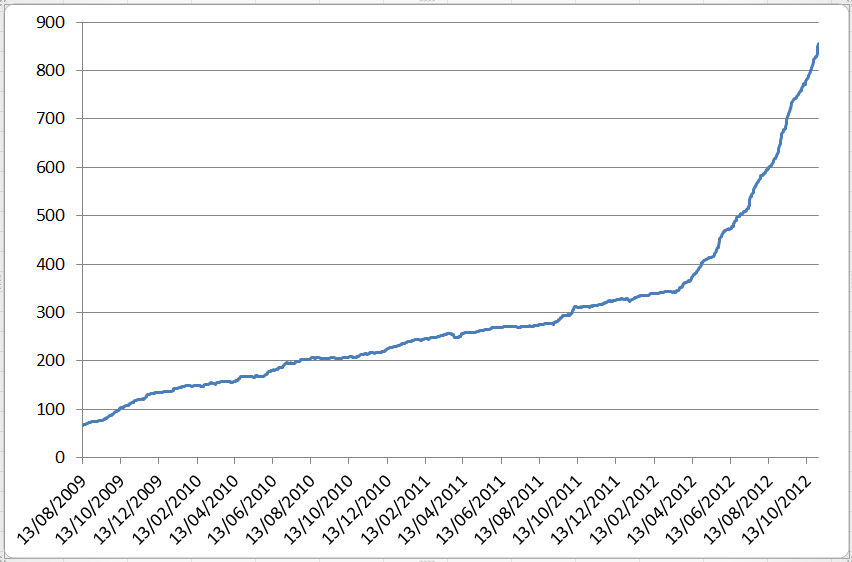
But the quest to address this kind of question, and then to share the answers widely, is the reason I have been keen to support the growth of the London Futurist meetup, by organising a series of discussion meetings with well-informed futurist speakers. Happily, membership has been on the up-and-up, reaching nearly 900 by the end of October.

The London Futurist event happening this weekend – on the afternoon of Saturday 3rd November – picks up the theme of enhancing our mental abilities. The title is “Hacking our wetware: smart drugs and beyond – with Andrew Vladimirov”:

What are the most promising methods to enhance human mental and intellectual abilities significantly beyond the so-called physiological norm? Which specific brain mechanisms should be targeted, and how?  Which aspects of wetware hacking are likely to grow in prominence in the not-too-distant future?

By reviewing a variety of fascinating experimental findings, this talk will explore:

  • various pharmacological methods, taking into account fundamental differences in Eastern and Western approaches to the development and use of nootropics
  • the potential of non-invasive neuro-stimulation using CES (Cranial Electrotherapy Stimulation) and TMS (Transcranial Magnetic Stimulation)
  • data suggesting the possibility to “awaken” savant-like skills in healthy humans without paying the price of autism
  • apparent means to stimulate seemingly paranormal abilities and transcendental experiences
  • potential genetic engineering perspectives, aiming towards human cognition enhancement.

The advance number of positive RSVPs for this talk, as recorded on the London Futurist meetup site, has reached 129 at the time of writing – which is already a record.

(From my observations, I have developed the rule of thumb that the number of people who actually turn up for a meeting is something like 60%-75% of the number of positive RSVPs.)

I’ll finish by returning to the question posed at the beginning of my posting:

  • Are these technological enhancements likely to increase human inequality (by benefiting only a small number of users),
  • Or are they instead likely to drop in price and grow in availability (the same as happened, for example, with smartphones, Internet access, and many other items of technology)?

My answer – which I believe is shared by Professor Bostrom – is that things could still go either way. That’s why we need to think hard about their development and application, ahead of time. That way, we’ll become better informed to help influence the outcome.

1 September 2012

The three most important questions about the future

Filed under: futurist, Humanity Plus, rejuveneering, risks, SENS, UKH+ — David Wood @ 2:51 pm

Futurism – the attempt at systematic, thoughtful speculation about the likely future – can be divided into smaller and larger questions.

Many of the ‘small’ questions are admittedly very interesting. Here are some examples.

Will China continue to grow in influence and strength? When will humans colonise Mars? Will increasing technological automation drive more and more people out of work? Will currencies converge (like a larger Euro-zone) or fragment? Is nuclear fusion ever going to prove viable? When will computers outplay humans at the game of Go, or drive cars better than humans, or create art better than humans? What will happen to the rate of population growth, and the rate of resource depletion? Will religion decline or resurge? Which of our present-day habits will our descendents look back on and regard as disdainfully as we now regard (say) slavery and cigarette smoking? Will money and campaign finance play an ever more domineering role in politics?

I call these questions ‘small’ only because there are even larger questions which frame any overall analysis of the future. In particular, I see three groups of questions as particularly pressing:

  1. The question of existential risk: Is it feasible that human civilisation could dramatically collapse within the next few decades – as a result of (e.g.) economic meltdown, rapidly changing climate, military or terrorist escapades, horrific weaponry or diseases, and/or rogue tech? Could we actually be living in the end times?
  2. The question of transhuman potential: Is it feasible that tech enhancements in the next few decades could radically transform and elevate human performance and experience – making us substantially smarter, stronger, healthier, longer-lived – potentially creating as big a step-up in capability as in the prehistoric jump from ape to human?
  3. The question of resource allocation: If transhuman potential lies within our grasp, should we indeed try to grasp it? Contrariwise, is any effort to accelerate transhumanism an indulgence, a distraction, or (even worse) a catalyst for disaster rather than progress? If there are credible risks of existential collapse, where should we actually be grasping? Which topics deserve the lion’s share of our collective attention, investment, analysis, and effort?

These questions are what I seek to see debated at the meetings of the London Futurists that I organise once every few weeks.

The questions defy any simple responses, but for what it’s worth, summary versions of my own answers are as follows:

  1. The threat of existential collapse is real. Human ingenuity and perseverance have led us through many major crises in the past, but there’s nothing guaranteed about our ability to survive even larger, more wicked, faster-breaking crises in the near future
  2. Technology is progressing at a remarkable rate, and the rate is likely to accelerate. Powerful combinations of nano-tech, AI, personal genetics, synthetic biology, robotics, and regenerative medicine, coupled with significantly improved understanding of diet and mental health (e.g. mindfulness), could indeed see the emergence of “Humanity+” amidst the struggles of the present-day. But there’s nothing inevitable about it
  3. Humanity+ (also known as “transhumanism”) is not only possible; it is highly desirable so long as the increased ‘external’ strengths of new human individuals and societies are balanced by matching increases in ‘internal’ strengths such as kindness, open-mindedness, and sociability. As I’ve written before, we need increased wisdom as well as increased smartness, and an increased desire for self-mastery as well as an increased ability to transcend limits.

The reason why Humanity+ is desirable (as well as being possible) is because I see the enhanced humans of the near future, with their much greater collective wisdom – improved versions of you and me – as being the best bet to guard against the very real threats of existential risk.

Speakers at the London Futurists meetings address different parts of this overall rich mix of existential risk and transhuman opportunity. As befits healthy debate, the speakers take different viewpoints. Some of these speakers are what can be called “professional futurists”, often hired by businesses to help them consider scenarios for evolution of technology, business, and products. Other speakers are what can be called “activists”, who personally commit large amounts of their time and energy to bringing about one or more aspects of a desirable transhuman future.

The speaker on Sunday 2nd September, Aubrey de Grey, falls into the second category. As noted on the webpage for the event,

Dr. Aubrey de Grey is a biomedical gerontologist based in Cambridge, UK and Mountain View, California, USA, and is the Chief Science Officer of SENS Foundation, a California-based 501(c)(3) charity dedicated to combating the aging process. He is also Editor-in-Chief of Rejuvenation Research, the world’s highest-impact peer-reviewed journal focused on intervention in aging.

Aubrey’s talk is entitled “Regenerative medicine for aging”. Note: this is not just about life extension – allowing longer lifespans. It is about health extension – allowing longer healthy lifespans, with resulting very positive benefits in reduced healthcare costs worldwide. As Aubrey writes,

In this talk I will explain why therapies that can add 30 healthy years to the remaining lifespan of typical 60-year-olds may well arrive within the next few decades.

If you’d like to find out more about Aubrey’s thinking and accomplishments, let me point you at two sources:

Alternatively, if you’re in or nearby London, by all means drop into the meeting 🙂

(We’re planning to record it and make the video available afterwards, for people unable to join on the day.)

16 June 2012

Beyond future shock

Filed under: alienation, books, change, chaos, futurist, Humanity Plus, rejuveneering, robots, Singularity, UKH+ — David Wood @ 3:10 pm

They predicted the “electronic frontier” of the Internet, Prozac, YouTube, cloning, home-schooling, the self-induced paralysis of too many choices, instant celebrities, and the end of blue-collar manufacturing. Not bad for 1970.

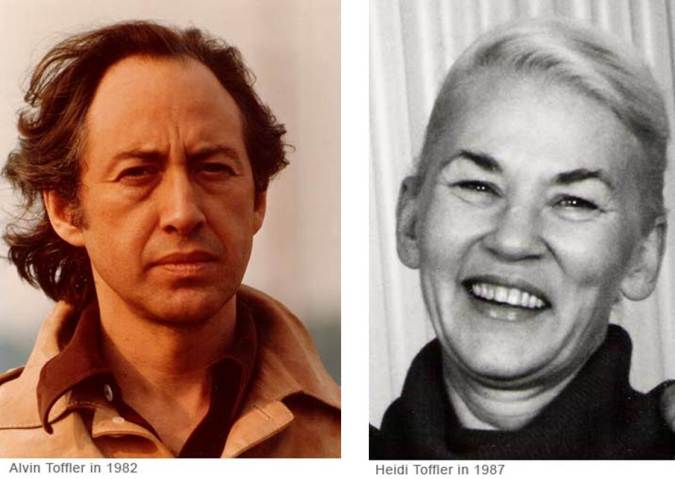
That’s the summary, with the benefit of four decades of hindsight, given by Fast Company writer Greg Lindsay, of the forecasts made in the 1970 bestseller “Future Shock” by husband-and-wife authors Alvin and Heidi Toffler.

As Lindsay comments,

Published in 1970, Future Shock made its author Alvin Toffler – a former student radical, welder, newspaper report and Fortune editor – a household name. Written with his wife (and uncredited co-author), Heidi Toffler, the book was The World Is Flat of its day, selling 6 million copies and single-handedly inventing futurism…

“Future shock is the shattering stress and disorientation that we induce in individuals by subjecting them to too much change in too short a time”, the pair wrote.

And quoting Deborah Westphal, the managing partner of Toffler Associates, in an interview at an event marking the 40th anniversary of the publication of Future Shock, Lindsay notes the following:

In Future Shock, the Tofflers hammered home the point that technology, culture, and even life itself was evolving too fast for governments, policy-makers and regulators to keep up. Forty years on, that message hasn’t changed. “The government needs to understand the dependencies and the convergence of networks through information,” says Westphal. “And there still needs to be some studies done around rates of change and the synchronization of these systems. Business, government, and organizational structures need to be looked at and redone. We’ve built much of the world economy on an industrial model, and that model doesn’t work in an information-centric society. That’s probably the greatest challenge we still face -understanding the old rules don’t apply for the future.”

Earlier this week, another book was published, that also draws on Future Shock for inspiration.  Again, the authors are a husband-and-wife team, Parag and Ayesha Khanna.  And again, the book looks set to redefine key aspects of the futurist endeavour.

This new book is entitled “Hybrid Reality: Thriving in the Emerging Human-Technology Civilization“.  The Khannas refer early on to the insights expressed by the Tofflers in Future Shock:

The Tofflers’ most fundamental insight was that the pace of change has become as important as the content of change… The term Future Shock was thus meant to capture our intense anxiety in the face of technology’s seeming ability to accelerate time. In this sense, technology’s true impact isn’t just physical or economic, but social and psychological as well.

One simple but important example follows:

Technologies such as mobile phones can make us feel empowered, but also make us vulnerable to new pathologies like nomophobia – the fear of being away from one’s mobile phone. Fifty-eight percent of millennials would rather give up their sense of smell than their mobile phone.

As befits the theme of speed, the book is a fast read. I downloaded it onto my Kindle on the day of its publication, and have already read it all the way through twice. It’s short, but condensed. The text contains many striking turns of phrase, loaded with several layers of meaning, which repay several rethinks. That’s the best kind of sound-bite.

Despite its short length, there are too many big themes in the book for me to properly summarise them here. The book portrays an optimistic vision, alongside a series of challenges and risks. As illustrations, let me pick out a selection of phrases, to convey some of the flavour:

The cross-pollination of leading-edge sectors such as information technology, biotechnology, pervasive computing, robotics, neuroscience, and nanotechnology spells the end of certain turf wars over nomenclature. It is neither the “Bio Age” nor the “Nano Age” nor the “Neuro Age”, but the hybrid of all of these at the same time…

Our own relationship to technology is moving beyond the instrumental to the existential. There is an accelerating centripetal dance between what technologies are doing outside us and inside us. Externally, technology no longer simply processes our instructions on a one-way street. Instead, it increasingly provides intelligent feedback. Internally, we are moving beyond using technology only to dominate nature towards making ourselves the template for technology, integrating technologies within ourselves physically. We don’t just use technology; we absorb it

The Hybrid Age is the transition period between the Information Age and the moment of Singularity (when machine surpass human intelligence) that inventor Ray Kurzweil estimates we may reach by 2040 (perhaps sooner). The Hybrid Age is a liminal phase in which we cross the threshold toward a new mode of arranging global society…

You may continue to live your life without understanding the implications of the still-distant Singularity, but you should not underestimate how quickly we are accelerating into the Hybrid Age – nor delay in managing this transition yourself

The dominant paradigm to explain global change in the Hybrid Age will be geotechnnology. Technology’s role in shaping and reshaping the prevailing order, and accelerating change between orders, forces us to rethink the intellectual hegemony of geopolitics and geoeconomics…

It is geotechnology that is the underlying driver of both: Mastery in the leading technology sectors of any era determines who leads in geoeconomics and dominates in geopolitics…

The shift towards a geotechnology paradigm forces us to jettison centuries of foundational assumptions of geopolitics. The first is our view on scale: “Bigger is better” is no longer necessarily true. Size can be as much a liability as an asset…

We live and die by our Technik, the capacity to harness emerging technologies to improve our circumstances…

We will increasingly differentiate societies on the basis not of their regime type or income, but of their capacity to harness technology. Societies that continuously upgrade their Technik will thrive…

Meeting the grand challenge of improving equity on a crowded planet requires spreading Technik more than it requires spreading democracy

And there’s lots more, applying the above themes to education, healthcare, “better than new” prosthetics, longevity and rejuvenation, 3D printing, digital currencies, personal entrepreneurship and workforce transformation, the diffusion of authority, the rise of smart cities and their empowered “city-zens”, augmented reality and enhanced personal avatars, robots and “avoiding robopocalypse”, and the prospect for a forthcoming “Pax Technologica”.

It makes me breathless just remembering all these themes – and how they time and again circle back on each other.

Footnote: Readers who are in the vicinity of London next Saturday (23rd June) are encouraged to attend the London Futurist / Humanity+ UK event “Hybrid Reality, with Ayesha Khanna”. Click on the links for more information.

3 June 2012

Super-technology and a possible renaissance of religion

Filed under: death, disruption, Humanity Plus, rejuveneering, religion, Singularity, UKH+ — David Wood @ 11:02 pm

“Any sufficiently advanced technology is indistinguishable from magic” – Arthur C. Clarke

Imagine that the human race avoids self-destruction and continues on the path of increased mastery of technology. Imagine that, as seems credible some time in the future, humans will eventually gain the ability to keep everyone alive indefinitely, in an environment of great abundance, variety, and  intrinsic interest.

That paradise may be a fine outcome for our descendants, but unless the pace of technology improvement becomes remarkably rapid, it seems to have little direct impact on our own lives. Or does it?

It may depend on exactly how much power our god-like descendants eventually acquire.  For example, here are two of the points from a radical vision of the future known as the Ten cosmist convictions:

  • 5) We will develop spacetime engineering and scientific “future magic” much beyond our current understanding and imagination.
  • 6) Spacetime engineering and future magic will permit achieving, by scientific means, most of the promises of religions — and many amazing things that no human religion ever dreamed. Eventually we will be able to resurrect the dead by “copying them to the future”.

Whoa! “Resurrect the dead”, by “copying them to the future”. How might that work?

In part, by collecting enormous amount of data about the past – reconstructing information from numerous sources. It’s similar to collecting data about far-distant stars using a very large array of radio telescopes. And in part, by re-embodying that data in a new environment, similar to copying running software onto a new computer, giving it a new lease of life.

Lots of questions can be asked about the details:

  • Can sufficient data really be gathered in the future, in the face of all the degradation commonly called “the second law of thermodynamics”, that would allow a sufficiently high-fidelity version of me (or anyone else) to be re-created?
  • If a future super-human collected lots of data about me and managed to get an embodiment of that data running on some future super-computer, would that really amount to resurrecting me, as opposed to creating a copy of me?

I don’t think anyone can confident about answers to such questions. But it’s at least conceivable that remarkably advanced technology of the future may allow positive answers.

In other words, it’s at least conceivable that our descendants will have the god-like ability to recreate us in the future, giving us an unexpected prospect for immortality.

This makes sense of the remark by radical futurist and singularitarian Ray Kurzweil at the end of the film “Transcendent Man“:

Does God exist? Well I would say, not yet

Other radical futurists quibble over the “not yet” caveat. In his recent essay “Yes, I am a believer“, Giulio Prisco takes the discussion one stage further:

Gods will exist in the future, and they may be able to affect their past — our present — by means of spacetime engineering. Probably other civilizations out there already attained God-like powers.

Giulio notes that even the celebrated critic of theism, Richard Dawkins, gives some support to this line of thinking.  For example, here’s an excerpt from a 2011 New York Times interview, in which Dawkins discusses an essay written by theoretic physicist Freeman Dyson:

In one essay, Professor Dyson casts millions of speculative years into the future. Our galaxy is dying and humans have evolved into something like bolts of superpowerful intelligent and moral energy.

Doesn’t that description sound an awful lot like God?

“Certainly,” Professor Dawkins replies. “It’s highly plausible that in the universe there are God-like creatures.”

He raises his hand, just in case a reader thinks he’s gone around a religious bend. “It’s very important to understand that these Gods came into being by an explicable scientific progression of incremental evolution.”

Could they be immortal? The professor shrugs.

“Probably not.” He smiles and adds, “But I wouldn’t want to be too dogmatic about that.”

As Giulio points out, Dawkins develops a similar line of argument in part of his book “The God Delusion”:

Whether we ever get to know them or not, there are very probably alien civilizations that are superhuman, to the point of being god-like in ways that exceed anything a theologian could possibly imagine. Their technical achievements would seem as supernatural to us as ours would seem to a Dark Age peasant transported to the twenty-first century…

In what sense, then, would the most advanced SETI aliens not be gods? In what sense would they be superhuman but not supernatural? In a very important sense, which goes to the heart of this book. The crucial difference between gods and god-like extraterrestrials lies not in their properties but in their provenance. Entities that are complex enough to be intelligent are products of an evolutionary process. No matter how god-like they may seem when we encounter them, they didn’t start that way…

Giulio seems more interested in the properties than the provenance. The fact that these entities have god-like powers prompts him to proclaim “Yes, I am a believer“.  He gives another reason in support of that proclamation: In contrast to the views of so-called militant atheists, Giulio is “persuaded that religion can be a powerful and positive force”.

Giulio sees this “powerful and positive force” as applying to him personally as well as to groups in general:

“In my beliefs I find hope, happiness, meaning, the strength to get through the night, and a powerful sense of wonder at our future adventures out there in the universe, which gives me also the drive to try to be a better person here-and-now on this little planet and make it a little better for future generations”.

More controversially, Giulio has taken to describing himself (e.g. on his Facebook page) as a “Christian”. Referring back to his essay, and to the ensuing online discussion:

Religion can, and should, be based on mutual tolerance, love and compassion. Jesus said: “love thy neighbor as thyself,” and added: “let he who is without sin, cast the first stone”…

This is the important part of his teachings in my opinion. Christian theology is interesting, but I think it should be reformulated for our times…

Was Jesus the Son of God? I don’t think this is a central issue. He certainly was, in the sense that we all are, and he may have been one of those persons in tune with the universe, more in tune with the universe than the rest of us, able to glimpse at veiled realities beyond our senses.

I’ve known Giulio for several years, from various Humanity+ and Singularity meetings we’ve both attended – dating back to “Transvision 2006” in Helsinki. I respect him as a very capable thinker, and I take his views seriously. His recent “Yes, I am a believer” article has stirred up a hornets’ nest of online criticism.

Accordingly, I was very pleased that Giulio accepted my invitation to come to London to speak at a London Futurist / Humanity+ UK meeting on Saturday 14th July: “Transhumanist Religions 2.0: New Cosmist religion and spirituality for our boundless future (and our troubled present)”. For all kinds of reason, this discussion deserves a wider airing.

First, I share the view that religious sentiments can provide cohesion and energy to propel individuals and groups to undertake enormously difficult projects (such as the project to avoid the self-destruction of the human race, or any drastic decline in the quality of global civilisation).  The best analysis I’ve read of this point is in the book “Darwin’s Cathedral: Evolution, Religion, and the Nature of Society” by David Sloan Wilson.  As I’ve written previously:

This book has sweeping scope, but makes its case very well.  The case is that religion has in general survived inasmuch as it helped groups of people to achieve greater cohesion and thereby acquire greater fitness compared to other groups of people.  This kind of religion has practical effect, independent of whether or not its belief system corresponds to factual reality.  (It can hardly be denied that, in most cases, the belief system does not correspond to factual reality.)

The book has some great examples – from the religions in hunter-gatherer societies, which contain a powerful emphasis on sharing out scarce resources completely equitably, through examples of religions in more complex societies.  The chapter on John Calvin was eye-opening (describing how his belief system brought stability and prosperity to Geneva) – as were the sections on the comparative evolutionary successes of Judaism and early Christianity.  But perhaps the section on the Balinese water-irrigation religion is the most fascinating of the lot.

Of course, there are some other theories for why religion exists (and is so widespread), and this book gives credit to these theories in appropriate places.  However, this pro-group selection explanation has never before been set out so carefully and credibly, and I think it’s no longer possible to deny that it plays a key role.

The discussion makes it crystal clear why many religious groups tend to treat outsiders so badly (despite treating insiders so well).  It also provides a fascinating perspective on the whole topic of “forgiveness”.  Finally, the central theme of “group selection” is given a convincing defence.

But second, there’s no doubt that religion can fit blinkers over people’s thinking abilities, and prevent them from weighing up arguments dispassionately. Whenever people talk about the Singularity movement as having the shape of a religion – with Ray Kurzweil as a kind of infallible prophet – I shudder. But we needn’t lurch to that extreme. We should be able to maintain the discipline of rigorous independent thinking within a technologically-informed renaissance of positive religious sentiment.

Third, if the universe really does have beings with God-like powers, what attitude should we adopt towards these beings? Should we be seeking in some way to worship them, or placate them, or influence them? It depends on whether these beings are able to influence human history, here and now, or whether they are instead restricted (by raw facts of space and time that even God-like beings have to respect) to observing us and (possibly) copying us into the future.

Personally my bet is on the latter choice. For example, I’m not convinced by people who claim evidence to the contrary. And if these beings did have the ability to intervene in human history, but have failed to do so, it would be evidence of them having scant interest in widespread intense human suffering. They would hardly be super-beings.

In that case, the focus of our effort should remain squarely on building the right conditions for super-technology to benefit humanity as a whole (this is the project I call “Inner Humanity+“), rather than on somehow seeking to attract the future attention of these God-like beings. But no doubt others will have different views!

16 October 2011

Human regeneration – limbs and more

Filed under: healthcare, medicine, rejuveneering, risks, Singularity — David Wood @ 1:57 am

Out of the many interesting presentations on Day One of the 2011 Singularity Summit here in New York, the one that left me with the most to think about was “Regenerative Medicine: Possibilities and Potential” by Dr. Stephen Badylak.

Dr Badylak is deputy director of the McGowan Institute for Regenerative Medicine, and a Professor in the Department of Surgery at the University of Pittsburg. In his talk at the Singularity Summit, he described some remarkable ways in which the human body could heal itself – provided we provide it with suitable “scaffolding” that triggers the healing.

One of the examples Dr Badylak discussed is also covered in a recent article in Discover Magazine, How Pig Guts Became the Next Bright Hope for Regenerating Human Limbs.  The article deserves reading all the way through. Here are some short extracts from the beginning:

When he first arrived in the trauma unit of San Antonio’s Brooke Army Medical Center in December 2004, Corporal Isaias Hernandez’s leg looked to him like something from KFC. “You know, like when you take a bite out of the drumstick down to the bone?” Hernandez recalls. The 19-year-old Marine, deployed in Iraq, had been trying to outfit his convoy truck with a makeshift entertainment system for a long road trip when the bomb exploded. The 12-inch TV he was clutching to his chest shielded his vital organs; his buddy carrying the DVDs wasn’t so lucky.

The doctors kept telling Hernandez he would be better off with an amputation. He would have more mobility with a prosthetic, less pain. When he refused, they took a piece of muscle from his back and sewed it into the hole in his thigh. He did all he could to make it work. He grunted and sweated his way through the agony of physical therapy with the same red-faced determination that got him through boot camp. He even sneaked out to the stairwell, something they said his body couldn’t handle, and dragged himself up the steps until his leg seized up and he collapsed.

Generally people never recovered from wounds like his. Flying debris had ripped off nearly 70 percent of Hernandez’s right thigh muscle, and he had lost half his leg strength. Remove enough of any muscle and you might as well lose the whole limb, the chances of regeneration are so remote. The body kicks into survival mode, pastes the wound over with scar tissue, and leaves you to limp along for life….

Hernandez recalled that one of his own doctors—Steven Wolf, then chief clinical researcher for the United States Army Institute of Surgical Research in Texas—had once mentioned some kind of experimental treatment that could “fertilize” a wound and help it heal. At the time, Hernandez had dismissed the therapy as too extreme. The muscle transplant sounded safer, easier. Now he changed his mind. He wanted his leg back, even if it meant signing himself up as a guinea pig for the U.S. Army.

So Hernandez tracked down Wolf, and in February 2008 the two got started. First, Wolf put Hernandez through another grueling course of physical therapy to make sure he had indeed pushed any new muscle growth to the limit. Then he cut open Hernandez’s thigh and inserted a paper-thin slice of the same material used to make the pixie dust: part of a pig’s bladder known as the extracellular matrix, or ECM, a fibrous substance that occupies the spaces between cells. Once thought to be a simple cellular shock absorber, ECM is now understood to contain powerful proteins that can reawaken the body’s latent ability to regenerate tissue.

A few months after the surgery healed, Wolf assigned the young soldier another course of punishing physical therapy. Soon something remarkable began to happen. Muscle that most scientists would describe as gone forever began to grow back. Hernandez’s muscle strength increased by 30 percent from what it was before the surgery, and then by 40 percent. It hit 80 percent after six months. Today it is at 103 percent—as strong as his other leg. Hernandez can do things that were impossible before, like ease gently into a chair instead of dropping into it, or kneel down, ride a bike, and climb stairs without collapsing, all without pain

The challenge now is replicating Hernandez’s success in other patients. The U.S. Department of Defense, which received a congressional windfall of $80 million to research regenerative medicine in 2008, is funding a team of scientists based at the University of Pittsburgh’s McGowan Institute for Regenerative Medicine to oversee an 80-patient study of ECM at five institutions. The scientists will attempt to use the material to regenerate the muscle of patients who have lost at least 40 percent of a particular muscle group, an amount so devastating to limb function that it often leads doctors to perform an amputation.

If the trials are successful, they could fundamentally change the way we treat patients with catastrophic limb injuries. Indeed, the treatment might someday allow patients to regrow missing or mangled body parts. With an estimated 1.7 million people in the United States alone missing limbs, promoters of regenerative medicine eagerly await the day when therapies like ECM work well enough to put the prosthetics industry out of business.

The interesting science is the explanation of the role of the ECM – the extracellular matrix, which provides the scaffolding that allows the healing to take place. The healing turns out to involve the body directing stem cells to the scaffolding. These stem cells then differentiate into muscle cells, nerve cells, blood cells, and so on. There’s also some interesting science to explain why the body doesn’t reject the ECM that’s inserted into it.

Badylak speaks with confidence of the treatment one day allowing the regeneration of damaged human limbs, akin to what happens with salamanders.  He also anticipates the healing of brain tissue damaged by strokes.

Later that morning, another speaker at the Singularity Summit, Michael Shermer, referred to Dr Badylak’s presentation. Shermer is a well-known sceptic – indeed, he’s the publisher of Skeptic magazine.  Shermer often participates in public debates with believers in various religions and new-age causes.  Shermer mentioned that, at these debates, his scientific open mindedness is sometimes challenged.  “OK, if you are open-minded, as you claim, what evidence would make you believe in God?”  Shermer typically gives the answer that, if someone with an amputated limb were to have that limb regrow, that would be reason for him to become a believer:

Most religious claims are testable, such as prayer positively influencing healing. In this case, controlled experiments to date show no difference between prayed-for and not-prayed-for patients. And beyond such controlled research, why does God only seem to heal illnesses that often go away on their own? What would compel me to believe would be something unequivocal, such as if an amputee grew a new limb. Amphibians can do it. Surely an omnipotent deity could do it. Many Iraqi War vets eagerly await divine action.

However, Shermer joked with the Singularity Summit audience, it now appears that Dr Badylak might be God.  The audience laughed.

But there’s a serious point at stake here. The Singularity Summit is full of talks about humans being on the point of gaining powers that, in previous ages, would have been viewed as Divine. With great power comes great responsibility. As veteran ecologist and environmentalist Stewart Brand wrote at the very start of his recent book “Whole Earth Discipline“,

We are as gods and HAVE to get good at it.

In the final talk of the day, cosmologist Professor Max Tegmark addressed the same theme.  He gave an estimate of “between 1/10 and 1/10,000” for the probability of human extinction during any decade in the near-term future – extinction arising from (for example) biochemical warfare, runaway global warming, nanotech pollution, or a bad super-intelligence singularity. In contrast, he said, only a tiny fraction of the global GDP is devoted to management of existential risks.  That kind of “lack of paying attention” meant that humanity deserved, in Tegmark’s view, a “mid-term rating” of just D-.  Our focus, far too much of the time, is on the next election cycle, or the next quarterly financial results, or other short term questions.

One person who is seeking to encourage greater attention to be paid to existential risks is co-founder of Skype, Jaan Tallinn (who earlier in the year gave a very fine talk at a Humanity+ event I organised in London).  Jaan’s main presentation at the 2011 Singularity Summit will be on Day Two, but he briefly popped up on stage on Day One to announce a significant new fundraising commitment: he will personally match any donations made over the weekend to the Singularity Institute, up to a total of $100,000.

With the right resources, wisely deployed, we ought to see collective human intelligence achieve lots more regeneration – not just of broken limbs, but also of troubled societies and frustrated lives – whilst at the same time steering humanity away from the existential risks latent in these super-powerful technologies.  The discussion will continue tomorrow.

31 December 2010

Welcome 2011 – what will the future hold?

Filed under: aging, futurist, Humanity Plus, intelligence, rejuveneering — David Wood @ 6:42 pm

As 2010 turns into 2011, let me offer some predictions about topics that will increasingly be on people’s minds, as 2011 advances.

(Spoiler: these are all topics that will feature as speaker presentations at the Humanity+ UK 2011 conference that I’m organising in London’s Conway Hall on 29th January.  At time of writing, I’m still waiting to confirm possibly one or two more speakers for this event, but registration is already open.)

Apologies for omitting many other key emerging tech-related trends from this list.  If there’s something you care strongly about – and if you live within striking distance of London – you’ll be more than welcome to join the discussion on 29th January!

« Newer Posts

Blog at WordPress.com.