dw2

13 June 2009

Monday night is demo night

Filed under: applications, demos, Mobile Monday, Samsung — David Wood @ 4:12 pm

Mobile Monday London is at a new location this Monday (15th June). Most of the MoMoLo events I’ve attended over the last few years have been at the CBI Conference Centre in the Centrepoint building near Tottenham Court Road tube station. But on this occasion, the venue will be the 10th floor of the Blue Fin Building, 110 Southwark St, SE1 0SU. This venue is south of Tate Modern, and nearby tube stations include Blackfriars, Waterloo, Southwark, Cannon Street and London Brige. The event is being hosted by IPC Media, who are based in the building.


Blue Fin building has its own significance in the Symbian world. The second floor of that building is home to the UK branch of SOSCO – which is an acronym for “S60 on Symbian Customer Operations”. Prior to Nokia’s acquisition of Symbian Ltd last December, the unit was known by the simpler name of SCO – “Symbian Customer Operations”. It’s a descendent (via several renamings) of the Technical Consulting (“TC”) department which was created on the initial formation of Symbian Ltd back in June 1998. I was responsible for TC at that time, and several of the people from the early days of TC still work in SOSCO. Among other claims to fame, SOSCO engineers recently ported a version of the Symbian platform to run on an off the shelf Atom based motherboard from Intel.

This Monday’s event is a demo night. At the last count, the following mobile demos are lined up:

  • Vopium – like Skype but fully integrated into your mobile’s phonebook
  • Peepr.TV – webcam streaming to mobile
  • 0870.me – standard rate calls instead of 0870
  • Photofit – photo mashup application
  • Total Hotspots – Rummble your nearest wifi hotspot
  • Audioboo – audio micro-blogging as much loved by Stephen Fry amongst others
  • Artilium – making LBS easy for developers
  • Proxama – the latest in NFC wallets
  • Ookl – mobile learning
  • Singtones – karaoke on your phone
  • Masabi – rail ticketing
  • Corebridge – CRM on the go
  • Spoonfed – London restaurant finder

It will be a fine chance to weigh up some innovative mobile applications and services. There will presumably be some of the latest mobile devices on show too – given that the co-sponsor of the evening (along with IPC Media) is Samsung Mobile Innovator.

The word on the streets is that Samsung Mobile Innovator “will be making a special announcement on Monday evening” – which is another reason for attending. (OK, full disclosure: let me confess my source for this info: it’s someone who used to work for SOSCO, but who is now employed by Samsung Mobile Innovator.)

As the official site for the event explains:

  • Doors will open at 6pm for a prompt start at 6.30pm;
  • There’s a LOT to get through;
  • Please allow enough time to get through security on the ground floor and take the lift up to the 10th floor;
  • Also please make sure you are registered well in advance so you can whizz through security;
  • There is no guarantee of entry unless you are registered in advance.

To register, please visit the event website.

The venue has capacity for 155 participants. As I write this, there are 38 places still available.
28 May 2009

The future of medicine

Filed under: cryonics, medicine, UKTA — David Wood @ 11:37 pm
  • Someone who believes in the radical transformational potential of technology, and who anticipates that technology will result in very significant improvements in the quality of life in the relatively near future – but who is willing to go beyond predictions and theorising, to roll up his sleeves and become vigorously involved in building better technology.

That’s how I’d describe Mike Darwin, the speaker at the Extrobritannia (UKTA) meeting at Birkbeck College in central London this Saturday. In other words, Mike is an eminent engineer as well as a philosopher. Specifically, he’s an engineer in the field of preservative medicine.

But there’s more. Mike appreciates that the process of refining new medical processes can be intensely messy and flawed. Just because we’re surrounded by hi-tech, it’s no guarantee that medical trials will be pain-free or mistake-free. Far from it. There are technological uncertainties, organisational impediments, and cultural hurdles. Without a willingness to embrace this ugly fact, there’s a real risk that developments in medicine will slow down.

Mike’s topic on Saturday is “Whatever happened to the future of medicine”; the subtitle is “Why the much anticipated medical breakthroughs of the early 21st century are failing to materialize”. In his own words, here’s what the talk will address:

The last half of the 20th Century was a time of explosive growth in growth in high technology medicine. Effective chemotherapy for many microbial diseases, the advent of sophisticated vaccination, the development and application of the corticosteroids, and the development of extracorporeal and cardiovascular prosthetic medicine (cardiopulmonary bypass, hemodialysis, synthetic arterial vascular grafts and cardiac valves) are but a few examples of what can only be described as stunning progress in medicine derived in large measure from translation research.

The closing decades of the last century brought confident predictions from both academic and clinical researchers (scientists and physicians alike) that the opening decade of this century would see, if not definitive cure or control, then certainly the first truly effective therapeutic drugs for cancer, ischemia-reperfusion injury (i.e. heart attack, stroke and cardiac arrest), multisystem organ failure and dysfunction (MSOF/D), immunomodulation (control of rejection and much improved management of autoimmune diseases), oxygen therapeutics and more radically, the perfection of long term organ preservation, widespread use of the total artificial heart (TAH) and the clinical application of the first drugs to slow or moderate biological aging.

So far, so good. But Mike continues:

However, none of these anticipated gains has materialized, and countless drug trials in humans based on highly successful animal models of MSOF/D, stroke, heart attack, cancer, and immunomodulation have failed. Indeed it may be reasonably argued that the pace of therapeutic advance has slowed. By contrast, the growth of technology and capability in some areas of diagnostic medicine, primarily imaging, has maintained its exponential rate of growth and, while much slower than growth in other areas of technological endeavor, such as communications and consumer electronics, progress has been impressive.

Why has translational research at the cutting edge of medicine (and in particular in critical care medicine) stalled, or often resulted in clinical trials that had to be halted due to increased morbidity and mortality in the treated patients? The answers to these questions are complex and multifactorial, and deserve careful review.

And in conclusion:

Renewed success in the application of translational research in humans will require a return to the understanding and acceptance of the inescapable fact that perfection of complex biomedical technologies cannot be modeled solely in the animal or computer research laboratory. The corollary of this understanding must be the acceptance of the unpleasant reality that perfection of novel, let alone revolutionary medical technologies, will require a huge cost in human suffering and sacrifice. The aborted journey of the TAH to widespread clinical application due to the unwillingness on the part of the public, and the now extant bioethical infrastructure in medicine, to accept the years of suffering accompanied by modest, incremental advances towards perfection of this technology, is a good example of what might rightly be described as a societal ‘failure of nerve’ in the face of great benefit at great cost. It may be rightly said, to quote the political revolutionary Delores Ibarruri, that we must once again come to understand that, “It is better to die on our feet than to live on our knees!”

Mike has spoken once before at an Extrobritannia meeting. See here for my write-up. It was a tremendous event. I’m expecting a similar engrossing debate this Saturday too. No doubt some of the discussion will focus on the main thrust of Mike’s life work, cryonics: very few people in the world are as knowledgeable about this topic.

If anyone reading this is going to be in or near London on Saturday, it would be great to see you at this meeting.

26 April 2009

Immersed in deception

Filed under: deception, intelligence, spam — David Wood @ 2:43 pm

Over the last few weeks, I’ve received a lot of flattery and what looks like friendly advice.

Here’s an example:

Ah! This is the sort of thing I have been looking for. I’m doing some research for an article. You should add buttons to the bottom of your posts to digg, stumble, etc your content. I think this is great and want to share it, but as it stands, I’m a lazy lazy person. Just kidding!

And here’s another:

I’ve just found your blog and I really like it. This is the first time I’ve written a comment. I’m not sure what to say, but please keep up the good work!

I found these compliments while checking the comments posted in reply to my own postings – either here, on my personal blog, or on the Symbian corporate blog.

At first, I felt pleased. Then I realised I was being deceived. These comments were being placed on my blogs, simply to tempt unwary readers to click on the links in them. These links lead to sites promoting bargain basement laptops, products made from the Acai “super berry”, and numerous other wild and wacky stuff (much of it not suitable for work). Now that I’m aware of these “link bait” comments, I notice them all over the web. They’re presumably being generated automatically.

The Symbian corporate blog is hosted by WordPress and relies on a service from Akismet to sort incoming comments into “pending” and “spam”. On the whole, it does a remarkably good job. But sometimes (not too surprisingly) it gets things wrong:

  • There are false positives – genuine messages that are classified onto the spam list
  • There are false negatives – deceptive messages that are classified onto the pending queue.

The task of sorting comments becomes even harder when “linkbacks” are taken into account. By default, WordPress lists “pingbacks” and “trackbacks”, when other blogs reference one of your articles. I haven’t yet made up my mind how useful this is. But I do know that it’s another avenue for deceptive postings to get their links onto your webpage. Some of these other postings re-use text from the original posting, chopping it up to give the appearance that a human being is providing intelligent analysis of your ideas. But again, it’s now my view that these postings are being generated algorithmically, just in order to receive and harvest incoming clicks.

Companies like Akismet are clearly involved in some kind of escalating arms race. As they learn the tricks employed by one generation of spam-creating program, another generation finds ways to mask the intent more skilfully.

I guess it’s like the way human intelligence is often thought to have emerged. According to widespread opinion, early humans existing in large groups found it beneficial to be able to:

  • Deceive each other about their true intentions;
  • Pretend to be supportive of the ends of the group, but to free-ride on the support of others when they could get away with it;
  • See through the deceptive intentions of others;
  • To keep track of what person A thinks about what person B thinks about person C…

This kind of evolutionary arms race was, according to this theory, one of the causes of mushrooming human brain power.

For example, to quote from Mario Heilmann’s online paper Social evolution and social influence: selfishness, deception, self-deception:

This paper endeavors to point out that the selfish interests of individuals caused deception and countermeasures against deception to become driving forces behind social influence strategies. The expensive and wasteful nature of negotiation and impression management is a necessary and unavoidable consequence of this arms race between deception and detection.

Natural selection created genetic dispositions to deceive, and to constantly and unconsciously suspect deception attempts. In a competitive, selfish, and war-prone world, these techniques, proven in billions of years in evolution, still are optimal. Therefore they are reinforced by cultural selection and learning. Conscious awareness of deception and countermeasures is not required, often even counterproductive. This is so because conscious deception is easier to detect and carries harsher sanctions.

Humans not only deceive, but also deceive themselves and others about the fact that they deceive, into believing that they do not deceive. This double deception makes the system so watertight, that it tends to evade detection even by psychologists.

Deception may be widespread in human society, but the associated increase in brainpower has had lots of more positive side-effects. I wonder if the same will result from the rapid arms race in electronic deception and counter-deception mechanisms – and whether this will be one means for genuine electronic intelligence to emerge.

10 April 2009

The future: neuroengineering and virtual minds

Filed under: books, futurist, neuroengineering — David Wood @ 8:25 pm

Because things have been so absorbing and demanding at work, during the setup phase of the Symbian Foundation, I’ve had little time over the last few months for a couple of activities that I usually greatly enjoy.

First, I’ve had little time to write articles for this blog (my personal blog). Any time and energy that I’ve had available for blogging has tended to go, instead, to postings in my work blog. For example, over the last fortnight I’ve written work-related postings entitled A new software journey, Collaboration at the heart, The first hardware reference design, Who wants to join a movement?, and Simpler and cleaner code. In principle, this blog here is for more personal reflections, and for matters removed from my day-to-day work responsibilities.

Second, I’ve had little time to read books. Last year, I probably finished on average at least one book and/or audio-book every two weeks. This year, so far, I’ve only made it to the end of one book: Darwin’s Cathedral: Evolution, Religion, and the Nature of Society, by David Sloan Wilson. (It’s a fine book, which is both intellectually challenging and intellectually satisfying, and which also happens to be very relevant to the ongoing debates over “the new atheism”. My review of it can be found on the LivingSocial site.)

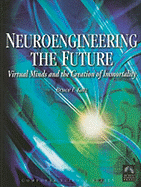
However, earlier today, in the course of a long flight, I took the time to open a book I’ve been carrying with me on several previous trips, and I made a good start on it. From what I’ve read so far, it already seems clear to me that this is a tremendous piece of work, about a field that deserves a significant increase in attention. The author is Bruce F. Katz, adjunct professor at Drexel University, and Chief Artificial Intelligence Scientist at ColdLight. The book is Neuroengineering the future: virtual minds and the creation of immortality.

Wikipedia gives the following definition of the term “Neuroengineering”:

Neural engineering also known as Neuroengineering is a discipline that uses engineering techniques to understand, repair, replace, enhance, or treat the diseases of neural systems. Neural engineers are uniquely qualified to solve design problems at the interface of living neural tissue and non-living constructs… Prominent goals in the field include restoration and augmentation of human function via direct interactions between the nervous system and artificial devices.

That’s an ambitious set of goals, but Bruce sets out an even grander vision. To give a flavour, here’s an extract from the Preface of his book:

I am not the first, and certainly will not be the last, to stress the importance of coming developments in neural engineering. This field has all the hallmarks of a broad technological revolution, but larger in scope and with deeper tentacles than those accompanying both computers and the Internet…

To modify the brain is to modify not only how we perceive but what we are, our consciousnesses and our identities. The power to be able to do so cannot be over-stated, and the consequences can scarcely be imagined, especially with our current unmodified evolutionarily provided mental apparatuses…

Here are just a few topics that we will cover…

  1. Brain-machine interfaces to control computers, exoskeletons, robots, and other devices with thought alone;
  2. Mind-reading devices that will project the conscious contents of one’s brain onto a screen as if it was a movie;
  3. Devices to enhance intellectual ability and to increase concentration;
  4. Devices to enhance creativity and insight;
  5. Mechanisms to upload the mind to a machine, thus preserving it from bodily decay and bodily death.

Other writers have addressed these topics before – both in science fiction and in technology review books. But it looks to me that Bruce brings a greater level of rigour and a wider set of up-to-date research information. To continue quoting from the Preface:

The book is divided into three sections:

  1. The first develops the neurophysiological as well as philosophical foundations on which these advances may be made;
  2. The second describes the current state of the art, and neuroengineering developments that will be with us in the near term;
  3. The final part of the book speculates on what will happen in the long-term, and what it will be like to be a post-evolutionary entity…

The futurist will naturally be drawn to the final section, but in their case it is all the more imperative that the initial development be mastered, especially the chapters with a philosophical bent. The uploading of the soul to a chine is not just a matter of creating the proper technology; it is first and foremost figuring out what it means to have a soul…

As an unabashed futurist, I’m greatly looking forward to finding more time (somehow!) to read further into this book!

20 March 2009

The industry with the greatest potential for disruptive growth

Filed under: aging, healthcare, UKTA — David Wood @ 11:37 pm

Where is the next big opportunity?

According to renowned Harvard Business School professor and author Clayton Christensen, in a video recorded recently for BigThink:

The biggest opportunities are in healthcare. We are now just desperate to make healthcare affordable and accessible. Healthcare is something that everybody consumes. There are great opportunities for non-consumers to be brought into the market by making things affordable and accessible. I just can’t think of another industry that has those kinds of characteristics where demand is robust, and there’s such great opportunities for disruption.

The healthcare industry has many angles. I’m personally fascinated by the potential of smart mobile devices to play significant new roles in maintaining and improving people’s health.

Another important dimension to healthcare is the dimension of reducing (or even altogether removing) the impacts of aging. In an article on “10 ideas changing the world right now”, Time magazine recently coined the word “amortality” for the growing trend for people who seek to keep the same lifestyle and appearance, regardless of their physical age:

When Simon Cowell let slip last month that he planned to have his corpse cryonically preserved, wags suggested that the snarky American Idol judge may have already tested the deep-freezing procedure on his face. In 2007, Cowell, now 49, told an interviewer that he used Botox. “I like to take care of myself,” he said. Cowell is in show biz, where artifice routinely imitates life. But here’s a fact startling enough to raise eyebrows among Botox enthusiasts: his fellow Brits, famously unconcerned with personal grooming, have tripled the caseload of the country’s cosmetic surgeons since 2003. The transfiguration of the snaggletoothed island race is part of a phenomenon taking hold around the developed world: amortality.

You may not have heard of amortality before – mainly because I’ve just coined the term. It’s about more than just the ripple effect of baby boomers’ resisting the onset of age. Amortality is a stranger, stronger alchemy, created by the intersection of that trend with a massive increase in life expectancy and a deep decline in the influence of organized religion – all viewed through the blue haze of Viagra…

Amortals don’t just dread extinction. They deny it. Ray Kurzweil encourages them to do so. Fantastic Voyage, which the futurist and cryonics enthusiast co-wrote with Terry Grossman, recommends a regimen to forestall aging so that adherents live long enough to take advantage of forthcoming “radical life-extending and life-enhancing technologies.” Cambridge University gerontologist Aubrey de Grey is toiling away at just such research in his laboratory. “We are in serious striking distance of stopping aging,” says De Grey, founder and chairman of the Methuselah Foundation, which awards the Mprize to each successive research team that breaks the record for the life span of a mouse…

Notions of age-appropriate behavior will soon be relegated as firmly to the past as dentures and black-and-white television. “The important thing is not how many years have passed since you were born,” says Nick Bostrom, director of the Future of Humanity Institute at Oxford, “but where you are in your life, how you think about yourself and what you are able and willing to do.” If that doesn’t sound like a manifesto for revolution, it’s only because amortality has already revolutionized our attitudes toward age.

Just how feasible is the idea of radical life extension? In part, it depends on what you think about the aging processes that take place in humans. Are these processes fixed, or can they somehow be influenced?

One person who is engaged in a serious study of this topic is Dr Richard Faragher, Reader in the School of Pharmacy and Biomolecular Sciences at the University of Brighton on the English south coast. Richard describes the research interests of his team as follows:

We “do” senescence. Why do we do this? Because it has been suggested for over 30 years that the phenomenon of cell senescence may be linked in some way to human ageing. Senescence is the progressive replicative failure of a population of cells to divide in culture. Once senescent, cells exhibit a wide range of changes in phenotype and gene expression which give them the potential to alter the behaviour of any tissue in which they are found. In its modern form the cell hypothesis of ageing suggests that the progressive accumulation of such senescent cells (as a result of ongoing tissue turnover) may contribute to the ageing process.

Richard is the featured speaker at this month’s Extrobritannia (UKTA) meeting in Central London, this Saturday (21st March). The title for his talk is “One foot in the future. Attaining the 10,000+ year lifespan you always wanted?”:

Dr Richard Faragher, Reader in Gerontology, School of Pharmacy & Biomolecular Sciences, University of Brighton, will review the aging process across the animal kingdom together with the latest scientific insights into how it may operate. The lecture will also review promising avenues for translation into practice over the next few years, and current barriers to progress in aging research will be considered.

I’m expecting a lively but informative discussion!

14 March 2009

Top posting on Techmeme

Filed under: Symbian Foundation, Techmeme — David Wood @ 3:14 am

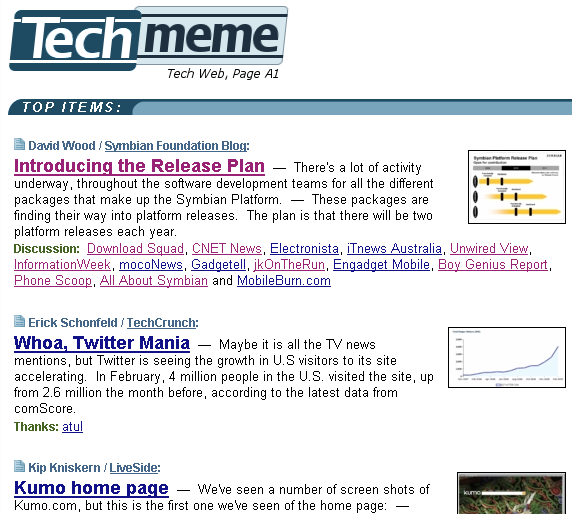
At the time I’m writing these words, the website Techmeme, which is a technology news aggregator, has the following display:

The top billing on the site is taken by a posting I made on the Symbian Foundation corporate weblog a little over 24 hours ago, on the subject of the Symbian platform release plan.

It’s the first time that something I’ve written on a blog has generated so much coverage. The powerpoint pictures (originally created by my colleague Ian Hutton) which I spent some time tweaking last night, have ended up being copied to numerous locations on the Internet.

If I had known there would be so much interest, I would have taken more time over the posting!

7 March 2009

The China Brain project and the future of industry

Filed under: AGI, China, robots — David Wood @ 8:15 pm

An intriguing note popped up on my Twitter feed a couple of hours ago. It was from James Clement, owner and manager at Betterhumans LLC:

with U.S. economy hurting, AI programs may move to China to work with Hugo de Garis. He sees house robots as biggest industry in 20 – 30 yrs

And slightly earlier:

de Garis has already received 10.5 million RMB for the China Brain Project. Basically 10k’s of neural nets for Minsky style “society of mind”

James is attending the AGI-09 conference in Artificial General Intelligence, which is taking place at Arlington, Virginia.

Casting my eye over the schedule for this conference, I admit to a big pang of envy that I’m not attending!

As James says, one of the most significant talks there could be the one by Hugo de Garis. The schedule has a link to a PDF authored in October last year. Here’s a couple of extracts from the paper:

The “China Brain Project”, based at Xiamen University, is a 4 year (2008-2011), 10.5 million RMB, 20 person, research project to design and build China’s first artificial brain (AB). An artificial brain is defined here to be a “network of (evolved neural) networks”, where each neural net(work) module performs some simple task (e.g. recognizes someone’s face, lifts an arm of a robot, etc), somewhat similar to Minsky’s idea of a “society of mind”, i.e. where large numbers of unintelligent “agents” link up to create an intelligent “society of agents”. 10,000s of these neural net modules are evolved rapidly, one at a time, in special (FPGA based) hardware and then downloaded into a PC (or more probably, a supercomputer PC cluster). Human “BAs” (brain architects) then connect these evolved modules according to their human designs to architect artificial brains…

The first author [de Garis] thinks that the artificial brain industry will be the world’s biggest by about 2030, because artificial brains will be needed to control the home robots that everyone will be prepared to spend big money on, if they become genuinely intelligent and hence useful (e.g. baby sitting the kids, taking the dog for a walk, cleaning the house, washing the dishes, reading stories, educating its owners etc). China has been catching up fast with the western countries for decades. The first author thinks that China should now aim to start leading the world (given its huge population, and its 3 times greater average economic growth rate compared to the US) by aiming to dominate the artificial brain industry.

If it’s true that the downturn in the economy will cause a relocation of AGI research personnel from other countries to China, this could turn out to be one of the most significant unforeseen consequences of the downturn.

What have operators done for us recently?

Filed under: collaboration, innovation, Mobile Monday, operators — David Wood @ 2:13 pm

Mobile Monday in London this Monday evening (9th March) will be on the topic of “What have operators done for us recently?”.

To quote from the event website,

What have mobile operators done for innovators and developers, lately? Our next MobileMonday London event will explore this issue. The event will be held on March 9th at CBI conference centre (at Centrepoint Tower) at 6:00 pm, sponsored by O2 Litmus and Vodafone. Panelists will include James Parton from O2, Terence Eden from Vodafone, Steve Wolak from Betavine, David Wood from Symbian Foundation and Jo Rabin representing dotMobi. The event will be chaired by Anna Gudmundson from AdIQ and Dan Appelquist will be your host for the evening.

At the time of writing, there are still a few registration slots left. If you’re in or around London on Monday evening, and you’re at all interested in the future of the mobile phone industry, you will almost certainly find the meeting worthwhile. From my past experience, these events are great for networking as well as for highlighting ideas and sharply debugging them. The breadth and depth of experience in the room mean that any superficially attractive proclamations from panellists are quickly challenged. I typically leave these meetings wiser than when I went in (and often chastened, too).

Usually people blog meetings after they happen (or whilst they are happening). In this case, I’d like to set down a few thoughts in advance.

Early last year, Symbian commissioned a third party report into the viewpoints and experiences of mobile developers. The report had a Californian bias but the results are familiar even in the context of Europe. The report did not specifically seek out the opinions of developers towards network operators, but these opinions came through loud and clear regardless. Here are some representative comments:

  • “Everyone in tech has rope burns around their necks from doing business with the carriers [network operators]. They hung themselves trying to do carrier deals.”
  • “The operator is an adversary, not a partner.”
  • “The basic problem with mobile is that operators are in the way.”
  • “The reality is that the mobile operators will screw you, unless they already want to do what you’re developing. They always ask, ‘What’s in it for me?'”

I raise these comments here, not because I endorse them, but because they articulated a set of opinions that seem to be widely held, roughly twelve months ago.

Operators are (of course!) aware of these perceptions too, and are seeking to address these concerns. At the Mobile Monday meeting, we’ll have a chance to evaluate progress.

Ahead of the meeting, I offer the following six points for consideration:

1: With their widespread high bandwidth coverage, the wireless networks are a modern-day technological marvel – perhaps one of the seven wonders of the present era. These networks need maintenance and care. For this reason, network operators are justified in seeking to protect access to this resource. If these resources become flooded with too much video transfer, manic automated messaging, or deleterious malware, we will all be the losers as a result.

2: Having invested very considerably in the build-up of these networks, it is completely reasonable for operators to seek to protect a significant revenue flow from the utilisation of these networks – especially from core product lines such as voice and SMS. Anything that risks destroying this revenue flow is bound to cause alarm.

3: The potential upside of new revenue flow from innovative new data services often seems dwarfed by the potential downside from loss of revenues from existing services, if networks are opened too freely to new players. In other words, network operators all face a case of the Innovators’ Dilemma. When it comes to the strategic crunch, innovative new business potential often loses out to maintaining the existing lines of business.

4. New lines of revenue for operators – to supplement the old faithfuls of voice and SMS – include the following:

  • Straightforward data usage charges;
  • A micro-share of monetary transactions (such as mobile banking, or goods being bought or sold or advertised) that are carried out over wireless network;
  • Reliable provision of high-quality services (such as would support crystal-clear telephone conference calls);
  • Premium charges for personalised services (such as answers to searches or enquiries)
  • A share of the financial savings that companies can achieve through efficiency gains from the intelligent deployment of new mobile services; etc.

But in all cases, the evolution of these new lines of service is likely be faster and more successful, if new entrepreneurs and innovators can be involved and feel welcome.

5. The best step to involving more innovators in the development of commercially significant new revenues – and to solving the case of the Innovators Dilemma mentioned above – is to systematically identify and analyse and (as far as possible) eliminate all cases of friction in the existing mobile ecosystem.

6. Three instances of mobile ecosystem friction stand out:

  • The diversity (fragmentation) of different operator developer support programmes. Developers have to invest considerable effort in joining and participating in each different scheme. Why can’t there more greater commonality between these programmes?
  • The hurdles involved with getting sophisticated applications approved for usage on networks and/or handsets – developers often feel that they are being forced to go through overly-onerous third party testing and verification hoops, in order to prove that their applications are trustworthy. Some element of verification is probably inevitable, but can’t we find ways to streamline it?
  • The difficulties consumers face in finding and then installing and using applications that are reliably meet their expectations.

In all cases, it’s my view that a collaborative approach is more likely to deliver lasting value to the industry than a series of individualist approaches.

1 March 2009

A different kind of job title

Filed under: catalysts, communications, openness, vision — David Wood @ 11:29 pm

The companies where I’ve worked for the last twenty years – first Psion PLC, then Symbian Ltd – were, in the end, commercially driven companies, with a mission from shareholders to generate profits. The Symbian Foundation is different: it’s a not-for-profit organisation.

That’s not to say we are blind to commercial considerations. On the contrary, our task is to support a collection of member organisations, many of which are highly profit-focused. We have to manage our own finances well, and we have to enable our member organisations to earn significant profits (if that’s what they want to do). But we’re not, ourselves, a fundamentally commercial entity.

With this thought in mind, we took the decision that we ought to rethink other aspects of how we organise ourselves, and how we communicate. We did not want to take it for granted that elements from the setups of our previous companies would automatically also appear in the setup of the Symbian Foundation.

One outcome of this is a decision to avoid overly business-oriented language like “vice president”, “officers” and “chiefs”, in describing the senior management team. Instead, we’ve eventually settled on the term “Leadership Team”. Hopefully this terminology conveys an emphasis on openness, approachability, and a pioneering spirit.

To designate my own particular area of responsibility, I’ve taken a deep gulp, and I’ve plumped for the description:

Catalyst and Futurist, Leadership Team

In brief:

  • As catalyst, my role is to enable the Symbian software movement to discover and explore innovative solutions for the many challenges and opportunities faced by the mobile industry;
  • As futurist, my task is to distil compelling visions of the future of technology, business, and society – visions that provide the energy and inspiration for deeply productive open collaboration among the many creators and users of mobile products.

As catalyst, it falls to me to accelerate reactions that might otherwise occur too slowly. These reactions draw on energy that’s already present in the ecosystem, but my activities should help to ignite that energy. I’ve written before about the important role of catalysts in ecosystems, in my review of the book “The starfish and the spider” by Ori Brafman and Rod Beckstrom.

What’s involved in igniting reactions? In part, it’s to hold out an attractive vision of a different way of working, a different kind of product, a different software architecture, a different user experience, and so on. That’s where the “futurist” part of my job description fits in. In part, it’s also to act, on occasion, as an irritant.

From time to time, I’ll be acting as an ambassador for Symbian, as an agitator, as a networker, and as an evangelist. I’ve got mixed views about the term “evangelist”. On reflection, here’s why I prefer “catalyst”:

  • Evangelists come with pre-cooked solutions – they already know the answers;
  • Catalysts come with suggestions and ideas, but the answer actually comes from the ecosystem, rather than from the catalyst;
  • Evangelists listen, but only to improve their prospects for converting the listener;
  • Catalysts listen, in order to find the ingredients of a solution that no one fully understood in advance.

If I should forget this advice in the future, and speak more forcefully than I listen, I’m sure that members of the ecosystem will find the way to remind me of what true openness really means!

28 February 2009

Ambushed

Filed under: communications, fun, retrospection — David Wood @ 1:16 pm

The invitation made good sense to me:

Apologies for the short notice but are you free tomorrow afternoon [Friday] after 3pm to meet with us to provide your feedback on MWC please? It should only take 30 mins or so.

It would be a chance to discuss with the Symbian Foundation marcomms team my reflections on our activities at the Mobile World Congress event in Barcelona the previous week: what had gone well, where there was room to improve, what we should try to do differently at future events, and so on. As a big fan of the practice of retrospection, I was happy to carve out 30 minutes in my diary for this purpose.

As I climbed up the stairs to the first floor of #1 Boundary Row – where the marcomms team sits – I briefly rehearsed my thoughts. I had many positive recollections of how everyone had prepared for and then supported the Symbian Foundation presence at Barcelona. (My main negative observation was that the music in the party was, at times, a bit too loud, and impeded networking conversations.)

But when I came into the room, Anatolie Papas asked me to review a press release. I could see there were lots of quotes on it. Then I noticed the title of the release:

DW 2.0 TURNS 5.0

SLIGHTLY BELATED BIRTHDAY PRESS RELEASE FOR IMMEDIATE DISTRIBUTION!

The man who helped put the ‘smart’ in ‘smartphone’ celebrates his half century and becomes a friendly spaceman

and I realised I was being ambushed – but in a very pleasant way!

Then a cake materialised, magnificently decorated with what is becoming an increasingly familiar picture:

A knife and forks appeared, and we collectively set to dividing up the cake and eating it. It was particuarly yummy! (The marcomms team get the credit for the design of the cake, but the manufacture was apparently by Konditor and Cook.)

The endorsements on the “press release” left me (unusually) lost for words. I won’t repeat the endorsements here – that would be far too indulgent – but I do nominate Bruce Carney (from Symbian’s Foster City office) as the provider of the geekiest quote:

“Congratulations on your 0x32nd birthday and thank you for your tireless contribution to get Symbian to where it is today; ready for the most exciting decade in all of our lives; the ‘Internet without wires’”, said Bruce Carney, Symbian^h^h^h^h^h^h^h Nokia.

The upbeat creativity that shone through this “press release” gives me all the more reason to be confident that this team will continue to devise and deliver suberb market communications as the rest of the Symbian Foundation accelerates into top gear over the months ahead.

« Newer PostsOlder Posts »

Blog at WordPress.com.