dw2

14 April 2025

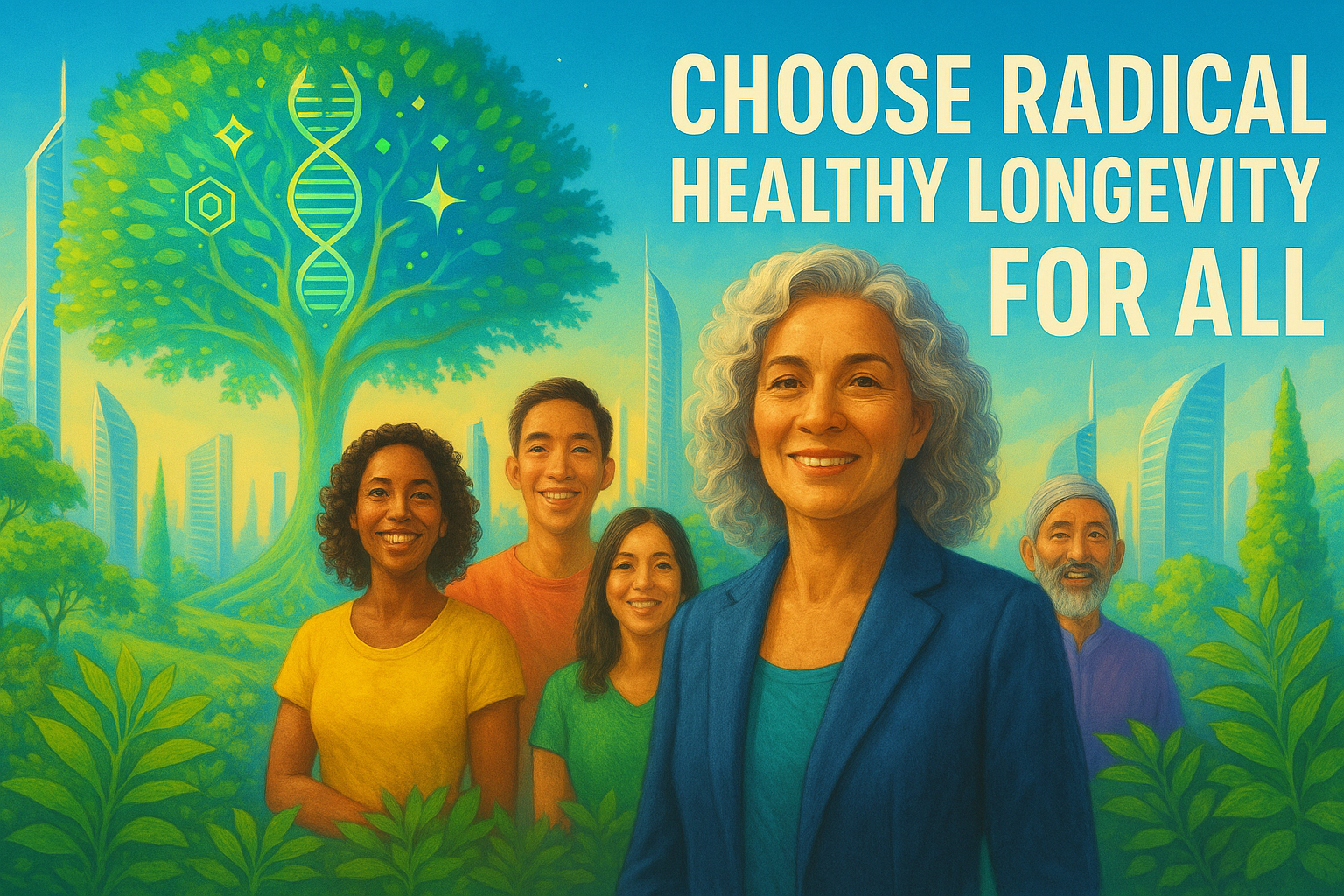
Choose radical healthy longevity for all

Filed under: aging, Economics, healthcare, politics, The Abolition of Aging, vision — Tags: — David Wood @ 9:04 pm

What do you think about the possibility of radical healthy longevity?

That’s the idea that, thanks to ongoing scientific progress, new medical treatments may become available, relatively soon, that enable people to remain as vibrant and healthy in their 80s, 90s, and beyond, as they were in their 20s and 30s.

It’s the idea that it may soon become possible to systematically repair or replace, on a regular basis, the various types of damage that tend to accumulate in our bodies over the decades – damage such as plaques, tangles, chronic inflammation, DNA mutations and epimutations, dysfunctional mitochondria, weakened immune function, crosslinks between macromolecules, cells that increasingly neglect their original function, and so on. This damage would be removed before it gives rise to chronic diseases.

It’s the idea, in other words, that aging as we know it – experienced as an inevitable deterioration – could be overcome by scientific innovations, well within the lifetimes of many people who are already adults.

It’s a divisive idea. Some people love it but others seem to hate it. Some people see it as liberating – as enabling lives of abundance. Others see it as being inherently unnatural, unethical, or unjust.

In more detail, I’ve noticed four widespread attitudes regarding this idea:

  1. It’s an unscientific fantasy. Radical healthy longevity won’t be possible any time soon.
  2. It will be the ultimate in inequality. Radical healthy longevity will be available only to a small minority of people; everyone else will receive much poorer medical treatment.
  3. It’s guaranteed that it will be a profound universal benefit. Everyone who is fortunate enough to live long enough to be alive at a threshold point in the future will benefit (if they wish) from low-cost high-quality radical healthy longevity.
  4. It’s an outcome that needs to be fought for. There’s nothing inevitable about the timing, the cost, the quality, or the availability of radical healthy longevity.

Before reading further, you might like to consider which of these four attitudes best describes you. Are you dismissive, fearful, unreservedly optimistic, or resolved to be proactive?

Who benefits?

To briefly address people inclined to dismiss the idea of radical healthy longevity: I’ve written at length on many occasions about why this idea has strong scientific backing. For example, see my article from May last year, “LEV: Rational Optimism and Breakthrough Initiatives”. Or consider my more recent Mindplex article “Ten ways to help accelerate the end of aging”. I won’t repeat these arguments in this article.

What is on my mind, however, is the question of who will benefit from radical healthy longevity. That’s a question that keeps on being raised.

For example, this is an extract from one comment posted under my Mindplex article:

If you want me to be an anti-aging influencer, the first thing I am going to ask you is “how is this going to be affordable?” How can you guarantee that I not serving only the agenda of the rich and the elite?

And here are some extracts from another comment:

Longevity is ruined by rich people and some elite politicians… Funding for anti-aging research tends to be controlled by those with deep pockets. In reality, the rich and powerful usually set the agenda, and I worry that any breakthroughs will only benefit an elite few rather than the general public… I’ve seen this play out in other areas of medicine and tech (big pharma and cancer are the best examples), where groundbreaking ideas are co-opted to serve market interests, leaving everyday people out in the cold.

The possible responses to these concerns mirror the four attitudes I’ve already listed:

  1. This discussion is pretty pointless, since relevant treatments won’t exist any time soon. If anything, this whole conversation is a regrettable distraction from spreading real-world health solutions more widely
  2. The concerns are perceptive, since there’s a long history of two-tier health solutions, compounding what is already a growing “longevity gap”
  3. The concerns are misplaced, since the costs of profound new health solutions will inevitably fall
  4. The concerns are a wake-up call, and should motivate all of us to ensure new treatments become widely available as soon as possible.

To restate the fourth response (which is the one I personally favour): we need to choose radical healthy longevity for all. We need to fight for it. We need to take actions to move away from the scenario “the ultimate in inequality” and toward the scenario “a guaranteed profound universal benefit”. That’s because both of these scenarios are credible possible futures. Each extrapolates from trends already in motion.

Extrapolating what we can already see

The scenario “a guaranteed profound universal benefit” takes inspiration from the observation that the cost of products and services often drops dramatically over time. That was the case with computers, smartphones, flat screen TVs, and many other items of consumer electronics. Even when prices remain high, lots of new features become included in the product – as in the case of motor cars. These improvements arise from economies of scale, from competition between different suppliers, and from the creative innovation arising.

But there’s no inevitability here. Monopolies or industry cartels can keep prices high. Strangleholds over IP (intellectual property) can hinder the kind of competition that would otherwise improve consumer experience. Consider the sky-high pricing of many medical procedures in various parts of the world, such as the United States. For example, research by Stacie Dusetzina of the University of North Carolina at Chapel Hill highlights how the costs in the United States of treatment of cancer by the newest pills rose sixfold over a recent 14-year period. That’s after taking account of inflation. And the inflation-adjusted cost of a millilitre of insulin, used in the treatment of diabetes, increased threefold over a recent 11-year period. Many other examples could be listed. In various ways, these examples all fit the well-known pattern that free markets can experience market failures.

A counter-argument is that, provided the benefits of new health treatments are large enough, it will become politically necessary for the state to intervene to correct any such market failures. Early application of the kinds of damage-repair and damage-removal treatments mentioned earlier, will result in a huge “longevity dividend“. The result will be to reduce the costs that would otherwise be incurred as age-related diseases take their toll (often with more than one co-morbidity complicating treatment options). According to the longevity dividend, it’s economically desirable to spend a smaller amount of money, earlier, as a preventive measure, than to have to pay much more money later, trying to alleviate widespread symptoms. No sensible political party could ignore such an imperative. They would surely be voted out of office. Right?

Uncertain politics

Alas, we need to reckon not only with occasional market failures but also with occasional political failures. There’s no guarantee that political leaders will take actions that benefit the country as a whole. They can be driven by quite different motivations.

Indeed, groups can seize power in countries and then hold onto it, whilst giving only lip service to the needs of the voters who originally elected them. Leaders of these groups may assert, beforehand, that voters will prosper in the wake of the revolution that they will bring. But by the way, for the success of this transformation, voters will need to agree that the revolutionary leaders can ride roughshod over normal democratic norms. These leaders will be above the law – 21st century absolute monarchs, in effect. But then, guess what, inflation remains high, unemployment surges, the environment is despoiled, freedoms are suspended, and protestors who complain about the turn of events are rounded up and imprisoned. Worse, due to the resulting crisis, future elections may be cancelled. As for universal access to radical healthy longevity, forget it! The voters who put the revolutionaries in power are now dispensable.

That’s only one way in which the scenario “the ultimate in inequality” could unfold. Less extreme versions are possible too.

It’s a future that we should all seek to prevent.

Choosing to be proactive

Is the answer, therefore, to urge a cessation of research into treatments that could bring about radical healthy longevity? Is the answer to allow our fears of inequality to block the potential for dramatic health improvements?

I disagree. Strongly. On the contrary, the answer is to advance several initiatives in parallel:

  • To increase the amount of public funding that supports research into such treatments
  • To avoid political conditions in which market failures grow more likely and more severe
  • To avoid social conditions in which political failures grow more likely and more treacherous

All three of these tasks are challenging. But all three of them make good sense. They’re all needed. Omit any one of these tasks and it becomes more probable that the future will turn out badly.

As it happens, all three tasks are choices to be proactive – choices to prevent problems early, rather than experiencing much greater pain if the problems are allowed to grow:

  • Problems from an accumulation of biological damage inside and between our cells, causing an escalation of ill-health
  • Problems from an accumulation of political damage, causing an escalation of economic dysfunction
  • Problems from an accumulation of societal damage, causing an escalation of political dysfunction

So, again I say, it is imperative that, rather than passively observing developments from the sidelines, we actively choose radical healthy longevity. That’s biological health, political health, and societal health.

Whether through advocacy, funding, research, or policy engagement, everyone has a role to play in shaping a profoundly positive future. By our actions, coordinated wisely, we can make a real difference to how quickly people around the world can be freed from the scourge of the downward spiral of aging-related ill-health, and can enjoy all-round flourishing as never before.

1 March 2025

€10 million, nine choices

Filed under: aging, rejuveneering — Tags: , , , — David Wood @ 3:09 pm

What’s the most humanitarian way to spend ten million euros?

Imagine that a rich acquaintance gifted you €10 million, and you wanted to have the biggest humanitarian impact from the way you spend that money. You gather some friends to review your options.

There are some reasonably straightforward ways you could spend that money, to improve people’s lives here and now:

  • Providing food for people who are malnourished
  • Obtaining shelter for people who are homeless or dispossessed
  • Purchasing medical vaccines, for people in an area where infectious diseases pose problems
  • Improving hygiene and sanitation.

But you might also consider tackling some root causes. As the saying goes, instead of buying fish for a group of people, you could teach them how to fish for themselves. Instead of paying for prosthetic limbs for people injured in war zones, you could in principle help negotiate a lasting peace settlement. Instead of covering medical costs for people who suffer chronic diseases arising from bad lifestyle choices, you could pay for effective prevention campaigns. And – and this is the big one – instead of trying to treat the individual diseases that become more prevalent as people become older – diseases such as cancer, heart failure, and dementia – the diseases from which most people die – you could tackle their common underlying cause, namely biological aging.

Now you might protest: solving these root causes is likely to cost a lot more than €10 million. And I would agree. So consider instead the possibility that your €10 million, spent well, could catalyse a whole lot more expenditure. The results of your own spending could alter people’s hearts and minds, around the world, which would in turn unleash a cascade of greater funding.

That’s what I want to explore. It’s the possibility that biological aging could be defeated, in the not-too-distant future, if society decides to apply sufficient resources for that goal. These resources would enable the development and deployment of low-cost high-quality rejuvenation treatments, available for everyone. In other words, a profoundly humanitarian outcome, removing vast amounts of human decline, degradation, frailty, pain, and suffering.

I realise that I’ve lost some of you by now. You may protest that solving biological aging isn’t possible, or that it’s somehow ethically wrong. But I suspect that, even in that case, there’s some interest, somewhere in the back of your mind, as to what it would take to create a world freed from biological aging. And if it turns out that spending €10 million wisely could hasten the arrival of such a world, maybe you’ll permit yourself to change your mind.

So, how could €10 million best be spent, to accelerate a societal tipping point, that would bring about a successful war on aging? People have different ideas on that question. I’m going to run through nine different ideas. Please let me know, in the comments, which one you would pick.

Option 1: Help develop special economic zones, sometimes called longevity states, that will encourage and support greater innovation with rejuvenation therapies, faster than is possible under existing FDA regulations and procedures.

Option 2: Target politicians, to get them to change their minds about the desirability of using public funds and resources to tackle biological aging; this could involve public Open Letters and petitions, or sharing research with politicians in language that is legislation-friendly.

Option 3: A more general coordinated public communications campaign, with improved messaging, including memes, songs, short stories, documentaries, wiki articles, Netflix series, and so on.

Option 4: A campaign targeted instead at High Net Worth Individuals – people with billions at their disposal – to push them beyond what’s been called the billionaires’ paradox, in which most billionaires fail to invest in the kind of research that could significantly extend the lifespans and healthspans of them and their family and friends.

Option 5: Efforts to transform existing healthspan initiatives, such as the “Don’t Die” project of Bryan Johnson, so that these initiatives move beyond lifestyle changes and instead support significant research into deeper rejuvenation treatments.

Option 6: Carry out rejuvenation experiments on relatively short-lived animals, such as mice, dogs, or C. elegans worms, where the results could be dramatic in just a few years.

Option 7: Support research into alternative theories of aging and rejuvenation, such as organ replacement and body replacement, or the body’s electrome.

Option 8: Don’t bother with any biological research, but plough the entire €10 million into improving AI systems, with the expectation that these AI systems will soon outpace human researchers in being able to solve aging.

Option 9: Provide a prize fund, with prizes being awarded to the individuals or teams who submit the best ideas for how to accelerate the comprehensive defeat of aging.

But which of the nine options would you personally choose? Or would you spend the money in yet another different way? Please let me know what you think!

My own choice, since you asked, would be for option 6, since I believe €10 million is likely to be sufficient to fund experiments with combination rejuvenation treatments for middle-aged mice, over the next 2-3 years, that could double the remaining lifespan of these mice. That’s similar to giving treatments to humans aged 50, and changing their expected lifespan from 80 years to 110 years. Wouldn’t that make the world sit up?

By the way, if you prefer a video version of this article, here it is:

2 May 2024

LEV: Rational Optimism and Breakthrough Initiatives

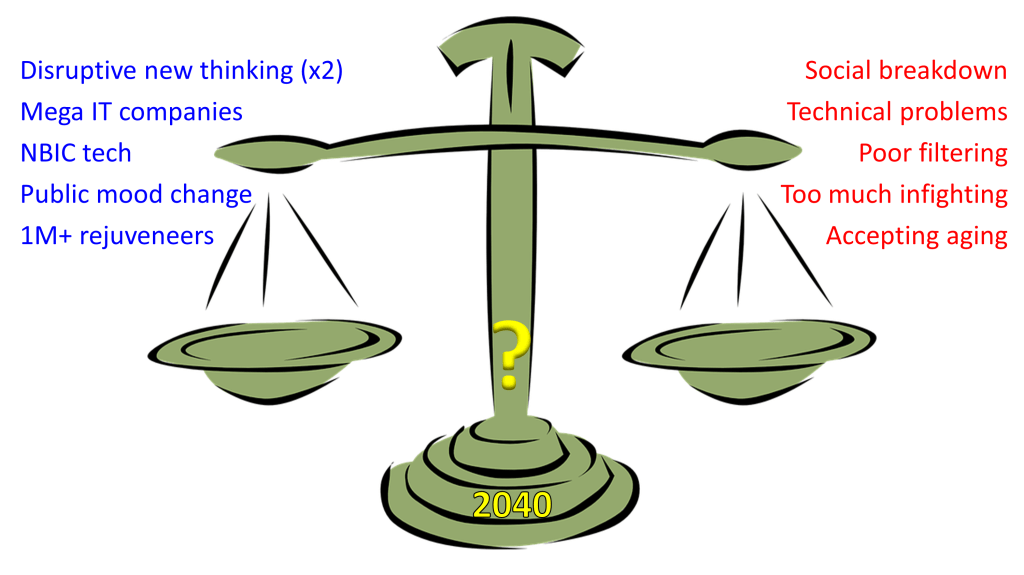
How likely is it that longevity escape velocity (LEV) will be achieved by, say, 2040?

In other words, how likely is it that, by 2040, biomedical interventions will be widely available that result in each adult becoming (if they wish) biologically younger – becoming systematically healthier and more resilient?

In that scenario, to give one illustration, adults who are aged 65 in 2050 will generally be healthier than they were at the age of 50 some 15 years earlier. They’ll be mentally sharper, with stronger muscles, a better immune system, cleaner arteries, and so on. That’s instead of them following the downward health spiral which has accompanied human existence throughout all of history so far – a spiral in which each additional year of life from middle age onward brings a decline in vitality and robustness, and an increase in the probability of death.

Members of the extended longevity community express a variety of degrees of optimism or pessimism on such questions. The pessimists highlight what they see as a lack of significant progress over recent decades: not a single person has reached the age of 120 this century. They also lament the apparent unfathomable complexity of the biological metabolism, and differences of opinion over theories of what actually causes aging. They may conclude that the chance of reaching LEV by 2040 is less than one percent.

In contrast to that pessimism, I believe there are strong grounds for optimism. That’s the subject of this essay.

To be clear, there’s no inevitabilism to my optimism. I offer a probability for success, rather than any certainty. Whether humanity makes it to LEV by 2040 still remains to be seen.

Theories of aging

It’s true that aging is complicated. However, we don’t need to understand all aspects of aging in order to reverse it. Nor do we need to map out a comprehensive diagram of all the relationships of cause and effect at the biochemical level. Nor to pinpoint all the interactions of every gene in every cell of the body. Nor to debate whether aging happens because of evolution or despite evolution. Nor whether aging is best understood from a “reductionist” perspective or a “holistic” perspective.

Instead, to my mind, we already understand enough. There are plenty of details still to be filled in, but we already understand the basic framework that can lead to the comprehensive reversal of aging.

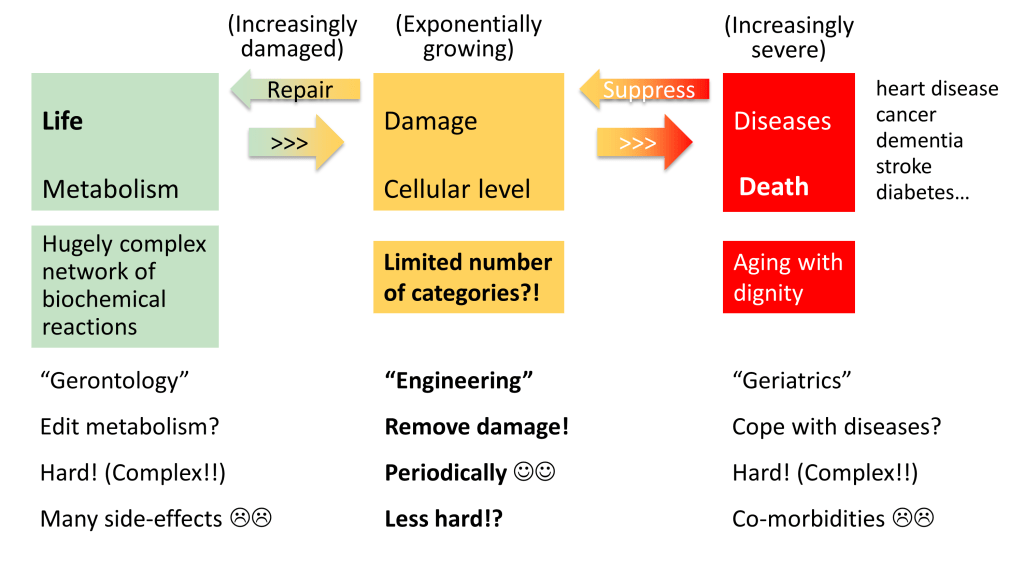
I’m referring to the damage repair approach to ending aging. This approach views aging as the accumulation of damage at the cellular and biomolecular levels throughout our bodies, with that damage in turn reducing the vitality of bodily subsystems. Moreover, this approach maintains that our biological vitality can be restored by repeatedly intervening to remove or repair that damage before it reaches a critical level.

What needs to be researched, therefore, is the set of interventions that can be developed and applied to remove or repair biological damage, without having adverse side-effects on overall metabolism.

These interventions need to be understood at an engineering level rather than at a detailed scientific level. We need to ascertain that such-and-such interventions result in given observable reductions in cellular or biomolecular damage. The way in which damage accumulates before being removed or repaired is of secondary concern.

This approach involves categorizing different types of damage, where each type of damage is associated with one or more potential mechanisms that could repair or remove it. Examples include:

  • A decline in the number or health of stem cells available – which could be addressed by the introduction of new stem cells
  • An accumulation of cells that are in a senescent state – which could be addressed by bolstering the innate biological mechanisms that normally break down these senescent cells
  • Damage to the long-lived proteins in the extra-cellular matrix that normally supports cells, with results such as the stiffening of arteries – which could be addressed by a variety of mechanisms including breaking crosslinks between adjacent proteins.

In this understanding, what needs to be done, to accelerate the advent of LEV, is to:

  • Identify and research mechanisms that have the potential to remove or repair aspects of the damage
  • Determine how these mechanisms might be applied in practice
  • Consider and monitor for potential side-effects of these mechanisms, and, as required, design modifications or alternatives to them
  • Consider and monitor for potential interactions between various such mechanisms.

This program was first suggested over twenty years ago. It was the subject of a major book published in 2007, Ending Aging: The Rejuvenation Breakthroughs that Could Reverse Human Aging in Our Lifetime, and it has been explored in a series of academic conferences held at various times from 2003 onward in Queens’ College Cambridge, San Francisco, Berlin, and Dublin. (Since you ask, the next one in that series is taking place in Dublin from 13-16 June.)

My own optimism that LEV might be achieved by 2040 is based on my assessment of the viability of this damage repair approach. In turn, that’s because I see:

  • A wide set of potential damage repair interventions that deserve further study
  • Early encouraging signs that damage repair can extend healthy lifespans in various species
  • A general pattern that slow progress in a field can transition into a new phase with much faster progress
  • Ways in which “breakthrough initiatives” can trigger such a phase transition for the project to achieve LEV.

I’ll now turn to each of these four points in sequence.

Damage repair mechanisms – plenty to explore

There are five basic sources of ideas for mechanisms to repair or remove damage at the cellular and biomolecular levels throughout the body:

  1. Identifying and improving the repair mechanisms that already work within the human body when we are younger – before these mechanisms lose their effectiveness
  2. Learning from the special self-repairing features of the small proportion of humans who are “superagers” in the sense that they reach the age of 95 without having suffered any of the usual age-related diseases such as heart disease, cancer, dementia, or stroke
  3. Learning from the fascinating self-repairing features of numerous species which avoid various age-related diseases, and which can retain their vitality for decades longer than other species with whom they share many other characteristics
  4. Learning from other regenerative features that various species possess, such as the regrowth of damaged limbs or organs, as well as the birth of a baby whose cells are aged zero from parents who can be many decades older
  5. New interventions that don’t exist anywhere in nature, but which can be introduced as a result of scientific analysis and engineering innovation (relatively simple examples are blood transfusions, and stents that can repair a narrowed or blocked blood vessel; more complicated examples involve nanobots and 3D printing).

Progress so far

Here are some pointers to descriptions of various results obtained so far from investigations of possible damage repair interventions – disappointments as well as successes:

Some conclusions from this data are uncontentious:

  • None of these treatments, so far, have resulted in animals passing the LEV threshold
  • The extension of healthy lifespan achieved in these trials is generally less than 50%, and is usually significantly less than that
  • Results obtained in experiments with shorter-lived animals, such as mice and rats, often do not translate into similar results with humans (or have not done so yet).

These conclusions would appear to bolster the case for pessimism mentioned earlier. However, they are by no means the entire story:

  • The various trials indicate that at least some rejuvenation can be engineered, and that there are multiple ways of doing so
  • Trials of combinations of different rejuvenation treatments (which might be expected to have more substantial results) are still at an early stage
  • Nothing like a proof of impossibility has been found, or even seriously suggested
  • The total amount of resources dedicated to this field is far below that in many other fields of scientific research; the field might, plausibly, be expected to make faster improvements if it gains more support.

Key to faster progress will be the removal of roadblocks. That’s the subject of the remainder of this essay.

The possibility of a phase change

Sometimes a field of technology or other endeavour remains relatively stagnant for decades, apparently making little progress, before bursting forward in a major new spurt of progress. Factors that can cause such a tipping point to such a phase change include:

  • The availability of re-usable tools (such as improved microscopes, molecular assembly techniques, diagnostic tests, or reliable biomarkers of aging)
  • The availability of important new sets of data (such as population-scale genomic analyses)
  • The maturity of complementary technologies (such as a network of electrical recharging stations, to allow the wide adoption of electric vehicles; or a network of wireless towers, to allow the wide adoption of wireless phones)
  • Vindication of particular theoretical ideas (such as the paramount importance of mechanisms of balance, in the earliest powered airplanes; or the germ theory for the transmission of infectious diseases)
  • Results that demonstrate possibilities which previously seemed beyond feasibility (such as the first time someone ran a mile in under four minutes)
  • Fear regarding a new competitive threat (such as the USSR launching Sputnik, which led to wide changes in the application of public funding in the United States)
  • Fear regarding an impending disaster (such as the spread of Covid-19, which accelerated development of vaccines for coronaviruses)
  • The availability of significant financial prizes (such as those provided by the XPrize)
  • A change in the attitude of researchers about the attractiveness of working in the field
  • A change in the public narrative regarding the importance of the field
  • The different groups who are all trying to find solutions to problems in the field finding and committing to a productive new method of collaboration on what turns out to be core issues.

When such factors apply – especially in combination – it can transform the pace of a change in a field from “linear” or “incremental” to “exponential” or “disruptive”, meaning that progress which previously was forecast as requiring (say) 100 years of research might actually happen within (say) 15 years.

That’s a general pattern. Now let’s consider how it can apply to accelerating progress toward LEV.

The existing roadblocks

Based on my observations of the longevity community stretching back nearly twenty years, here are my own assessment of the roadblocks which are presently hindering progress toward LEV:

  1. Lack of funding for some of the experiments that would produce important new data, since commercial interests such as VCs see little prospect of them earning a financial return from supplying that funding.
  2. Some people who are in a position to supply funding to support important experiments choose not to do so, because they are dominated by a mindset (sometimes called “longevity myths” or the “pro-aging trance”) that it’s wrong to support significantly longer lifespans.
  3. More broadly: society as a whole assigns insufficient priority to the comprehensive prevention and reversal of age-related diseases.
  4. Some potential supporters are deterred by what they perceive as irresponsible or untrustworthy aspects of the longevity field (snake-oil solutions, uncritical claims, tedious infighting).
  5. There is disagreement or confusion about which experiments are most important; as a result, available funds are being misdirected into, for example, less useful “lifestyle research”.
  6. Related: there is no agreed list of which experiments (or other research) should be conducted next, once additional funds become available.
  7. In the absence of biometrics that are accepted as being good measurements of overall biological aging (as opposed to measuring only an aspect of biological aging), it’s hard to know whether treatments increase the life expectancy of any long-lived animal.
  8. It’s likely that pools of data already in existence contain important insights related to aging and its possible alleviation – namely biological and other health data about individuals as they age and pass through different experiences and treatments. However, much of this data is kept in proprietary or private databases and isn’t made available for scrutiny by other researchers. Especially with the greater power nowadays of data analysis tools such as deep learning, the potential for open analysis isn’t being achieved. (This is another example where commercial or personal concerns are preventing the development of public goods from which everyone would benefit.)

Given this analysis, let’s look at four initiatives that could coalesce to cause the kind of phase transition discussed above.

The breakthrough initiatives

From one perspective, the breakthrough initiatives involve biomedical reengineering: projects such as the RMR (Robust Mouse Rejuvenation) study of combination interventions, designed and managed by the LEV Foundation. These are projects which have the potential to make the whole world wake up and pay attention.

But from another perspective, what most needs to change is the availability and application of sufficient funding to allow many such biomedical engineering projects to proceed in parallel. This can be termed the rejuvenation financial reengineering initiative – the initiative to direct more of the world’s vast financial resources toward these projects.

Taking one step further back, the financial reengineering will be facilitated by perhaps the most important initiative of all – namely narrative reengineering, altering the kinds of stories people in society tell themselves about the desirability of the comprehensive prevention and reversal of age-related diseases. Whereas today many people have an underlying insight that aging and death are deeply regrettable, they manage to persuade themselves (and each other) that there’s nothing that can be done about these trends, so that the appropriate response is to “accept what cannot be changed”. That is, they lack “the courage to change what can be changed”, in turn (to complete the citation of the so-called “serenity prayer” of Reinhold Niebuhr) because they lack the wisdom (or awareness) that such change is possible.

In parallel, important elements of community reengineering are required:

  • To clarify which experiments and research have the biggest potential for dramatic results
  • To avoid behaviours or statements which alienate or deter important potential supporters
  • To reduce amounts of wasteful duplication and “noise”
  • To develop and publicise meaningful quantitative metrics of progress toward LEV
  • To share more openly both the successes and the failures of experiments conducted, to allow more effective collaborative learning.

The breakthrough narratives

Some observers are pessimistic about any changes any time soon in the public narrative about the desirability of reaching LEV. These observers say they have been awaiting such a change for years or even decades, without it happening.

Part of the answer is that experimental results will make people pay attention. When middle-aged mice have their remaining life expectancy doubled – and then when similar treatments become available for middle-aged pet dogs – it is going to cause a large number of “road to Damascus” conversion experiences. People will set aside their former proclaimed “acceptance” of aging and death, and will instead start to clamor for rejuvenation treatments to be made available for humans too, as soon as possible.

But another part of the answer is to develop new themes within the public conversation related to aging and death. If these new themes have sufficient innate interest, they may develop a momentum of their own.

Here are some of the potential “breakthrough narratives” that I have in mind:

  1. Building on top of the latest “longevity dividend” and “evergreen society” arguments in the new book by the economist Andrew Scott, The Longevity Imperative: How to Build a Healthier and More Productive Society to Support Our Longer Lives, to highlight the broader economic and social benefits of biorejuvenation treatments
  2. The fascinating learning that can be obtained from looking more closely at the damage repair mechanisms already utilized by some “superaging” animal species; more and more of these mechanisms are being discovered and explored, and deserve greater publicity.
  3. Additional learning that can be obtained from further study into human superagers. Note that, for evolutionary reasons, it is likely that different superaging families around the world employ different biological damage repair mechanisms.
  4. The RMR narrative that the particularly useful data to collect is that from the combination of multiple treatments administered in mid-life; as this data accumulates, it is likely to give rise to lots of new theories about interactions between these treatments.
  5. The attractiveness of extending the RMR projects (for the robust rejuvenation of middle-aged mice) to similar investigations that might be called RDR (focused on dogs) and RSR (focused on simians, that is, monkeys and apes).
  6. The ups and downs of the various teams that are entering the XPrize Healthspan – a contest that can be seen as promoting an “RHR” extension (the ‘H’ for “human) to the RMR / RDR / RSR progression mentioned above
  7. A new analysis to supersede the existing “hallmarks of aging” diagrams, with a richer model of the interactions between different types of aging damage and the different possible damage repair mechanisms.
  8. Exploration of some “left field” rejuvenation interventions, such as those of Jean Hébert about growing and using replacement organs (including gradual replacement of parts of our brains), and those of Michael Levin about the ways in which the electrome can trigger biorejuvenation.
  9. The new possibilities that are continuing to emerge that take advantage of CRISPR-style genetic reprogramming and the reprogramming of epigenetics by Yamanaka factors or other means.
  10. More powerful AI platforms can enable faster advances in fields of science than were previously expected; examples include AlphaFold by DeepMind and the so-called menagerie of AI models utilised by Insilico Medicine
  11. Further championing of the ideas of anti-death philosopher Ingemar Patrick Linden from his book The Case Against Death.
  12. Engaging new video versions of some of the above narratives, in the manner of the CGP Grey video of Nick Bostrom’s allegory “Fable of the Dragon Tyrant” and those in the “Aging” YouTube playlist of Andrew Steele.

A probability, not a certainty

As I said earlier, there’s nothing inevitable about the longevity community experiencing the kind of tipping point and phase transition that I have described above.

Instead, I estimate the probability of humanity reaching LEV by 2040 to be less than 50%, although more than 25%. That’s because there are plenty of things that can go wrong along the way:

  • Distractions and loss of focus
  • Too much infighting and lack of constructive collaboration
  • A decline in the understanding and use of scientific methods
  • The field becomes dominated by pseudoscience, uncritical hero-worship, snake-oil, or wishful thinking
  • A growth of societal irrationality and preference for conspiracy thinking
  • An adverse change in the global political and geopolitical environment
  • The triggering of one or more of what I have called “Landmines”.

Which set of forces will prevail – the ones highlighted by the optimists, or those highlighted by the pessimists?

Frankly, it’s still too early to tell. But each of us can and should help to influence the outcome, by finding the roles where we can make the biggest positive impact.

18 December 2021

My encounter with a four-armed robot

Filed under: aging, healthcare, robots — Tags: , , — David Wood @ 8:45 pm

I didn’t actually see the robot. My mind had already been switched off, by anaesthetists, ahead of my bed being wheeled into the operating theatre. It was probably just as well.

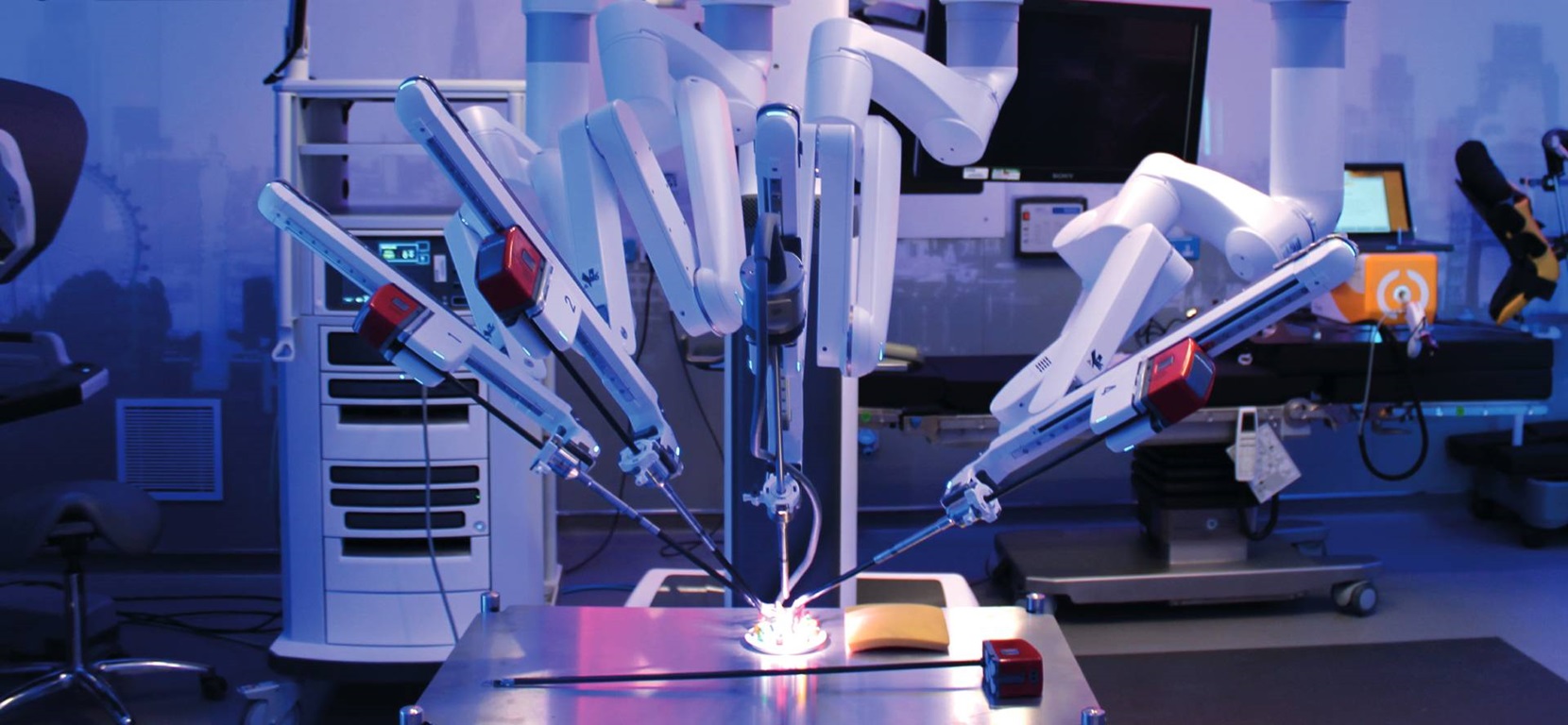
Image source: HCA Healthcare

Later, when my mind had restarted, and I was lying in recovery in my hospital ward, I checked. Yes, there were six small plasters on my abdomen, covering six small wounds (“ports”), that the urology surgeon had told me he would create in order for the da Vinci robot to work its magic.

The point of the operation was to remove the central core of my prostate – an organ that sits toward the back of the body and which is difficult to access.

The prostate wraps around the urethra – the channel through which urine flows from the bladder into the penis. The typical size of a prostate for a man aged twenty is around 20 ml. By age sixty this may have doubled. The larger the prostate, the greater the chance of interference with normal urine flow. In my own case, I had experienced various episodes over the last ten years when urination was intermittently difficult, but matters always seemed to right themselves after a few days. Then at the beginning of September, I found I couldn’t pass any urine. What made matters more complicated was that I was away from home at the time, on a short golfing holiday in Wiltshire. The golf was unusually good, but my jammed up bladder felt awful.

Following an anxious call to the NHS 111 service, I was admitted to the Royal United Hospital in Bath where, after a couple of false starts, an indwelling catheter was inserted through my urethra. Urine gushed out. I felt relieved as never before.

In a way, that was the easy bit. The harder question was what long-term approach to take.

A six-week trial of a muscle-relaxant drug called Tamsulosin had no impact on my ability to pass urine unaided. Measuring the size of my prostate via a transrectal ultrasound procedure clarified options: it was a whopping 121 ml.

The radiologist said “This is not the largest prostate I have ever seen”, but it was clear my condition was well outside the usual range. Not only would changes in medication or diet be very unlikely to produce a long-term solution for me. But most of the more standard prostate operations (there are a large family of possibilities, as I discovered) would not be suitable for a prostate as large as mine. The risks of adverse side-effects would be too large, as well as recurrence of prostate pressure in the years to come.

That led my consultant to recommend what is called a robotic-assisted simple prostatectomy. The “simple” is in contrast to the “radical” option often recommended for men suffering from prostate cancer. In a simple prostatectomy, the outer part of the prostate remains in place, along with nerve and other connections.

Over several hours, whilst my mind was deanimated, the robotic arms responded to the commands issued by the human surgeon. Some of the ports were used to introduce gas (CO2) into my abdomen, to inflate it, creating room for the robotic arms to move. Some ports supported illumination and cameras. And the others channelled various cutting and reconstruction tools. By the end, some 85% of my prostate had been removed.

It might sound cool, for a technology advocate like myself to receive an operation from a high-precision robot. But in reality, it was still a miserable experience, despite the high-calibre professional support from medical staff. The CO2 left parts of my body unexpectedly swollen and painful. And as time passed, other swellings known as oedemas emerged – apparently due to fluid.

I learned the hard way that I needed to take things slow and gentle as I recovered. In retrospect, it was a mistake for me to walk too far too soon, and to take part in lengthy Zoom calls. My sleep suffered as a result, with shivering, sweating, coughing fits, and even one black-out when I went to the bathroom and felt myself about to pass out. I had the presence of mind to lower my head quickly before the lights went out altogether. I came to my senses a few moments later, with my upper torso sprawled in the bath, and my lower body hanging over the edge. Thank goodness no serious damage ensued from that mini collapse. The only good outcome that night was when I took a Covid test (because of the coughing) and it came out negative.

Ten days later, things are closer to normal again. It’s wonderful that my internal plumbing works smoothly again, under my control. But I’m still being cautious about how much I take on at any time.

(If you’re waiting for me to reply to various emails, I’ll get round to them eventually…)

More good news: tests on the material removed from my body have confirmed that the growth was “benign” rather than cancerous. My wounds are healing quickly, and I am almost weaned off painkillers.

I have no regrets about choosing this particular surgical option. It was a good decision. Hopefully I’ll be playing golf again some time in January. I am already strolling down some of the fairways at Burhill Golf Club, carrying a single club in my hand – a putter. I drop a golf ball when I reach the green. Sometimes I knock the ball in the hole in two putts, or even just one. And sometimes it’s three putts, or even more. But the fresh air and gentle exercise is wonderful, regardless of the number of putts.

The bigger lesson for me is a message I often include in my presentations: prevention is better than cure. A stitch in time saves nine.

Earlier attention to my enlarging prostate – either by a change of diet, or by taking medicines regularly – may well have avoided all the unpleasantness and cost of the last few months.

As for the prostate, so also for many other parts of the body.

This year, I’ve been thinking more and more about the good health of the mind and the brain. With my reduced mobility over the last few months, I’ve had time to catch up with some reading about brain rewiring, mental agility and reprogramming, the role and content of consciousness, and ways in which people have recovered from Alzheimer’s.

Once again, the message is that prevention is better than cure.

If you’re interested in any of these topics, here’s an image of some books I have particularly enjoyed.

3 September 2021

Aging, slowing down, becoming a cyborg

Here’s a personal note. I’ve had to change quite a few of my plans, due to an unexpected medical issue.

(It’s nothing to do with Covid. The details are below, for readers with a stomach for indelicate topics.)

That issue completely disrupted my activities yesterday and the day before, and it is likely to cause further disruptions in the weeks and months ahead – depending on how my body responds to various treatments.

In any case, I’m going to have to slow down a bit. I may need to cancel some of my provisional travel plans, and spend less time in front of screens and keyboards.

Please accept my apologies in advance if you’re waiting to hear from me about something, and I seem to be unduly slow in responding.

I said my medical issue was “unexpected”, but that’s not the whole story.

I’ve known for some time that potential danger was building up in my body.

It’s an aspect of aging. Our bodies perform remarkably well while we’re in our youth, but over time, various sorts of damage and dysfunction start to build up.

In early years, that damage doesn’t matter much. The body is healthy enough to carry out repairs, and to produce workarounds to compensate for the decline in performance.

Eventually, however, the dysfunction becomes too severe, and results in greater amounts of harm, disease, frailty, and (in due course) death.

That’s why, for example, human mortality (along with the mortality of many other species) accelerates exponentially over time.

If you analyse the data from the UK’s National Life Tables for how many people at any particular age, you’ll find the following:

  • A ten year old has only one chance in around 10,000 of dying before their next birthday
  • A 35 year old has one chance in around 1,000 of dying before their next birthday
  • A 60 year old has one chance in around 100 of dying before their next birthday
  • An 85 year old has one chance in around 10 of dying before their next birthday.

(I did that particular analysis a few years ago. An analysis of the most recent life tables data may show slight differences.)

You’ll spot the pattern.

The pattern isn’t exact. (Otherwise no 110 year old would ever reach the age of 111. Which is what an extrapolation of the previous figures would suggest.)

But it holds to a first approximation. It was first stated in 1825 by London-based actuary and mathematician Benjamin Gompertz, and is sometimes expressed as follows: After the age of around 35, human mortality doubles every eight years.

And it’s plausible that what underlies this observed trend is a gradual increase in damage throughout the biological structures of the body – including damage in those aspects of our biology responsible for repair and regeneration.

That’s the general pattern. One specific example involves the prostate organ. Over time, in some men, the prostate grows and grows, to the extent that it constricts the urethra which passes through it. That constriction slows the flow of urine from the bladder to the outside world.

(As I said, this is an indelicate subject. But it can in some cases become a matter of life and death.)

And that’s what has happened to me.

I’ve known for some time that my prostate had grown large, and was interfering with my “plumbing”.

I now regret that I didn’t pay more attention to that growing risk. I was too easily reassured by observing that the problem seemed to wax and wane. I remember hearing that, for many people, the issue remains tolerable throughout their life. Indeed, the NHS webpage on the topic starts as follows (my emphasis):

Benign prostate enlargement (BPE) is the medical term to describe an enlarged prostate, a condition that can affect how you pee (urinate).

BPE is common in men aged over 50. It’s not a cancer and it’s not usually a serious threat to health.

I knew there were medicines that might help, such as Tamsulosin (brand name “Flomax Relief”) – but that they had side-effects.

So I gave the matter little attention.

But two days ago, my problems passing urine suddenly became a lot worse. I had a constant desire to “go”, but an inability to produce more than the tiniest trickle (after a lot of, err, stressing and straining).

To complicate matters, I was away from home. With my wife and two other couples, I was meant to be enjoying a three day golfing holiday in the picturesque Wiltshire countryside.

Yesterday morning, having failed to reach my own GPs online or by phone, I called the NHS 111 service. To cut to the chase, I was advised to get to a hospital as soon as possible. They made an appointment for me at a hospital in Bath, around 30 minutes car journey distant. And soon after that, I was being examined by an excellent team of NHS staff.

When someone’s bladder is full, it’s normally around 400 to 600 ml in volume. Ultrasound scans showed there was around 900 ml of urine in my bladder. No wonder I was feeling so uncomfortable.

I hadn’t expected to be in hospital that day, but thank goodness I was there.

I’ll skip over all the phases of analysis and treatment, and just mention that I am now slightly more of a cyborg than before. I’ve had a cleverly engineered piece of plastic inserted into my body, allowing me to drain my bladder at will, using a tap at the end of a tube which protrudes. It’s called an indwelling catheter.

It’s most likely only a temporary solution, until my response to Tamsulosin (the drug mentioned earlier) is assessed.

For the time being, my mobility is restricted, until I get used to this new attachment.

And my mind is, how to put it, rather shaken at the turn of events.

But things could have been a great deal worse. I’m deeply grateful for the rapid, painstaking response of the dozen or so members of the Royal United Hospital Bath who took such good care of me.

In moments of lucidity during these hours, I reflected on how much we all depend on each other. Rugged individualism only goes so far.

In the meantime, I’ll move forward with at least some of my projects, including the online London Futurists events already scheduled. They include one on (guess what?) aging, in two weeks time, and one on “Cryptocurrencies for profound good?” taking place tomorrow.

Opening image credit: Wolfgang Eckert from Pixabay.

29 December 2020

The best book on the science of aging in the last ten years

Filed under: aging, books, rejuveneering, science, The Abolition of Aging — Tags: , — David Wood @ 10:44 am

Science points to many possibilities for aging to be reversed. Within a few decades, medical therapies based on these possibilities could become widespread and affordable, allowing all of us, if we wish, to remain in a youthful state for much longer than is currently the norm – perhaps even indefinitely. Instead of healthcare systems continuing to consume huge financial resources in order to treat people with the extended chronic diseases that become increasingly common as patients’ bodies age, much smaller expenditure would keep all of us much healthier for the vast majority of the time.

Nevertheless, far too many people fail to take these possibilities seriously. They believe that aging is basically inevitable, and that people who say otherwise are deluded and/or irresponsible.

Public opinion matters. Investments made by governments and by businesses alike are heavily influenced by perceived public reaction. Without active public support for smart investments in support of the science and medicine that could systematically reverse aging, that outcome will be pushed backwards in time – perhaps even indefinitely.

What can change this public opinion? An important part of the answer is to take the time to explain the science of aging in an accessible, engaging way – including the many recent experimental breakthroughs that, collectively, show such promise.

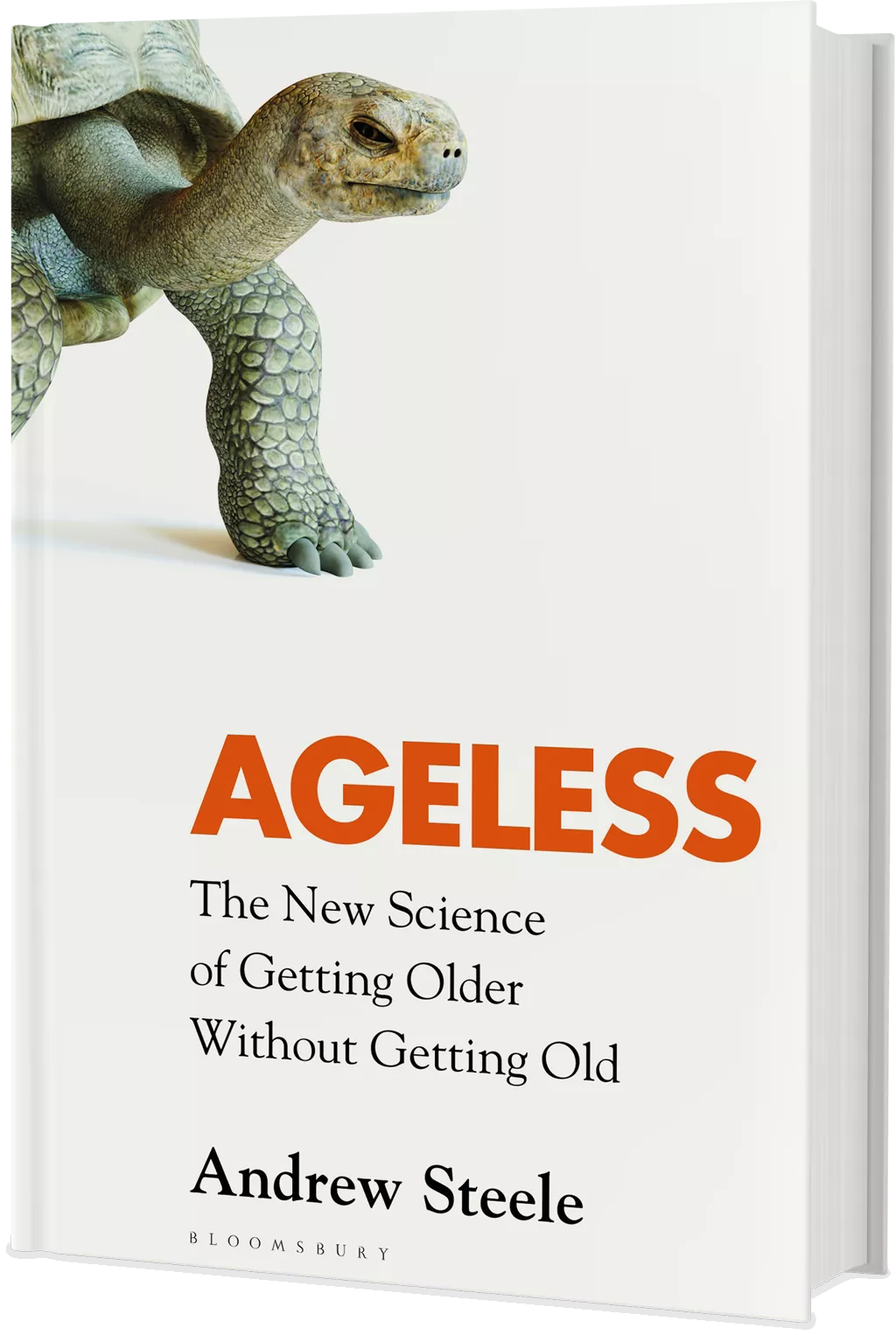
That’s exactly what Dr Andrew Steele accomplishes in his excellent book Ageless: The new science of getting older without getting old.

The audio version of this book became available on Christmas Eve, narrated by Andrew himself. It has been a delight to listen to it over the intervening days.

Over the last few years, I’ve learned a great deal from a number of books that address the science of aging, and I’ve been happy to recommend these books to wider audiences. These include:

But I hope that these esteemed authors won’t mind if I nominate Andrew Steele’s book as a better starting point into the whole subject. Here’s what’s special about it:

  • It provides a systematic treatment of the science, showing clear relationships between the many different angles to what is undeniably a complex subject
  • The way it explains the science seems just right for the general reader with a good basic education – neither over-simplified or over-dense
  • There’s good material all the way through the book, to keep readers turning the pages
  • The author is clearly passionate about his research, seeing it as important, but he avoids any in-your-face evangelism
  • The book avoids excessive claims or hyperbole: the claims it makes are, in my view, always well based
  • Where research results have been disappointing, there’s no attempt to hide these or gloss over them
  • The book includes many interesting anecdotes, but the point of these stories is always the science, rather than the personalities or psychologies of the researchers involved, or clashing business interests, or whatever
  • The information it contains is right up to date, as of late 2020.

Compared to other research, Ageless provides a slightly different decomposition of what is known as the hallmarks of aging, offering ten in total:

  1. DNA damage and mutations
  2. Trimmed telomeres
  3. Protein problems: autophagy, amyloids and adducts
  4. Epigenetic alterations
  5. Accumulation of senescent cells
  6. Malfunctioning mitochondria
  7. Signal failure
  8. Changes in the microbiome
  9. Cellular exhaustion
  10. Malfunction of the immune system

As the book points out, there are three criteria for something to be a useful “hallmark of aging”:

  1. It needs to increase with age
  2. Accelerating a hallmark’s progress should accelerate aging
  3. Reducing the hallmark should decrease aging

The core of the book is a fascinating survey of interventions that could reduce each of these hallmarks and thereby decrease aging – that is, decrease the probability of dying in the next year. These interventions are grouped into four categories:

  1. Remove
  2. Replace
  3. Repair
  4. Reprogram

Each category of intervention is in turn split into several subgroups. Yes, the treatment of aging is likely to be complicated. However, there are plenty of examples in which single interventions turned out to have multiple positive effects on different hallmarks of aging.

There are a couple of points where some readers might quibble with the content, for example regarding dietary supplements, or whether the concept of group selection can ever be useful within evolutionary theory.

However, my own presentations on the subject of the abolition of aging will almost certainly evolve in the light of the framework and examples in Ageless. I’m much the wiser from reading it.

Here’s my advice to anyone who, like me, believes the subject of reversing aging is important, and who wishes to accelerate progress in this field:

  • Read Ageless with some care, all the way through
  • Digest its contents and explore the implications, for example via discussion in online groups
  • Recommend others to read it too.

Ideally, a sizeable proportion of the book’s readers will alter their own research or other activity, in order to assist the projects covered in Ageless.

Finally, a brief comparison between Ageless and the remarkable grandfather book of this whole field: Ending Aging: The Rejuvenation Breakthroughs That Could Reverse Human Aging in Our Lifetime, authored by Aubrey de Grey and Michael Rae. Ending Aging was published in 2007 and remains highly relevant, even though numerous experimental findings and new ideas have emerged since its publication. There’s a deep overlap in the basic approach advocated in the two books. Both books are written by polymaths who are evidently very bright – people who, incidentally, did their first research in fields outside biology, and who brought valuable external perspectives to the field.

So I see Ageless as a worthy successor to Ending Aging. Indeed, it’s probably a better starting point for people less familiar with this field, in view of its coverage of important developments since 2007, and some readers may find Andrew’s writing style more accessible.

1 October 2019

“Lifespan” – a book to accelerate the emerging paradigm change in healthcare

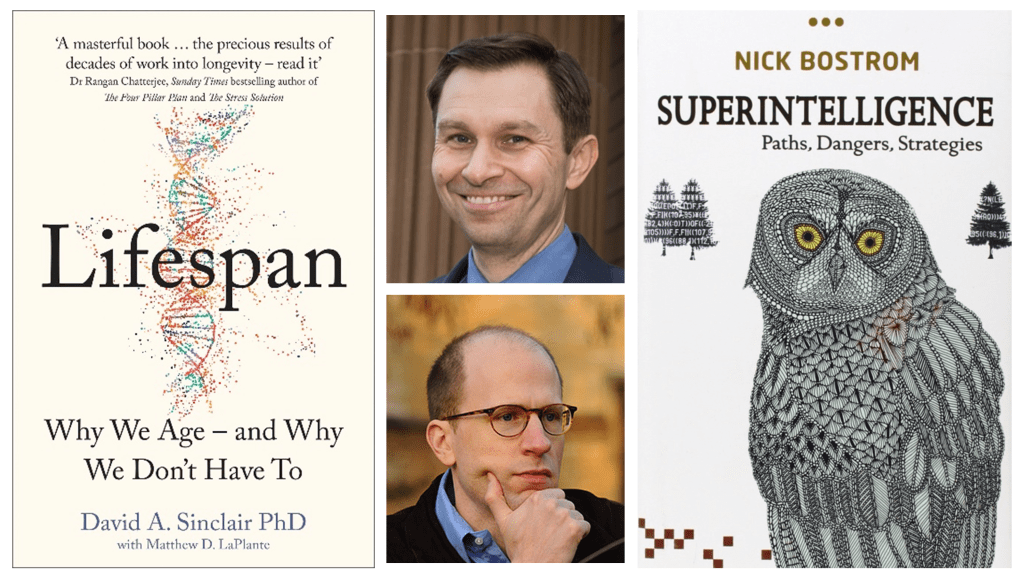
Harvard Medical School professor David Sinclair has written a remarkable book that will do for an emerging new paradigm in healthcare what a similarly remarkable book by Oxford University professor Nick Bostrom has been doing for an emerging new paradigm in artificial intelligence.

In both cases, the books act to significantly increase the tempo of the adoption of the new paradigm.

Bostrom’s book, Superintelligence – subtitled Paths, Dangers, Strategies – caught the attention of Stephen Hawking, Bill Gates, Elon Musk, Barack Obama, and many more, who have collectively amplified its message. That message is the need to dramatically increase the priority of research into the safety of systems that contain AGI (artificial general intelligence). AGI will be a significant step up in capability from today’s “narrow” AI (which includes deep learning as well as “good old fashioned” expert systems), and therefore requires a significant step up in capability of safety engineering. In the wake of a wider appreciation of the scale of the threat (and, yes, the opportunity) ahead, funding has been provided for important initiatives such as the Future of Life Institute, OpenAI, and Partnership on AI. Thank goodness!

Sinclair’s book, Lifespan – subtitled Why We Age, and Why We Don’t Have To – is poised to be read, understood, and amplified by a similar group of key influencers of public thinking. In this case, the message is that a transformation is at hand in how we think about illness and health. Rather than a “disease first” approach, what is now possible – and much more desirable – is an “aging first” approach that views aging as the treatable root cause of numerous diseases. In the wake of a wider appreciation of the scale of the opportunity ahead (and, yes, the threat to society if healthcare continues along its current outdated disease-first trajectory), funding is likely to be provided to accelerate research into the aging-first paradigm. Thank goodness!

Bostom’s book drew upon the ideas of earlier writers, including Eliezer Yudkowsky and Ray Kurzweil. It also embodied decades of Bostrom’s own thinking and research into the field.

Sinclair’s book likewise builds upon ideas of earlier writers, including Aubrey de Grey and (again) Ray Kurzweil. Again, it also embodies decades of Sinclair’s own thinking and research into the field.

Both books are occasionally heavy going for the general reader – especially for a general reader who is in a hurry. But both take care to explain their thinking in a step-by-step process. Both contain many human elements in their narrative. Neither books contain the last word on their subject matter – and, indeed, parts will likely prove to be incorrect in the fullness of time. But both perform giant steps forwards for the paradigms they support.

The above remarks about the book Lifespan are part of what I’ll be talking about later today, in Brussels, at an open lunch event to mark the start of this year’s Longevity Month.

Longevity Month is an opportunity to celebrate recent progress, and to anticipate faster progress ahead, for the paradigm shift mentioned above:

  • Rather than studying each chronic disease separately, science should prioritise study of aging as the common underlying cause (and aggravator) of numerous chronic diseases
  • Rather than treating aging as an unalterable “fact of nature” (which, by the way, it isn’t), we should regard aging as an engineering problem which is awaiting an engineering solution.

In my remarks at this event, I’ll also be sharing my overall understanding of how paradigm shifts take place (and the opposition they face):

I’ll run through a simple explanation of the ideas behind the “aging-first” paradigm – a paradigm of regular medical interventions to repair or remove the damage caused at cellular and inter-cellular levels as a by-product of normal human metabolism:

Finally, I’ll be summarising the growing momentum of progress in a number of areas, and suggesting how that momentum has the potential to address the key remaining questions in the field:

In addition to me, four other speakers are scheduled to take part in today’s event:

It should be a great occasion!

20 January 2019

Rejuvenation. Now. Easier than we think?

Filed under: aging, books — Tags: , , , , — David Wood @ 11:25 pm

Chronic poor health is caused by the accumulation of biological damage in our body. Eventually the damage builds to such an extent that it kills us. Before reaching that nadir, the damage weakens us, slows us down, and makes us more vulnerable to all kinds of illness.

Accordingly, if we want more vitality, for longer, we need to find therapies that undo the biological damage in our bodies. And we need to apply these therapies on a regular basis.

These two paragraphs summarise a view about health that is becoming increasingly common these days. One of the champions of this “find therapies to fix the damage” school is the biomedical gerontologist Aubrey de Grey – chief science officer of the SENS Research Foundation. I write about this approach in, for example, Chapter 8, “Towards an abundance of health” of my own most recent book, “Sustainable Superabundance”.

The kinds of damage-repair therapies that transhumanist tend to talk about involve breakthrough new technologies – such as stem cell therapies, manipulation of genetics and epigenetics, nanotechnology, synthetic biology, and 3D bio-printing.

But what if there is already a very promising damage-repair treatment, whose power we frequently overlook?

Step forward Professor Matthew Walker of the Neuroscience department at UC Berkeley. Walker is also the founder and director of the Center for Human Sleep Science. Walker recently summarised the state-of-art understanding about sleep (and dreams), in his book “Why We Sleep: Unlocking the Power of Sleep and Dreams”. I started reading that book following a tip from London Futurists member Mark Goodman. That tip was one of the best I received in the whole of last year. Many thanks, Mark!

According to the wide research that Walker summarises in “Why We Sleep”, getting sufficient sound sleep on a regular basis is a great all-round boost to our health. Skimping on sleep – getting an average of only six hours a night, instead of the eight hours recommended – stores up lots of longer term damage. (For example: greater propensity to cancer, dementia, obesity, diabetes, heart condition…)

It’s not just a question of quantity of sleep. It’s a question of quality. Sometimes we have a sort of sleep – for example, when under the influence of alcohol – but that sleep doesn’t perform the rejuvenation miracles of good quality sleep.

It’s also a question of the different types of sleep – including the REM (Rapid Eye Movement) sleep that accompanies dreams, and the four different levels of NREM (not-REM) sleep (sleep when we’re not dreaming). The different kinds of sleep are associated with different kinds of healing.

To be clear, sleep isn’t just for healing. Many kinds of memory are improved by the right kinds of sleep. And sleep can be a great boost to creativity too.

The number of diseases linked to poor quality sleep is both staggering and frightening. People who scorn getting a good night’s sleep – people who boast that they can get by on, say, five hours a night on average – are deluding themselves. If you don’t believe this, look into the research that Walker assembles and discusses.

Of course, there are limits to the kinds of repair that sleeping and dreaming can perform. These fine therapies, by themselves, won’t boost anyone’s life expectancy from 75, say, to 125, or beyond. For that kind of change, we’ll need the initiatives being researched by SENS (and developed by an increasing number of commercial companies). But if you want to increase the chance of you (and your loved ones) living long enough to benefit from the eventual availability of SENS-type treatments, changing your sleep habits could make all the difference.

As well as increasing your life expectancy, these improved habits have the potential to improve your focus, your memory, your creativity, and the way you interact positively and supportively with others.

Changing your diet is another way in which you might increase your life expectancy. As an aside, the best single book I have come across on that topic is “The Longevity Code: The New Science of Aging” by Kris Verburgh. (Verburgh’s book actually has a lot more in it than just analysis of the relation between diet and healthy aging. It should definitely be on your bookshelf.)

But what’s striking is that, although the connection between diet and healthy aging has been widely discussed, the connection between sleep and healthy aging has been relatively ignored. Walker’s book should start to amend that unfortunate state of ignorance.

There are another three big reasons why transhumanists (and people who share the same broad interests) should read “Why we sleep”. First, the book offers (directly and indirectly) lots of insights about the nature of consciousness, as explored through the discussion of consciousness in different sleep states, including dreaming. I’m sure that there are insights ready to be sparked by some of these sections, for AI researchers struggling with particular conceptual problems.

Second, Walker discusses broader social factors connected with sleep (and why so many people sleep badly these days). The sheer scale of lives lost by drivers drifting into “micro sleeps” is astonishing: accidents caused by drowsiness exceed those caused by drugs and alcohol. The damage caused by sleeping pills is another eye-opener. It also turns out there’s a lot of inertia in society – society often resists changes that would be in its own best interest! The adverse practice of the medical industry pushing junior doctors to the limit, sleepwise, is just one case. But the book also has some great examples, in the closing chapters, about positive social change. One involves the time at which schools start. It turns out that moving the start time later by 30 minutes, or one hour, can have a big impact on successful learning, as well as on the prevalence of teenage depression (not to mention the likelihood of students having car accidents en route to school).

Third, Walker identifies both risks and opportunities from new technologies, as regards changing sleep quality. Small doses of electricity applied to the scalp can significantly improve sleep. Other mechanisms look like they can improve our dreams. In the not-so-distant future, the ways in which we sleep and dream might be quite different from today. Technology, if used wisely, could lead us to patterns of sleeping and dreaming in which rejuvenation happens more profoundly.

To conclude: I really liked the first few chapters of “Why We Sleep”, and wondered how the book could continue at the same level of engagement over the remainder of its 340 pages of content. But it did – it was thoroughly interesting all the way through!

Image source: Claudio_Scott on Pixabay.

25 June 2017

12 months progress in radical life extension: RAADfest 2016 & 2017

The few days that I spent at RAADfest 2016, August 4-7 last year, were a wake-up call for me, in a very pleasant way.

RAAD stands for “Revolution Against Aging and Death”. It’s a bold name, for a set of big ideas that have to fight an uphill battle in a world that is, sadly, predisposed to find a kind of reconciliation with aging and death.

Critically, RAADfest is more than a set of ideas. It’s a community of people – the Coalition for Radical Life Extension – which exists both as a formal organisation and as a broader informal network. The “fest” part of the name is short for “festival”. RAADfest 2016 featured a combination of presentations, discussions, and art performances. The result was to highlight scientific progress, celebrate personal experiences, and to debate candidly about issues and opportunities.

RAADfest 2016 was also a chance for participants to reflect on the positive examples provided by the lifestyles and the projects of other attendees. What might we learn from each others’ experiences and achievements? That was where the wake-up call could be heard.

So what have we learned since last August? And what are the next steps?

With these questions in mind, I recently took part in a video conversation with Jim Strole, Director of the Coalition for Radical Life Extension and RAADfest.

The two of us looked forward to a bigger, longer RAADfest taking place this year, August 9-13. I’ll have the honour of chairing one of the key panels at that event. I’ll be asking a number of distinguished experts on healthy life extension questions about progress since the inaugural RAADfest twelve months previous:

  • What has happened faster than you expected?
  • What has happened slower than you expected?
  • What took you completely by surprise?
  • And in the light of these lessons, what do you recommend is done differently in the next twelve months?

It’s a long journey from the UK all the way to San Diego, southern California, where RAADfest will be taking place. But, judging from what happened at the event last year, that long journey could well be a gateway into a much better future.

To gain a fuller idea of the topics that will be included at RAADfest 2017, you can find a whole series of short videos of “RAADfest preview conversations” on YouTube.

Important: If you register by July 16th, using the discount code FUTURISTS, you can obtain tickets for just $497, rather than the current headline price of $692.

Postscript 1: If you can’t wait until August…

If you can’t wait until August before taking a deep dive into the question of how technology can abolish aging, let me draw your attention to a talk I’ll be giving on Monday evening (26th June) in a venue in Brick Lane, London E1.

I’ll be describing what I see as a credible roadmap to abolish aging by 2040. Click here to read more about this talk, and to register to attend. I’ll be building up to explaining the content of the near-balance of conflicting forces depicted as follows:

Postscript 2: More interested in AI and sustainability?

In case you’re more interested in AI and sustainability than in the radical extension of healthspans, note that the London Futurists event at Birkbeck College next Saturday (1st July) is “The future of AI and sustainability, with Alex Housley”:

Artificial intelligence (AI) is powering the fourth industrial revolution. Intelligent machines are tackling new cognitive tasks at scale, leading to enormous economic efficiency gains and disruption across the labour market. But what will be the net impact of AI on society and the ecological environment?

In this talk, Alex Housley, founder of open-source machine learning platform Seldon, will explain how the collaborative approach to AI development helps transform industries and provides the macro-scale opportunities for AI to make the world a better and more sustainable place.

Questions to be considered will include:

  • What role can AI play in the transition to a sustainable economy?
  • What successes can we already identify, with AI systems improving uses of energy, waste recycling, and the circular economy?
  • What extra results can reasonably be expected, with future enhancements in AI?

For more details, click here.

30 September 2016

A declaration for radical healthspan extension

Filed under: aging, healthcare, medicine, rejuveneering, Uncategorized — Tags: , , , — David Wood @ 5:26 pm

I’m writing during a short break in the proceedings of the 2016 Eurosymposium on Healthy Ageing, which is being held in central Brussels.

The organisers have in mind that attendees could issue a declaration at the end of the event, tomorrow, Saturday 1st October – a date which happens to be Longevity Day.

Please find some draft text for this declaration. Lots of other text has been proposed too, but this is a fairly minimal version.

Before the text of the declaration is finalised, I’m interested to hear comments:

  • What should be added – or omitted?
  • What’s unclear?
  • What do people particularly like about it?
  • What improvements might be made to the language?
  • What changes (if any) would convince you to add your signature to it?
  • What’s a good way to conclude the declaration?

Please let us know!

Note: Many thanks are due to various members and supporters of Heales for suggesting text – especially Didier Coeurnelle.

(Update 6pm Brussels time 1st October – the draft text has evolved. The latest version is below.)

declaration-v3

The Brussels Declaration for Radical Healthspan Extension

The defeat of aging lies within our collective grasp. It’s time to seize this remarkable opportunity.

This 1st of October 2016, during International Longevity Day, the Eurosymposium on Healthy Ageing (EHA) meeting in Brussels proclaims the possibility and the imperative of a moonshot project to overcome all age-related diseases within 25 years by tackling aging as their root cause.

The result will be a world:

  • Where healthcare is far less expensive
  • Where human well-being can be radically extended
  • Where people place greater value on the environment and on peace, in view of their expectation of much longer lives
  • Where the right to life is more precious than ever, because life is longer.

Key steps in this initiative will include:

  • A paradigm shift stressing the need for research on aging itself, rather than only on individual diseases of old age
  • The removal of regulatory and other barriers which prevent or disincentivize companies from developing treatments for aging itself
  • An accelerated program to test anti-aging interventions on a much larger scale than anything that exists at the moment, leading to multiple human clinical trials of genuine rejuvenation biotechnologies by 2021.

These programs will require a coordinated effort at national and international level, integrating diverse existing and novel research approaches. They need to be financed by both public and private organizations, and create inclusive, affordable solutions available on equal terms to everybody.

Older Posts »

Blog at WordPress.com.