dw2

22 December 2012

Symbian retrospective: hits and misses

Filed under: More Than Smartphones, Nokia, Psion, retrospection, Symbian, Symbian Story — David Wood @ 12:19 pm

As another calendar year draws to a close, it’s timely to reflect on recent “hits” and “misses” – what went well, and what went less well.

In my case, I’m in the midst of a much longer reflection process, surveying not just the past calendar year, but the entire history (and pre-history) of Symbian – the company that played a significant role in kick-starting the smartphone phenomenon, well before anyone had ever heard of “iPhone” or “Android”. I’m channeling my thoughts into a new book that I’m in the midst of writing, “More than smartphones”. The working subtitle is “Learning from Symbian…”

I’ve got no shortage of source material to draw on – including notes in my electronic diary that go all the way back to January 1992. As I note in my current draft of the introductory chapter,

My analysis draws on an extensive set of notes I’ve taken throughout two decades of leadership positions in and around Symbian – including many notes written in the various Psion PDA organisers that have been my constant electronic companions over these years. These Psion devices have been close to my heart, in more than one sense.

Indeed, the story of Symbian is deeply linked with that of Psion, its original parent. Psion and Symbian were both headquartered in London and shared many of the same personnel…

The PDAs that Psion brought to market in the 1980s and 1990s were the mobile game-changers of their day, generating (albeit on a smaller scale) the same kind of industry buzz as would later manifest around new smartphone releases. Psion PDAs were also the precursors for much of the functionality that subsequently re-emerged in smartphones, satellite navigation products, and other smart mobile devices.

My own Psion electronic diary possibly ranks among the longest continuously maintained personal electronic agendas in the world. The oldest entry in it is at 2.30pm on Friday 31st January, 1992. That entry reads “Swedes+Danes Frampton St”. Therein lies a tale.

At that time, Psion’s commercial departments were located in a building in Frampton Street, in central London, roughly midway between the Edgware Road and Maida Vale tube stations. Psion’s technical teams were located in premises in Harcourt Street, about 15 minutes distance by walking. In 1992, the Psion Series 3a PDA was in an early stage of development, and I was trialling its new Agenda application – an application whose UI and rich set of views were being built by a team under my direction. In parallel, discussions were proceeding with representatives from several overseas distributors and partners, about the process to create versions of Psion PDAs for different languages: German, French, Italian, Spanish… and Swedish and Danish…

As the person who assembled and integrated all the files for different software versions, I met the leads of the teams doing the various translations. That day, 31st January 1992, more than 20 years ago, was among my first meetings with work professionals from the Nordic countries.

I recall that we discussed features such as keyboards that would cater for the additional characters of the Danish and Swedish alphabets, like ‘å’ and ‘ø’. I had no inkling in 1992 that professionals from Denmark, Sweden, and Finland (including employees of mobile phone juggernauts Ericsson and Nokia) would come to have such a far-reaching influence on the evolution of the software which was at that time being designed for the Series 3a. Nor could I foresee the subsequent 20 year evolution of my electronic agenda file:

  • Through numerous pieces of Series 3a hardware
  • Via the Series 3c successor to the Series 3a, with its incrementally improved hardware and software systems
  • Via a one-time migration process to a new data format, for the 32-bit Series 5, which could cope with much larger applications, and with much larger data files (the Series 3 family used a 16-bit architecture)
  • Into the Series 5mx successor of the Series 5
  • Through numerous pieces of Series 5mx hardware – all of which give (in their “About” screen) 1999 as the year of their creation; when one piece of hardware ceases to work, because, say, of problems with the screen display or the hinge mechanism, I transfer the data onto another in my possession…

Why 1999 is the end of this particular run of changes is a fascinating tale in its own right. It’s just one of many fascinating tales that surround the changing fortunes of the players in the Symbian story…

Step forwards from chapter one to the penultimate chapter, “Symbian retrospective”. This is where I’d welcome some extra input from readers of this blog, to complement and refine my own thinking.

This is the first of two retrospective chapters that draw conclusions from the episodes explored in preceding pages. In this chapter, I look at the following questions:

  • Out of all the choices over the years made by the players at the heart of the Symbian world, which ones were the most significant?
  • Of these choices, which were the greatest hits, and which the greatest misses?
  • With the advantage of hindsight, what are the different options that could credibly have been pursued which would have had the greatest impact on Symbian success or failure?

So far, my preliminary outline for that chapter lists a total of twenty hits and misses. Some examples of the hits:

  • Create Symbian with a commercial basis (not a “customers’ cooperative”)
  • Support from multiple key long-term investors (especially Nokia)
  • Enable significant differentiation (including network operator customisation)
  • Focus on performance and stability

And some examples of the misses:

  • Failure to appreciate the importance of the mobile web browser
  • Tolerating Symbian platform fragmentation
  • Failure to provide a CDMA solution
  • Failure to merge Nokia S60 and Symbian

My question for readers of this blogpost is: What would be in your list (say, 1-3 items) of the top hits and misses of decisions made by Symbian?

Footnote: Please accept some delays in your comments appearing. WordPress may hold them in a queue awaiting my review and approval. But I’m in a part of the world with great natural beauty and solitude, where the tour guides request that we all leave our wireless communication devices behind on the ship when we land for the daily excursions. Normally I would have balked at that very idea, but there are times and places when multi-tasking has to stop!

20 December 2012

An absorbing, challenging vision of near-future struggles

nexus-75-dpiTechnology can cause carnage, and in the wake of the carnage, outrage.

Take the sickening example of the shooting dead of 20 young children and six adults at Sandy Hook Elementary School in Newtown, Connecticut. After that fearful carnage, it’s no surprise that there are insistent calls to restrict the availability of powerful automatic guns.

There are similar examples of carnage and outrage in the new science fiction novel “Nexus: mankind gets an upgrade”, by the noted futurist and writer Ramez Naam.

I met Ramez at the WorldFuture 2012 event in Toronto earlier this year, where he gave a presentation on “Can Innovation Save the Planet?” which I rated as one of the very best sessions in the midst of a very good conference. I’ve been familiar with the high calibre of his thinking for some time, so when I heard that his new book Nexus was available for download to my Kindle – conveniently just ahead of me taking a twelve-hour flight – I jumped at the chance to purchase a copy. It turned out to be a great impulse purchase decision. I finished the book just as the airplane wheels touched down.

The type of technology that is linked to carnage and outrage in Nexus can be guessed from the image on the front cover of the book – smart drugs. Of course, drugs, like guns, are already the source of huge public debate in terms of whether to restrict access. Events described in Nexus make it clear why certain drugs become even more controversial, a few short decades ahead, in this fictional but all-too-credible vision of the near future.

Back in the real world, public interest in smart drugs is already accelerating:

  • I hear more and more discussions when people talk about taking nootropics of one sort or another – to help them “pull an all-nighter”, or to be especially sharp and mentally focused for an important interview. These comments often get followed up by reflections on whether these drugs might convey an unfair advantage.
  • The 2011 film Limitless – which I reviewed in passing here – helped to raise greater public awareness of the potential of this technology.
  • Audience attendance (and the subsequent online debate) at the recent London Futurist event “Hacking our wetware, with Andrew Vladimirov”, convinced me that public appetite for information on smart drugs is about to greatly intensify.

And as discussion of the technology of smart drugs increases, so (quite rightly) does discussion of the potential downsides and drawbacks of that technology.

Nexus is likely to ratchet this interest even higher. The technology in the novel doesn’t just add a few points of IQ, in a transitory basis, to the people who happen to take it. It goes much further than that. It has the potential to radically upgrade humans – with as big a jump in evolution (in the course of a few decades) as the transition between apes and humans. And not everyone likes that potential, for reasons that the book gradually makes credible, through sympathetic portrayals of various kinds of carnage.

Nexus puts the ideas of transhumanism and posthumanism clearly on the map. And lots more too, which I shouldn’t say much about, to avoid giving away the plot and spoiling the enjoyment of new readers.

But I will say this:

  • My own background as a software engineer (a profession I share with Ramez Naam) made me especially attuned to the descriptions of the merging of computing science ideas with those of smart drugs; other software engineers are likely to enjoy these speculations too
  • My strong interest in the battle of ideas about progress made me especially interested in inner turmoil (and changes of mind) of various key characters, as they weighed up the upsides and downsides of making new technology more widely available
  • My sympathy for the necessity of an inner path to enlightenment, to happen in parallel with increasingly smart deployment of increasingly powerful technology, meant that I was intrigued by some of the scenes in the book involving meditative practices
  • My status as an aspiring author myself – I’m now about one third of the way through the book I’m writing – meant that I took inspiration from seeing how a good author can integrate important ideas about technology, philosophy, societal conflict, and mental enlightenment, in a cracking good read.

Ramez is to be congratulated on writing a book that should have wide appeal, and which will raise attention to some very important questions – ahead of the time when rapid improvements of technology might mean that we have missed our small window of opportunity to steer these developments in ways that augment, rather than diminish, our collective humanity.

Anyone who thinks of themselves as a futurist should do themselves a favour and read this book, in order to participate more fully in the discussions which it is bound to catalyse.

Footnote: There’s a lot of strong language in the book, and “scenes of an adult nature”. Be warned. Some of the action scenes struck me as implausible – but hey, that’s the same for James Bond and Jason Bourne, so that’s no showstopper. Which prompts the question – could Nexus be turned into a film? I hope so!

2 December 2012

Let It Be at the Prince of Wales Theatre – Beatles stream of consiciousness

Filed under: fun, healthcare, music, theatre — David Wood @ 11:03 am

“For our last number I’d like to ask your help. Would the people in the cheaper seats clap your hands? And the rest of you, if you’ll just rattle your jewelry”

These were the words used by John Lennon, on stage for the Royal Variety Performance at the Prince of Wales theatre in central London on 4th November 1963, to introduce the last number of the set played by the Beatles. The packed audience included the British royal family. Black and white archive film of the set exists:

That moment was part of a period of a few months when the phenomenon of “Beatlemania” burst into the public consciousness. As told by Beatles historian Bruce Spizer,

By September 1963, The Beatles were gaining coverage in the British press and were receiving tremendous radio and television exposure. But their big break through was a widely-watched and well-publicized television appearance on “Val Parnell’s Sunday Night at the London Palladium”, which was televised throughout the U.K. during prime time Sunday evening and was the British equivalent of “The Ed Sullivan Show”. The Beatles headlined the Oct. 13, 1963, Palladium show, which was seen by more than 15 million people. The bedlam caused by the group both inside and outside the theater caught the attention of British news editors, who elevated The Beatles from a successful entertainment act to a national news phenomenon. The Daily Mirror described the hysteria as “Beatlemania!” The term stuck.

The Beatles’ triumphant Palladium appearance was quickly followed by the Oct. 31 airport reception witnessed by Sullivan and their playing before British high society at the Royal Command Performance, also known as the Royal Variety Show. Their presence on the Nov. 4, 1963, show drew more attention than the arrival of Royal Family. The Beatles, who were seventh on the bill of 19 acts, impressed the upscale crowd with “She Loves You”, “Till There Was You”, “From Me To You” and “Twist and Show”. Prior to ripping into a rousing rendition of their closing rocker, Lennon said, “For our last number I’d like to ask your help. Would the people in the cheaper seats clap your hands? And the rest of you, if you’ll just rattle your jewelry.” While [Beatles manager Brian] Epstein viewed John’s remarks as being a bit risque, he was relieved that the crowd seemed charmed by the Beatle’s cheeky humor. Before the show, John had joked to Brian that he was going to ask the Royals to rattle their “fookin’ jewelry.”

Nearly fifty years later, the show “Let It Be”, playing at the very same Prince of Wales theatre, re-created a great deal of the same music, musicianship, and mannerisms of the original act. Including the jewelry quip.

LetItBeI had the great pleasure of viewing the show last night – and it was, indeed, a great pleasure.

There’s no plot. It’s simply a group of four musicians who look and sound remarkably similar to the original Beatles, playing a series of sets of fabulous music, interspersed (allowing the band a chance to change clothing – and wigs) with archive news footage, mock advertisements conveying a wistful sense of the 1960s, and audio excerpts of retrospective interviews by the Beatles.

The show progresses through segments (each with their own clothing and hairstyles)

  • the 1963 Royal Variety Show era,
  • a set from the 1965 Shea Stadium concert – where the Beatles had played to an audience of more than 55,000
  • a Sergeant Pepper segment
  • a flower power segment featuring All You Need is Love, Magical Mystery Tour, and more
  • a quieter section, with the group members seated for evocative melodies such as Norwegian Wood and Blackbird
  • an Abbey Road segment, culminating in a powerful rendition of The End
  • a final encore – including (of course) Let It Be, as well as a fore-taste of forthcoming solitary careers: Give Peace A Chance.

I offer a few thoughts from my stream of consciousness during the performance:

  • On either side of the stage, large screens showed images to frame the main actions. The young women who were shouting and screaming with such hysteria must in many cases be grandmothers by now – I wonder if they know their images are still delighting London audiences, nearly fifty years after their rush of blood was captured on camera
  • The vibrant twanging of Get Back mentally transported me back in time to April 1969, when I remember being enthralled, as a very naive ten-year old, by that song playing on Top of The Pop: “Sweet Loretta Martin thought she was a woman, But she was another man…”
  • The vocals to Lucy in the Sky with Diamonds and A Day in the Life were, if anything, even more trippy than in the original
  • Actually the audience seemed bemused and unsure about A Day in the Life, with many of them showing blank faces as the cacophony grew – I guess this song is nothing like as well known nowadays. And the clincher: half the audience started applauding the end of this song too soon, before that final apocalyptic multi-piano E Major chord rang out, woops
  • Perhaps another sign of the differentially fading memories of the Beatles music – the audience were happy to rise to its feet to sway along to Twist and Shout in the opening section, but when a similar request was made to stand up during Sgt Pepper Reprise, everyone sat stuck in their seats
  • A nice touch of fidelity in the Abbey Road segment – the “Paul McCartney” character was barefoot on stage – as on the Abbey Road album cover photo
  • For sheer musicianship, the guitar crescendo at the end of While My Guitar Gently Weeps was outstanding; that has always been one of my favourite Beatles tracks – particularly in its remastered version on the Love album remix – but it seemed particularly dramatic on stage this evening.

With such a rich music portfolio to choose from, inevitably many favourites have to be excluded from the two-hour show. Personally I would have missed out one or two of the tracks chosen, in order to find room for glorious stomping classics such as Lady Madonna, Hello Goodbye, The Walrus, or Back In the USSR.  For example, I’ve probably heard Hey Jude enough times already in my life, but its iconic status presumably meant it needed to be included.

Is this the show with the best set of music ever? Seeing that the competition includes Mamma Mia (with its feast of Abba hits), Westside Story (with its feast of Bernstein), and Amadeus (with its feast of Mozart), the answer is perhaps not – but it was still a tremendous occasion, providing a welcome break from thoughts about futurism, existential risk, free markets, and mobile phone technology!

Footnote: But I could not forget about mobile phone technology altogether that evening. On the way home, my companion found that her London Travel Card was being systematically rejected by tube turnstiles – again. That’s despite having bought the ticket only a few hours earlier. It’s by no means the first occurrence for her. “Is it OK to carry my travel card here, right next to my mobile phone, in this small section of my handbag?” she asked. “That is exactly the problem”, I answered – and there seems to be plenty of knowledge of this problem online. And the Beatles music faded out of my mind, to be replaced by thoughts on the health implications of proximity of mobile phones to the human body.

2 November 2012

The future of human enhancement

Is it ethical to put money and resources into trying to develop technological enhancements for human capabilities, when there are so many alternative well-tested mechanisms available to address pressing problems such as social injustice, poverty, poor sanitation, and endemic disease? Is that a failure of priority? Why make a strenuous effort in the hope of allowing an elite few individuals to become “better than well”, courtesy of new technology, when so many people are currently so “less than well”?

These were questions raised by Professor Anne Kerr at a public debate earlier this week at the London School of Economics: The Ethics of Human Enhancement.

The event was described as follows on the LSE website:

This dialogue will consider how issues related to human enhancement fit into the bigger picture of humanity’s future, including the risks and opportunities that will be created by future technological advances. It will question the individualistic logic of human enhancement and consider the social conditions and consequences of enhancement technologies, both real and imagined.

From the stage, Professor Kerr made a number of criticisms of “individualistic logic” (to use the same phrase as in the description of the event). Any human enhancements provided by technology, she suggested, would likely only benefit a minority of individuals, potentially making existing social inequalities even worse than at present.

She had a lot of worries about technology amplifying existing human flaws:

  • Imagine what might happen if various clever people could take some pill to make themselves even cleverer? It’s well known that clever people often make poor decisions. Their cleverness allows them to construct beguiling sophistry to justify the actions they already want to take. More cleverness could mean even more beguiling sophistry.
  • Or imagine if rapacious bankers could take drugs to boost their workplace stamina and self-serving brainpower – how much more effective they would become at siphoning off public money to their own pockets!
  • Might these risks be addressed by public policy makers, in a way that would allow benefits of new technology, without falling foul of the potential downsides? Again, Professor Kerr was doubtful. In the real world, she said, policy makers cannot operate at that level. They are constrained by shorter-term thinking.

For such reasons, Professor Kerr was opposed to these kinds of technology-driven human enhancements.

When the time for audience Q&A arrived, I felt bound to ask from the floor:

Professor Kerr, would you be in favour of the following examples of human enhancement, assuming they worked?

  1. An enhancement that made bankers more socially attuned, with more empathy, and more likely to use their personal wealth in support of philanthropic projects?
  2. An enhancement that made policy makers less parochial, less politically driven, and more able to consider longer-term implications in an objective manner?
  3. And an enhancement that made clever people less likely to be blind to their own personal cognitive biases, and more likely to genuinely consider counters to their views?

In short, would you support enhancements that would make people wiser as well as smarter, and kinder as well as stronger?

The answer came quickly:

No. They would not work. And there are other means of achieving the same effects, including progress of democratisation and education.

I countered: These other methods don’t seem to be working well enough. If I had thought more quickly, I would have raised examples such as society’s collective failure to address the risk of runaway climate change.

Groundwork for this discussion had already been well laid by the other main speaker at the event, Professor Nick Bostrom. You can hear what Professor Bostrom had to say – as well as the full content of the debate – in an audio recording of the event that is available here.

(Small print: I’ve not yet taken the time to review the contents of this recording. My description in this blogpost of some of the verbal exchanges inevitably paraphrases and extrapolates what was actually said. I apologise in advance for any mis-representation, but I believe my summary to be faithful to the spirit of the discussion, if not to the actual words used.)

Professor Bostrom started the debate by mentioning that the question of human enhancement is a big subject. It can be approached from a shorter-term policy perspective: what rules should governments set, to constrain the development and application of technological enhancements, such as genetic engineering, neuro-engineering, smart drugs, synthetic biology, nanotechnology, and artificial general intelligence? It can also be approached from the angle of envisioning larger human potential, that would enable the best possible future for human civilisation. Sadly, much of the discussion at the LSE got bogged down in the shorter-term question, and lost sight of the grander accomplishments that human enhancements could bring.

Professor Bostrom had an explanation for this lack of sustained interest in these larger possibilities: the technologies for human enhancement that are currently available do not work that well:

  • Some drugs give cyclists or sprinters an incremental advantage over their competitors, but the people who take these drugs still need to train exceptionally hard, to reach the pinnacle of their performance
  • Other drugs seem to allow students to concentrate better over periods of time, but their effects aren’t particularly outstanding, and it’s possible that methods such as good diet, adequate rest, and meditation, have results that are at least as significant
  • Genetic selection can reduce the risk of implanted embryos developing various diseases that have strong genetic links, but so far, there is no clear evidence that genetic selection can result in babies with abilities higher than the general human range.

This lack of evidence of strong tangible results is one reason why Professor Kerr was able to reply so quickly to my suggestion about the three kinds of technological enhancements, saying these enhancements would not work.

However, I would still like to press they question: what if they did work? Would we want to encourage them in that case?

A recent article in the Philosophy Now journal takes the argument one step further. The article was co-authored by Professors Julian Savulescu and Ingmar Persson, and draws material from their book “Unfit for the Future: The Need for Moral Enhancement”.

To quote from the Philosophy Now article:

For the vast majority of our 150,000 years or so on the planet, we lived in small, close-knit groups, working hard with primitive tools to scratch sufficient food and shelter from the land. Sometimes we competed with other small groups for limited resources. Thanks to evolution, we are supremely well adapted to that world, not only physically, but psychologically, socially and through our moral dispositions.

But this is no longer the world in which we live. The rapid advances of science and technology have radically altered our circumstances over just a few centuries. The population has increased a thousand times since the agricultural revolution eight thousand years ago. Human societies consist of millions of people. Where our ancestors’ tools shaped the few acres on which they lived, the technologies we use today have effects across the world, and across time, with the hangovers of climate change and nuclear disaster stretching far into the future. The pace of scientific change is exponential. But has our moral psychology kept up?…

Our moral shortcomings are preventing our political institutions from acting effectively. Enhancing our moral motivation would enable us to act better for distant people, future generations, and non-human animals. One method to achieve this enhancement is already practised in all societies: moral education. Al Gore, Friends of the Earth and Oxfam have already had success with campaigns vividly representing the problems our selfish actions are creating for others – others around the world and in the future. But there is another possibility emerging. Our knowledge of human biology – in particular of genetics and neurobiology – is beginning to enable us to directly affect the biological or physiological bases of human motivation, either through drugs, or through genetic selection or engineering, or by using external devices that affect the brain or the learning process. We could use these techniques to overcome the moral and psychological shortcomings that imperil the human species.

We are at the early stages of such research, but there are few cogent philosophical or moral objections to the use of specifically biomedical moral enhancement – or moral bioenhancement. In fact, the risks we face are so serious that it is imperative we explore every possibility of developing moral bioenhancement technologies – not to replace traditional moral education, but to complement it. We simply can’t afford to miss opportunities…

In short, the argument of Professors Savulescu and Persson is not just that we should allow the development of technology that can enhance human reasoning and moral awareness, but that we must strongly encourage it. Failure to do so would be to commit a grave error of omission.

These arguments about moral imperative – what technologies should we allow to be developed, or indeed encourage to be developed – are in turn strongly influenced by our beliefs about what technologies are possible. It’s clear to me that many people in positions of authority in society – including academics as well as politicians – are woefully unaware about realistic technology possibilities. People are familiar with various ideas as a result of science fiction novels and movies, but it’s a different matter to know the division between “this is an interesting work of fiction” and “this is a credible future that might arise within the next generation”.

What’s more, when it comes to people forecasting the likely progress of technological possibilities, I see a lot of evidence in favour of the observation made by Roy Amara, long-time president of the Institute for the Future:

We tend to overestimate the effect of a technology in the short run and underestimate the effect in the long run.

What about the technologies mentioned by Professors Savulescu and Persson? What impact will be possible from smart drugs, genetic selection and engineering, and the use of external devices that affect the brain or the learning process? In the short term, probably less than many of us hope; in the longer term, probably more than most of us expect.

In this context, what is the “longer term”? That’s the harder question!

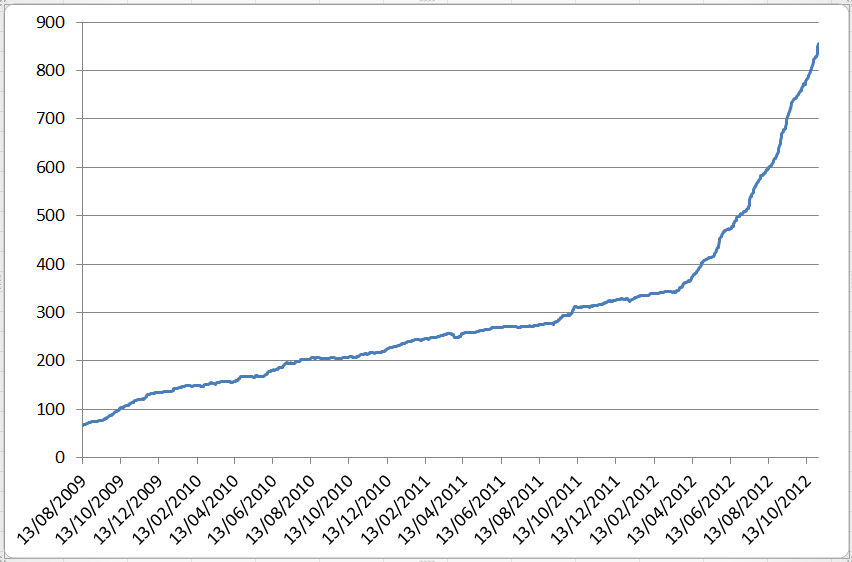
But the quest to address this kind of question, and then to share the answers widely, is the reason I have been keen to support the growth of the London Futurist meetup, by organising a series of discussion meetings with well-informed futurist speakers. Happily, membership has been on the up-and-up, reaching nearly 900 by the end of October.

The London Futurist event happening this weekend – on the afternoon of Saturday 3rd November – picks up the theme of enhancing our mental abilities. The title is “Hacking our wetware: smart drugs and beyond – with Andrew Vladimirov”:

What are the most promising methods to enhance human mental and intellectual abilities significantly beyond the so-called physiological norm? Which specific brain mechanisms should be targeted, and how?  Which aspects of wetware hacking are likely to grow in prominence in the not-too-distant future?

By reviewing a variety of fascinating experimental findings, this talk will explore:

  • various pharmacological methods, taking into account fundamental differences in Eastern and Western approaches to the development and use of nootropics
  • the potential of non-invasive neuro-stimulation using CES (Cranial Electrotherapy Stimulation) and TMS (Transcranial Magnetic Stimulation)
  • data suggesting the possibility to “awaken” savant-like skills in healthy humans without paying the price of autism
  • apparent means to stimulate seemingly paranormal abilities and transcendental experiences
  • potential genetic engineering perspectives, aiming towards human cognition enhancement.

The advance number of positive RSVPs for this talk, as recorded on the London Futurist meetup site, has reached 129 at the time of writing – which is already a record.

(From my observations, I have developed the rule of thumb that the number of people who actually turn up for a meeting is something like 60%-75% of the number of positive RSVPs.)

I’ll finish by returning to the question posed at the beginning of my posting:

  • Are these technological enhancements likely to increase human inequality (by benefiting only a small number of users),
  • Or are they instead likely to drop in price and grow in availability (the same as happened, for example, with smartphones, Internet access, and many other items of technology)?

My answer – which I believe is shared by Professor Bostrom – is that things could still go either way. That’s why we need to think hard about their development and application, ahead of time. That way, we’ll become better informed to help influence the outcome.

16 September 2012

Transcending the threat of the long emergency

The not-so-distant future (2030-2045) may turn out very different from how we commonly imagine. It may turn out very different from what we desire.

At that time, those of us who remain alive and who still have the faculty to think critically, may well bemoan the fact that we didn’t properly anticipate the intervening turn of events, and didn’t organise ourselves effectively to enable a better future to unfold. We may bitterly regret our present-day pre-occupations with celebrity gossip and 24×7 reality TV and rivalries between the latest superphones and by bickering over gullible interpretations of antiquated religious folk tales.

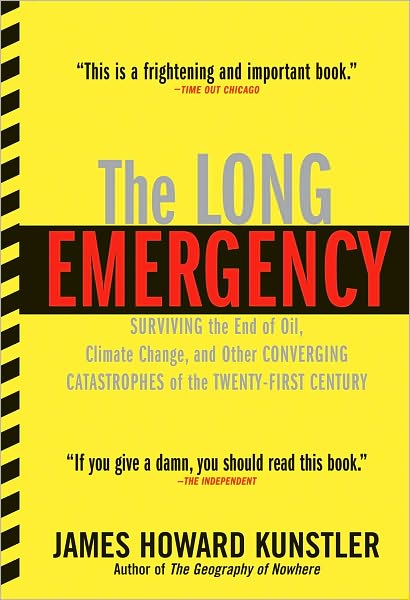
Why did we fiddle why Rome burned? Why did we not see the likelihood of Rome burning? Why were we so enthralled to the excitements of consumer goods and free-market economics and low-cost international travel and relentless technology innovation that we failed to give heed to the deeper stresses and strains portending what writer James Howard Kunstler has termed “The Long Emergency“?

The subtitle of Kunstler’s The Long Emergency book is “Surviving the end of oil, climate change, and other converging catastrophes of the twenty-first century“. His writing style is lively and unapologetic. He pays little respect to political correctness. His thesis is not just that supplies of oil are declining (despite vigorously growing demand), but that society fails to appreciate quite how difficult it’s going to be to replace oil with new sources of energy. Many, many aspects of our present-day civilisation depend in fundamental ways on by-products of oil. Therefore, we’re facing an almighty crisis.

Quoting Colin Tudge from The Independent, The Long Emergency carries an endorsement on its front cover:

If you give a damn, you should read this book

I echo that endorsement. Kunstler makes lots of important points about the likely near-future impact of diseases, shortages of fresh water, large multinationals in their runaway pursuit of profits and growth, the over-complexity of modern life, and the risks of cataclysmic wars over diminishing material resources.

I agree with around 80% of what Kunstler says. But even in the 20% where we part company, I find his viewpoint to be illuminating.

For example, I regard Kunstler’s discussion of both solar and wind energy as being perfunctory. He is too quick to dismiss the potential of these (and other) alternative energy sources. My own view is that the same kinds of compound improvements that have accelerated the information and communications hi-tech industries can also apply in alternative energy industries. Even though individual companies fail, and even though specific ideas for tech improvement are found wanting, there remains plenty of scope for cumulative overall improvement, with layers of new innovations all building on prior breakthroughs.

Kunstler’s first reply to this kind of rejoinder is that it confuses technology with energy. In a recent Rolling Stone interview, “James Howard Kunstler on Why Technology Won’t Save Us“, he responds to the following observation by journalist Jeff Goodell:

You write about visiting the Google campus in Silicon Valley, and how nobody there understood the difference between energy and technology.

Kunstler’s reply:

They are not substitutable. If you run out of energy, you can’t plug in technology. In this extremely delusional society right now, one of the reigning delusions is that if you run out of energy, you can just turn to technology. We completely don’t understand that. And the tragic thing is, the people who ought to understand it don’t get it. And if the people at Google don’t know the difference between energy and technology – well, then who does?

My own comment: the world is not facing a shortage of energy. An analysis published recently in Nature shows that wind energy could provide 20-100 times current global power demand. And as for solar energy, National Geographic magazine reports

Every hour the sun beams onto Earth more than enough energy to satisfy global energy needs for an entire year.

So the problem isn’t one of lack of energy. It’s a problem of harvesting the energy, storing it, and transporting it efficiently to where it needs to be used. That’s a problem to which technology can apply itself with a vengeance.

But as I said, Kunstler is insightful even when he is wrong. His complaint is that it is foolish to simply rely on some magical powers of a free-market economy to deliver the technology smarts needed to solve these energy-related problems. Due to the dysfunctions and failures of free-market economies, there’s no guarantee that industry will be able to organise itself to make the right longer-term investments to move from our current “local maximum” oil-besotted society to a better local maximum that is, however, considerably remote from where we are today. These are as much matters of economics and politics as they are of technology. Here, I agree with Kunstler.

Kunstler’s second reply is that, even if enough energy is made available from new sources, it won’t solve the problem of diminishing raw materials. This includes fresh water, rare minerals, and oil itself (which is used for much more than a source of energy – for example, it’s a core ingredient of plastics). Kunstler argues that these raw materials are needed in the construction and maintenance of alternative energy generators. So it will be impossible to survive the decline in the availability of oil.

My comment to this is that a combination of sufficient energy (e.g. from massive solar generators) and smart technology can be deployed to generate new materials. Fresh water can be obtained from sea water by desalination plants. Oil itself can be generated in due course by synthetic biology. And if it turns out that we really do lack a particular rare mineral, presently needed for a core item of consumer electronics, we can change the manufacturing process to swap in an alternative.

At least, these transformations are theoretically possible. But, again, they’ll probably require greater coordination than our present system of economics and politics enables, with its over-emphasis on short-termism.

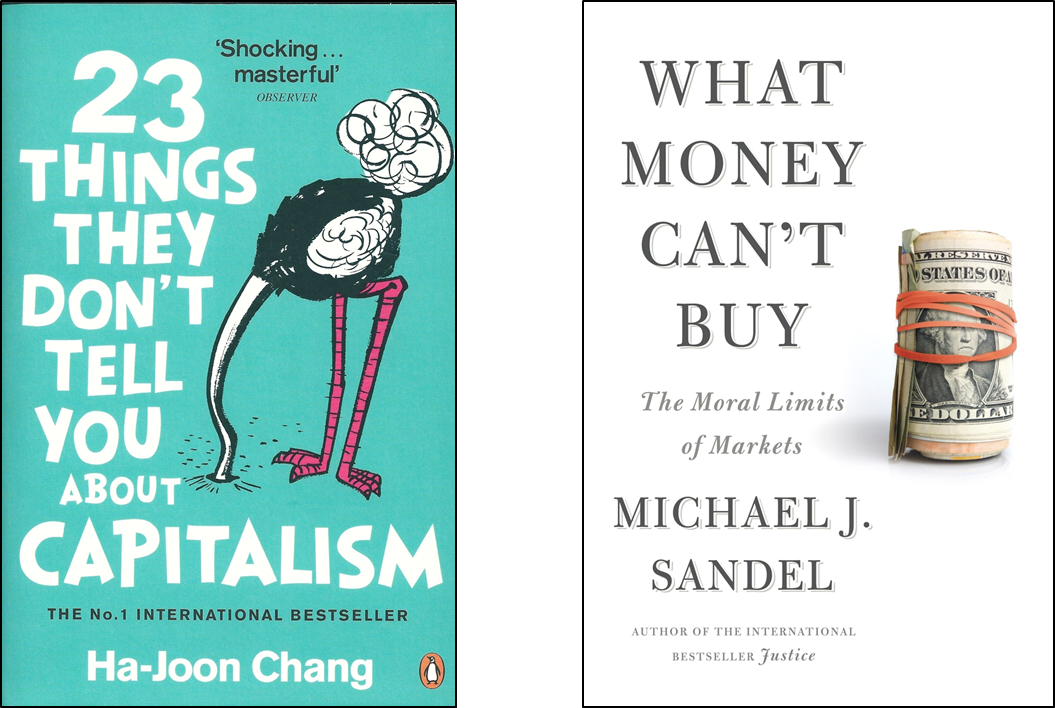
Incidentally, for a particularly clear critique of the idea that untramelled free market economics is the best mechanism to ensure societal progress, I recommend “23 things they don’t tell you about capitalism“, by Cambridge University economics professor Ha-Joon Chang. This consists of 23 chapters which each follow the same form: a common tenet of free-market economics is presented (and is made to appear plausible), and then is thoroughly debunked, by means of a mixture of data and theory. Professor Chang isn’t opposed to markets, but he does believe in the necessity for key elements of state intervention to steer markets. He offers positive remedies as well as negative criticisms. Alternatively, you might also enjoy “What money can’t buy: the moral limits of markets“, by Harvard professor Michael J. Sandel. That takes a complementary path, with examples that are bound to make both proponents and opponents of free markets wince from time to time. They really get under the skin. And they really make you think.

Both books are (in my viewpoint) brilliantly written, though if you only have time to read one, I’d recommend the one by Ha-Joon Chang. His knowledge of real-world economics is both comprehensive and uplifting – and his writing style is blessedly straightforward. Being Korean born, his analysis of the economic growth in Korea is especially persuasive, but he draws insight from numerous other geographies too.

Putting the future on the agenda

As you can tell, I see the threat of self-induced societal collapse as real. The scenarios in The Long Emergency deserve serious attention. For that reason, I’m keen to put the future on the agenda. I don’t mean discussions of whether national GDPs will grow or shrink by various percentage points over the next one or two years, or whether unemployment will marginally rise or marginally fall. Instead, I want to increase focus on the question of whether we’re collectively able to transition away from our profligate dependence on oil (and away from other self-defeating aspects of our culture) in sufficient time to head off environmental and economic disaster.

That’s the reason I’m personally sponsoring a series of talks at the London Futurists called “The Next Golden Age Of Technology 2030-45“.

The first in that series of talks took place on Saturday at Birkbeck College in Central London: “Surfing The Sixth Wave: Modelling The Next Technology Boom“, with lead speaker Stephen Aguilar-Millan. Stephen is is the Director of Research at the European Futures Observatory, a futures think tank based in the UK.

The different talks in the series are taking different angles on what is a complex, multi-faceted subject. The different speakers by no means all agree with each other. After all, it’s clear that there’s no consensus on how the future is likely to unfold.

Rather than making specific predictions, Stephen’s talk focused more on the question of how to think about future scenarios. He distinguished three main approaches:

  1. Trends analysis – we can notice various trends, and consider extrapolating them into the future
  2. Modelling and systems thinking – we seek to uncover underlying patterns, that are likely to persist despite technology changes
  3. Values-based thinking – which elevates matters of human interest, and considers how human action might steer developments away from those predicted by previous trends and current models.

Stephen’s own approach emphasised models of change in

  • politics (a proposed cycle of concerns: community -> corporate -> individual -> atomistic -> community…),
  • economics (such as the Kondratieff Cycle),
  • and social (such as generational changes: boomer -> generation X -> millennial -> homeland -> scarcity),
  • as well as in technology per se.

For a model to understand long-term technological change, Stephen referred to the Venezuelan scholar Carlota Perez, whose book “Technological Revolutions and Financial Capital: The Dynamics of Bubbles and Golden Ages” is held in high regard. Perez describes recent history as featuring five major technical-economic cycles:

  1. From 1771: The First Industrial Revolution (machines, factories, and canals)
  2. From 1829: The Age of Steam, Coal, Iron, and Railways
  3. From 1875: The Age of Steel and Heavy Engineering (electrical, chemical, civil, naval)
  4. From 1908: The Age of the Automobile, Oil, Petrochemicals, and Mass Production
  5. From 1971: The Age of Information Technology and Telecommunications.

In this analysis, each such cycle takes 40-60 years to spread across the world and reach maturity. Each techno-economic paradigm shift involves “a change in the direction of change” and brings:

  • New industries
  • New infrastructure
  • New ways of transport and communication
  • New ways of producing
  • A new way of working
  • A new way of living.

Golden ages of technology – insight from Carlota Perez

Stephen’s slides will shortly be posted onto the London Futurist website. The potential interplay of the different models is important, but in retrospect, the area that it would have been good to explore further was the analysis by Carlota Perez. There are a number of videos on YouTube that feature her presenting her ideas. For example, there’s a four-part presentation “Towards a Sustainable Global Golden Age” – where she also mentions a potential sixth technical-economic wave:

  • The Age of Biotech, Bioelectronics, Nanotech, and new materials.


Unlike Kunstler, Perez offers an optimistic view of the future. Whereas Kunstler in effect takes wave four as being irretrievably central to modern society, Perez argues that the technology of wave five is already in the process of undoing many of the environmental problems introduced by wave four. This transformation is admittedly difficult to discern, Perez explains, because of factors which prolong the “energy intensive” culture of wave four (even though the “information intensive” wave five already enables significant reductions in energy usage):

  • The low price of oil in the 1980s and 1990s
  • The low price of labor in China and Asia
  • The persistence of “the American way of life” as the “model of well-being” that the world wishes to emulate.

On the other hand, a paradigm change in expectation is now accelerating (see slide 20 of the PDF accompanying the video):

  • Small is better than big
  • Natural materials are better than synthetic
  • Multipurpose is better than single function
  • ‘Gourmet’ food is better than standard
  • Fresh organic fruit and vegetables are healthier
  • Exercise is important for well-being
  • Global warming is a real danger
  • Not commuting to work is possible and preferable
  • Solar power is luxurious
  • Internet communications, shopping, learning and entertainment are better than the old ways.

Nevertheless, despite her optimism that “a sustainable positive-sum future is possible”, Perez states clearly (slide 23):

  • But it will not happen automatically: the market cannot do it alone
  • The state must come back into the picture

Her analysis proceeds:

  • Each technological revolution propagates in two different periods
  • The first half sets up the infrastructure and lets the markets pick the winners
  • The second half (“the Golden Age” of the wave) reaps the full economic and social potential
  • Each Golden Age has been facilitated by enabling regulation and policies for shaping and widening markets.

Scarcity resolved?

The next London Futurist talk in this series will pick up some of the above themes. It will take place on Saturday the 20th of October, with independent futures consultant Guy Yeomans as the lead speaker. To quote from the event page:

Many people regard technological invention as not just a key driving force in human evolution but as the primary source of historical change, profoundly influencing wider economic and social developments. Is this perspective valid? Does it enable us to fully explain the world we live in today, and may actively occupy tomorrow?

Specifically, will technological invention be the ‘saviour’ some believe for our collective future challenges? Can we rely on technology to resolve looming issues of scarcity?

To answer these questions, this talk re-examines the emergence of technology and its role in human affairs. It does this by reviewing the history of the discipline of futures thinking, including techniques such as trend analysis themes.

The talk begins by considering the conditions under which futures thinking formed in North America in the aftermath of World War II. From this, we’ll assess what contributions the methods and techniques created during this period have made to contemporary strategic planning. Using parts of this framework, we’ll formulate a perspective on the key issues likely to affect future technological needs, and assess the dynamics via which technologies may then emerge to meet these needs.

Crucial to all this will be our ability to identify and reveal the core assumptions underpinning such a perspective, thereby providing a more robust footing from which to investigate the ways in which technology might actually evolve over the coming decades. From this, we’ll finally ask:Will scarcity even emerge, let alone need to be overcome?

Later talks in the same series will be given by professional futurists Nick Price, Ian Pearson, and Peter Cochrane.

1 September 2012

The three most important questions about the future

Filed under: futurist, Humanity Plus, rejuveneering, risks, SENS, UKH+ — David Wood @ 2:51 pm

Futurism – the attempt at systematic, thoughtful speculation about the likely future – can be divided into smaller and larger questions.

Many of the ‘small’ questions are admittedly very interesting. Here are some examples.

Will China continue to grow in influence and strength? When will humans colonise Mars? Will increasing technological automation drive more and more people out of work? Will currencies converge (like a larger Euro-zone) or fragment? Is nuclear fusion ever going to prove viable? When will computers outplay humans at the game of Go, or drive cars better than humans, or create art better than humans? What will happen to the rate of population growth, and the rate of resource depletion? Will religion decline or resurge? Which of our present-day habits will our descendents look back on and regard as disdainfully as we now regard (say) slavery and cigarette smoking? Will money and campaign finance play an ever more domineering role in politics?

I call these questions ‘small’ only because there are even larger questions which frame any overall analysis of the future. In particular, I see three groups of questions as particularly pressing:

  1. The question of existential risk: Is it feasible that human civilisation could dramatically collapse within the next few decades – as a result of (e.g.) economic meltdown, rapidly changing climate, military or terrorist escapades, horrific weaponry or diseases, and/or rogue tech? Could we actually be living in the end times?
  2. The question of transhuman potential: Is it feasible that tech enhancements in the next few decades could radically transform and elevate human performance and experience – making us substantially smarter, stronger, healthier, longer-lived – potentially creating as big a step-up in capability as in the prehistoric jump from ape to human?
  3. The question of resource allocation: If transhuman potential lies within our grasp, should we indeed try to grasp it? Contrariwise, is any effort to accelerate transhumanism an indulgence, a distraction, or (even worse) a catalyst for disaster rather than progress? If there are credible risks of existential collapse, where should we actually be grasping? Which topics deserve the lion’s share of our collective attention, investment, analysis, and effort?

These questions are what I seek to see debated at the meetings of the London Futurists that I organise once every few weeks.

The questions defy any simple responses, but for what it’s worth, summary versions of my own answers are as follows:

  1. The threat of existential collapse is real. Human ingenuity and perseverance have led us through many major crises in the past, but there’s nothing guaranteed about our ability to survive even larger, more wicked, faster-breaking crises in the near future
  2. Technology is progressing at a remarkable rate, and the rate is likely to accelerate. Powerful combinations of nano-tech, AI, personal genetics, synthetic biology, robotics, and regenerative medicine, coupled with significantly improved understanding of diet and mental health (e.g. mindfulness), could indeed see the emergence of “Humanity+” amidst the struggles of the present-day. But there’s nothing inevitable about it
  3. Humanity+ (also known as “transhumanism”) is not only possible; it is highly desirable so long as the increased ‘external’ strengths of new human individuals and societies are balanced by matching increases in ‘internal’ strengths such as kindness, open-mindedness, and sociability. As I’ve written before, we need increased wisdom as well as increased smartness, and an increased desire for self-mastery as well as an increased ability to transcend limits.

The reason why Humanity+ is desirable (as well as being possible) is because I see the enhanced humans of the near future, with their much greater collective wisdom – improved versions of you and me – as being the best bet to guard against the very real threats of existential risk.

Speakers at the London Futurists meetings address different parts of this overall rich mix of existential risk and transhuman opportunity. As befits healthy debate, the speakers take different viewpoints. Some of these speakers are what can be called “professional futurists”, often hired by businesses to help them consider scenarios for evolution of technology, business, and products. Other speakers are what can be called “activists”, who personally commit large amounts of their time and energy to bringing about one or more aspects of a desirable transhuman future.

The speaker on Sunday 2nd September, Aubrey de Grey, falls into the second category. As noted on the webpage for the event,

Dr. Aubrey de Grey is a biomedical gerontologist based in Cambridge, UK and Mountain View, California, USA, and is the Chief Science Officer of SENS Foundation, a California-based 501(c)(3) charity dedicated to combating the aging process. He is also Editor-in-Chief of Rejuvenation Research, the world’s highest-impact peer-reviewed journal focused on intervention in aging.

Aubrey’s talk is entitled “Regenerative medicine for aging”. Note: this is not just about life extension – allowing longer lifespans. It is about health extension – allowing longer healthy lifespans, with resulting very positive benefits in reduced healthcare costs worldwide. As Aubrey writes,

In this talk I will explain why therapies that can add 30 healthy years to the remaining lifespan of typical 60-year-olds may well arrive within the next few decades.

If you’d like to find out more about Aubrey’s thinking and accomplishments, let me point you at two sources:

Alternatively, if you’re in or nearby London, by all means drop into the meeting 🙂

(We’re planning to record it and make the video available afterwards, for people unable to join on the day.)

26 August 2012

Yoga, mindfulness, science, and human progress

Filed under: books, change, culture, Google, medicine, science, yoga — David Wood @ 12:07 am

Friday’s Financial Times carried a major article “The mind business“:

Yoga, meditation, ‘mindfulness’ – why some of the west’s biggest companies are embracing eastern spirituality

The article describes a seven-year long culture transformation initiative within business giant General Mills, as an example a growing wave of corporate interest in the disciplines of yoga, meditation, and ‘mindfulness’. It also mentions similar initiatives at Target, First Direct, Aetna, and Google, among others.

The article quotes Professor William George, the former CEO and Chairman of the Board of Medtronic, who is an intelligent fan of mindfulness. In a Harvard Business Review interview, Professor George makes the following points:

Mindfulness is a state of being fully present, aware of oneself and other people, and sensitive to one’s reactions to stressful situations. Leaders who are mindful tend to be more effective in understanding and relating to others, and motivating them toward shared goals. Hence, they become more effective in leadership roles…

Leaders with low emotional intelligence (EQ) often lack self-awareness and self-compassion, which can lead to a lack of self-regulation. This also makes it very difficult for them to feel compassion and empathy for others. Thus, they struggle to establish sustainable, authentic relationships.

Leaders who do not take time for introspection and reflection may be vulnerable to being seduced by external rewards, such as power, money, and recognition. Or they may feel a need to appear so perfect to others that they cannot admit vulnerabilities and acknowledge mistakes. Some of the recent difficulties of Hewlett-Packard, British Petroleum, CEOs of failed Wall Street firms, and dozens of leaders who failed in the post-Enron era are examples of this…

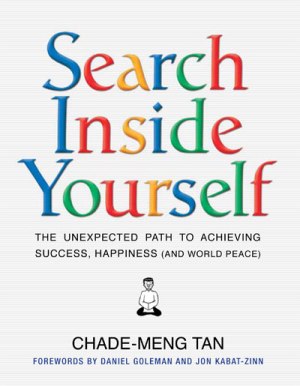
Public awareness of ‘mindfulness’ has recently received a significant boost from the publication of a book by one of Google’s earliest employees, Chade-Meng Tan. The book’s title is smart, playing on Google’s re-invention and dominance of the Search business: “Search inside yourself“. The sub-title of the book is both provocative and playful: The unexpected path to achieving success, happiness (and world peace).

The book’s website claims,

Meng has distilled emotional intelligence into a set of practical and proven tools and skills that anyone can learn and develop. Created in collaboration with a Zen master, a CEO, a Stanford University scientist, and Daniel Goleman (the guy who literally wrote the book on emotional intelligence), this program is grounded in science and expressed in a way that even a skeptical, compulsively pragmatic, engineering-oriented brain like Meng’s can process…

It’s playful, but it’s also serious. It’s a great idea to re-express the ideas of mindfulness in ways that software engineers find interesting and compelling. It uses the language of algorithms – familiar to all software engineers – to discuss techniques for improved mental performance.

(Aside: Meng has a remarkable gallery of photographs of himself alongside industry titans, leading politicians, media stars, famous book authors, and others. He’s impressively well connected.)

But does this stuff work?

Sure, these exercises can leave people feeling good, but do concrete long-term effects persist?

These are big questions, and for now, I’d like to zero in to a question that’s (marginally) smaller. I’ll leave further discussion about mindfulness and meditation for another occasion, and look now at the yoga side of this grand endeavour. Does yoga work?

My reason for focussing on the yoga aspect is that I can speak with more confidence about yoga than about mindfulness or meditation. That’s because I’ve been attending yoga classes, semi-regularly, for nearly 24 months. What I’ve experienced in these classes, and my discussions with fellow participants, has prompted me to read more, to try to make sense of what I’ve seen and heard.

I kept hearing about one particular book about yoga, “The Science of Yoga: The Risks and the Rewards“, written by Pulitzer prize-winning New York Times science journalist William J. Broad.

Broad is no newcomer to yoga – he has been practising the discipline since 1970. As he explains in the Acknowledgements section of the book, he initially thought it would take him nine months to write it, but it turned into a five-year project. The result shows – the book bristles with references to over a century’s worth of research, carried out all over the globe.

“The Science of Yoga” has received a great deal of criticism, especially from within the yoga community itself. Don’t let these criticisms put you off reading the book. It’s a mine of useful information.

The book has been criticised because of its less-than-reverential approach to many of the pioneers of yoga, as well as to some contemporary yoga leaders. The book also punctures several widespread myths about yoga – including claims made in many popular books. Some of these myths are enumerated in a handy review of Broad’s book by Liz Neporent, “What Yoga Can—and Can’t—Do: A look at the benefits and limitations of this popular, mind-body practice“:

  1. Yoga is a good cardiovascular workout
  2. Yoga boosts metabolism
  3. Yoga floods your body with oxygen
  4. Yoga doesn’t cause injuries
  5. Yoga is good for flexibility and balance
  6. Yoga improves mood
  7. Yoga is good for your brain
  8. Yoga improves your sex life

It turns out the four of these eight claims are strongly contradicted by growing scientific evidence. On the other hand, the other four are strongly supported. (I’ll leave you to do your own reading to find out which are which…)

The analysis Broad assembles doesn’t just point to correlations and statistics. It explains underlying mechanisms, so far as they are presently understood. In other words, it covers, not just the fact that yoga works, but why it works.

As well as summarising the scientific investigations that have been carried out regarding yoga, Broad provides lots of insight into the history of yoga – puncturing various more myths along the way. (For example, there’s no evidence that the popular “Sun salutation” exercises existed prior to the twentieth century. And advanced yogis aren’t actually able to stop their hearts.)

As you can see, there’s lots of good news here, for yoga enthusiasts, alongside some warnings about significant dangers.

Broad is convinced that yoga, carefully prescribed to the specific needs of individuals, can work wonders in curing various physical ailments. Broad’s discussions with Loren Fishman MD, in the chapter entitled “Healing”, form a great high point in the book. Fishman is an example of someone who immersed himself in the study of medicine after already learning about yoga. (Fishman learned yoga from none other than BKS Iyengar, who he travelled to Pune, India, to meet in 1973. Iyengar comes out well in Broad’s book, although Broad does find some aspects of Iyengar’s writing to be questionable. Full disclosure: the type of yoga I personally practice is Iyengar.)

For example, Fishman described yoga’s applicability to treat osteoporosis, the bone disease, which in turn “lies behind millions of fractures of the hip, spine, and wrist”:

Yoga stretching… works beautifully to stimulate the rebuilding of the bone. It happens at the molecular level. Stress on a bone prompts it to grow denser and stronger in the way that best counteracts the stress. Fishman said that for three years he had been conducting a study to find out which poses worked best to stimulate the rejuvenation.

“It’s a big thing”, he said of the disease. “Two hundred million women in the world have it and most can’t afford the drugs”, some of which produce serious side effects. By contrast, Fishman enthused, “Yoga is free”…

In addition to its beneficial effect on the body, yoga can have several key beneficial effects on the mind – helping in the treatment of depression, calming the spirit, and boosting creativity.

In the epilogue to the book, Broad envisions two possible futures for yoga. Here’s his description of the undesirable future:

In one scenario, the fog has thickened as competing groups and corporations view for market share among the bewildered. The chains offer their styles while spiritual groups offer theirs, with experts from different groups clashing over differing claims…

The disputes resemble the old disagreements of religion. Factionalism has soared… hundreds of brands, all claiming unique and often contradictory virtues.

Yet, for all the activity, yoga makes only a small contribution to global health care because most of the claims go unproven in the court of medical science. The general public sees yoga mainly as a cult that corporations try to exploit.

But a much more positive outcome is also possible:

In the other scenario, yoga has gone mainstream and plays an important role in society. A comprehensive program of scientific study… produced a strong consensus on where yoga fails and where it succeeds. Colleges of yoga science now abound. Yoga doctors are accepted members of the establishment, their natural therapies often considered gentler and more reliable than pills. Yoga classes are taught by certified instructors whose training is as rigorous as that of physical therapists. Yoga retreats foster art and innovation, conflict resolution, and serious negotiating…

Broad clearly recognises that his own book is far from the last word on many of the topics he covers. In many cases, more research is needed, to isolate likely chains between causes and effects. He frequently refers to research carried out within the 12-24 months prior to the book’s publication. We can expect ongoing research to bring additional clarity – for example, to shed more light on the fascinating area of the scientific underpinning of “kundalini awakening“. Broad comments,

The science of yoga has only just begun. In my judgement, the topic has such depth and resonance that the voyage of discovery will go on for centuries…

Studies… will spread to investigations ever more central to life and living, to questions of insight and ecstasy, to being and consciousness. Ultimately, the social understanding that follows in the wake of scientific discovery will address issues of human evolution and what we decide to become as a species.

I say “amen” to all this, but with two clarifications of my own:

  • Alongside a deeper understanding and wider application of yoga, improving human well-being, I expect leaps and bounds of improvement in “hard technology” fields such as genetic analysis, personalised medicines, stem cell therapy, nano-surgery, and artificial organs – which will work in concert with yoga and mindfulness to have an even more dramatic effect
  • Because I see the pace of scientific improvement as increasing, I think the most significant gains in knowledge are likely to happen in the next few decades, rather than stretching out over centuries.

Footnote: Earlier this week, William J Broad featured in a fifteen minute interview in a public radio broadcast. In this interview, Broad describes the adverse reaction of “the yoga industrial complex” to his book – “they hate this book, because it’s exploding myths… there’s an economic incentive for people to only focus on the good and deny the bad”.

24 August 2012

Duplication stuplication

Filed under: Accenture, Android, brain simulation, Connectivity, cryonics, death, futurist, Symbian — David Wood @ 12:04 am

I had a mixture of feelings when I looked at the display of the Agenda application on my Samsung Note smartphone:

On the face of things, I was going to be very busy at 09:00 that morning – I had five simultaneous meetings to attend!

But they were all the same meeting. And in fact I had already cancelled that meeting. Or, at least, I had tried to cancel that meeting. I had tried to cancel it several times.

The meeting in question – “TPR” – the Technology Planning Review that I chair from time to time inside Accenture Mobility – is a meeting I had organised, on a regularly repeating basis. This particular entry was set to repeat every four weeks. Some time earlier, I had decided that this meeting no longer needed to happen. From my Outlook Calendar on my laptop, I had pressed the button that, ordinarily, would have sent cancellation messages to all attendees. At first, things seemed to go well – the meeting disappeared from sight in my Outlook calendar.

However, a couple of hours later, I noticed it was still there, or had re-appeared. Without giving the matter much thought, I imagined I must have experienced some finger problem, and I repeated the cancellation process.

Some time later, I glanced at my engagements for that day on my smartphone – and my heart sank. The entry was shown no less than nine times, stacked on top of each other. One, two, three, four, five, six, seven, eight, nine. Woops.

(The screenshot above only shows the entry appearing five times. That’s because I deleted four of the occurrences before I had the presence of mind to record the image for posterity.)

To tell the truth, I also had a wry, knowing smile. It was a kind of “aha, this confirms that synchronising agendas can be hard” smile. “Thank goodness there are duplicate entry bugs on Android phones too!”

That uncharitable thought had its roots in many moments of personal embarrassment over the years, whenever I saw examples of duplicated entries on phones running Symbian OS. The software that synchronised agenda information across more than one device – for example, between a PC and a connected Symbian smartphone – got into a confused state on too many occasions. Symbian software had many strengths, but laser accuracy of agenda entry synchronisation was not one of them.

But in this case, there was no Symbian software involved. The bug – whatever it was – could not be blamed on any software (such as Symbian OS) for which I personally had any responsibility.

Nevertheless, I still felt bad. The meeting entry that I had created, and had broadcast to a wide number of my Accenture Mobility colleagues, was evidently misbehaving on their calendars. I had to answer several emails and instant messaging queries: Is this meeting happening or not?

Worse, the same problem applied to every one of the repeating entries in the series. Entries show up in the calendars of lots of my Accenture colleagues, once every four weeks, encouraging them to show up for a meeting that is no longer taking place.

Whether I tried to cancel all the entries in the series, or just an individual entry, the result was the same. Whether I cancelled them from my smartphone calendar or from Outlook on my laptop, the result was the same. Namely, the entry disappeared for a while, but re-appeared a few hours later.

Today I tried again. Looking ahead to the meeting slot planned for 30th August, I thought I would be smart, and deleted the entry, both from my smartphone calendar, and from Outlook on my laptop, within a few seconds of each other, just in case a defective synchronisation between the two devices was to blame. You guessed it: the result was the same. (Though this time it was about three hours before the entry re-appeared, and I was starting to think I had cracked it after all.

So what’s going on? I found a clue in an unexpected place – the email folder of Deleted Items in Microsoft Outlook. This showed an email that was unread, but which had somehow moved directly into the Deleted Items folder, without me seeing it.

The entry read as follows:

Microsoft Outlook on behalf of <one of the meeting participants>

One or more problems with this meeting were detected by Exchange 2010.

This meeting is missing from your calendar. You’re the meeting organizer and some attendees still have the meeting on their calendar.

And just as Outlook had silently moved this email into the Deleted Items folder, without drawing my attention to it, Outlook had also silently reinstated the meeting, in my calendar and (it seems) in everyone else’s calendar, without asking me whether or not that was a good idea. Too darned clever.

I still don’t know how to fix this problem. I half-suspect there’s been some kind of database corruption problem – perhaps caused by Microsoft Exchange being caught out by:

  • Very heavy usage from large numbers of employees (100s of 1000s) within one company
  • Changes in policy for how online meetings are defined and operated, in between when the meeting was first created, and when it was due to take place
  • The weird weather we’ve experienced in London this summer
  • Some other who-knows-what strange environmental race conditions.

However, I hear of tales of other colleagues experiencing similar issues with repeating entries they’ve created, which provides more evidence of a concrete software defect, rather than a random act of the universe.

Other synchronisation problems

As I said, when I reflected on what was happening, I had a wry smile. Synchronisation of complex data between different replications is hard, when the data could be altered in more than one place at the same time.

Indeed, it’s sometimes a really hard problem for software to know when to merge apparent duplicates together, and when to leave them separated. I’m reminded of that fact whenever I do a search in the Contacts application on my Android phone. It often lists multiple entries corresponding to a single person. Some of these entries show pictures, but others don’t. At first, I wasn’t sure why there were multiple entries. But closer inspection showed that some details came from my Google mail archives, some from my collection of LinkedIn connections, some from my set of Facebook Friends, and so on. Should the smartphone simply automatically merge all these instances together? Not necessarily. It’s sometimes not clear whether the entries refer to the same person, or to two people with similar names.

If that’s a comparatively simple example, let me finish with an example that takes things further afield. It’s not about the duplication and potential re-integration of agenda entries. Nor is it about the duplication and potential re-integration of pieces of contacts info. It’s about the duplication and potential re-integration of human minds.

Yes: the duplication and potential re-integration of human minds.

That’s a topic that came up in a presentation in the World Future 2012 conference I attended in Toronto at the end of July.

The talk was given by John M. Smart, founder and president of the Acceleration Studies Foundation. The conference brochure described the talk as follows:

Chemical Brain Preservation: How to Live “Forever”

About 57 million unique and precious human beings die every year, or 155,000 people every day. The memories and identities in their brains are permanently lost at present, but may not be in the near future.

Chemical brain preservation is a technique that many scientists believe may inexpensively preserve our memories and identity when we die, eventually for less than $10,000 per person in the developed world, and less than $3,000 per person in the developing world. Preserved brains can be stored at room temperature in cemeteries, in contract storage, or even in private homes. Our organization, the Brain Preservation Foundation (brainpreservation.org), is offering a $100,000 prize to the first scientific team to demonstrate that the entire synaptic connectivity of mammalian brains, where neuroscientists believe our memories and identities reside, can be perfectly preserved using these low-cost chemical techniques.

There is growing evidence that chemically preserved brains can be “read” in the future, like a computer hard drive, so that memories, and even the complete identities of the preserved individuals can be restored, using low-cost automated techniques. Amazingly, given the accelerating rate of technological advance, a person whose brain is preserved in 2020 might “return” to the world, most likely in a computer form, as early as 2060, while their loved ones and some of their friends are still alive…

Note: this idea is different from cryonics. Cryonics also involves attempted brain preservation, at an ultra-low temperature, but with a view to re-animating the brain some time in the future, once medical science has advanced enough to repair whatever damage brought the person to the point of death. (Anyone serious about finding out more about cryonics might be interested in attending the forthcoming Alcor-40 conference, in October; this conference marks the 40th anniversary of the founding of the most famous cryonics organisation.)

In contrast, the Brain Preservation Foundation talks about reading the contents of a brain (in the future), and copying that information into a computer, where the person can be re-started. The process of reading the info from the brain is very likely to destroy the brain itself.

There are several very large questions here:

  • Could the data of a brain be read with sufficient level of detail, and recreated in another substrate?
  • Once recreated, could that copy of the brain be coaxed into consciousness?
  • Even if that brain would appear to remember all my experiences, and assert that it is me, would it be any less of a preservation of me than in the case of cryonics itself (assuming that cryonics re-animation could work)?
  • Given a choice between the two means of potential resurrection, which should people choose?

The first two of these questions are scientific, whereas the latter two appear to veer into metaphysics. But for what it’s worth, I would choose the cryonics option.

My concern about the whole program of “brain copying” is triggered when I wonder:

  • What happens if multiple copies of a mind are created? After all, once one copy exists in software, it’s probably just as easy to create many copies.
  • If these copies all get re-animated, are they all the same person?
  • Imagine how one of these copies would feel if told “We’re going to switch you off now, since you are only a redundant back-up; don’t worry, the other copies will be you too”

During the discussion in the meeting in Toronto, John Smart talked about the option to re-integrate different copies of a single mind, resulting in a whole that is somehow better than each individual copy. It sounds an attractive idea in principle. But when I consider the practical difficulties in re-integrating duplicated agenda entries, a wry, uneasy smile comes to my lips. Re-integrating complex minds will be a zillion times more complicated. That project could be the most interesting software development project ever.

28 July 2012

More for us all, or more for them?

Filed under: books, disruption, Economics, futurist, Humanity Plus, politics, UKH+ — David Wood @ 1:15 pm

The opening keynote speaker at this weekend’s World Future 2012 conference this weekend was Lee Rainie, the Director of the Pew Research Center’s Internet & American Life Project. Lee’s topic, “Future of the Internet”, was described as follows in the conference agenda:

In this keynote presentation based on his latest book, Networked: The New Social Operating System (co-authored with Barry Wellman), Dr. Rainie will discuss the findings of the most recent expert surveys on the future of teens’ brains, the future of universities, the future of money, the impact of Big Data, the battle between apps and the Web, the spread of gamefication, and the impact of smart systems on consumers.

That was a lot to cover in 45 minutes, but Lee said he would speak fast – and he did!

Analysis  of the Pew Internet expert surveys Lee mentions is available online at http://www.elon.edu/e-web/predictions/expertsurveys/2012survey/ – where you’ll find a wealth of fascinating material.

But Lee’s summary of the summary (if I can put it like that) is that there are two potential pathways ahead, between now and 2020, regarding what happens with Internet technology:

  1. In one pathway, we all benefit: the fruits of improving Internet technologies are widely shared
  2. In another pathway, the benefits are much more restricted, to “them”.

Hence the question: “More for us all, or more for them?”

“Them” could be political leaders, or it could be corporate leaders.

Listening to Lee’s words, I was struck by a powerful resonance with the main theme of a BIG book on history that I’m the processing of reading. (Actually, I’m listening to an Audible version of it on my iPod.)

The book is “Why nations fail the origins of power, prosperity, and poverty“, by Daron Acemoglu and James Robinson. It has a marvelous sweep through events in all eras of human history and in all corners of the globe.

I’m only six hours into what will be a 15 hour long listen, but I already suspect this to be the most important book about history that I’ve ever read. (And as regular readers of this blog know, I read a lot.)

It’s not just “one thing after another” (fascinating though that kind of history book can be), but a profound analysis of the causes of divergence between societies with prosperity and societies with poverty.

In brief, the primary differentiator is the kind of political institutions that exist:

  • Are they extractive, in which the outputs of society are siphoned by a relatively small elite
  • Or are they inclusive, which a much greater sharing of power, influence, and potential benefit?

The nature of political institutions in turn influence the nature and operation of economic institutions.

The book has many striking examples of how ruling elites blocked the development or the wider application of technology and/or market reforms, fearing the “creative destruction” which would be likely to follow – threatening their grip on power.

One example in the book is the story of the reaction of the Roman emperor Tiberius to the invention of unbreakable glass. This story is also told by, for example, Computer World blogger John Riley, in his article “Why innovation is not always welcomed with open arms“:

The story of the Roman inventor of flexible glass 2000 years ago is a salutary lesson for all innovators, especially those within organisations.

As Isadore of Seville tells it, the inventor went to the Roman Emperor Tiberius (14-37 AD) with a drinking bowl made of this flexible and ductile glass, and threw in on the ground to demonstrate that it didn’t shatter.

Tiberius asked him if anyone else knew about the invention. The inventor said he’d told no-one.

And he was instantly beheaded.

What the unfortunate inventor hadn’t seen was the big picture – Tiberius had instantly realised that cheap, easily produced flexible glass that didn’t break would wreck the Imperial monopoly on gold and silver!

That, sadly is too often the case in big companies, where someone comes up with a bright idea which in practice means interfering with a profitable short term operation or disintermediating a product line.

In such cases innovators these days don’t get killed – they get ignored, sidelined, blocked or gagged under non-disclosures. Many innovative products have been  rejected by large suppliers controlling projects when they threaten monopolistic inefficiencies. There are many cases of other innovations being bought up and mothballed…

As Acemoglu and Robinson point out, in a different political climate, the inventor could have taken his invention to market without the explicit knowledge and permission of the ruling elite (such as the emperor). That would be a world in which, to return to my opening question, there would more likely be technology benefits for everyone, rather than control of technology being subordinated to the benefits of a clique.

But our current political climate is highly troubled. My friend and Humanity+ UK co-organiser Amon Kalkin describes the situation like this:

We are in a time of crisis. Large numbers of people are increasingly disenfranchised, squeezed on all sides and with no hope of appeal to authorities. Why? Because those very same authorities – our governments – are virtually indistinguishable from the corporate interests who are gaining most from the current situation. We live under a system where our votes essentially don’t matter. You can pick a team, but you’re not allowed to change the rules of the game. Even worse, we have been trained to think of this as a normal and natural situation. Who are we to question these powerful people? Who are we to awaken, to unify and demand change?

Rather than just considering the topic “Why Nations Fail“, we might well consider “Why Transnational Institutions Fail” – referring to, for example, the evident problems within the Eurozone and within the United Nations.

The same imperative applies: we need to find a mode of collaboration that avoids being subverted by the special interests of ruling minorities – whether these minorities be economic elites or political elites.

That imperative has led Amon to found the Zero State movement:

Zero State is a movement for positive social change through technology.

We’re a grass-roots world community pursuing smart, compassionate solutions to problems, and improving the human condition.

Personal transformative technologies we pursue include life extension and Artificial Intelligence. Social projects include accelerating changebasic incomeMeshnet and Bitcoin, while lifestyle initiatives explore areas such as the arts, spirituality, fashion and culture.

More recently, Amon and various other Zero State members are launching a political party, “Consensus“, to promote their Zero State vision. My quote above (“We are in a time of crisis…”) comes from Amon’s description of what he plans to say at the launch meeting for Consensus that will take place next weekend in London.

For more details about this launch event, see this announcement on the London Futurist meetup site:

The case for a Zero State political movement

Many futurists envisage a better, more compassionate society, organized in terms of using technological developments to maximize well-being rather than simply concentrating resources in a few ultra-rich hands and leaving everybody else increasingly worse off. But all too often, futurists talk about positive outcomes as if such things come without work or struggle. They are apparently oblivious to the fact that right now our society is stalling, strangled by a tiny proportion of citizens who do not share our values.

There have been few moments in the history of our society like the one facing us now, where deep crisis also offers the opportunity for deep, positive change. It’s the time for futurists to step up to actively guide our society toward the better futures we envisage.

The CONSENSUS is a newly-formed UK-based political party which seeks to harness the intelligence and compassion to be found among futurists and other subcultures to the design of a real, improved future, for us and our children. Drawing inspiration from the eight principles of the Zero State movement, the CONSENSUS will encourage people to think about the possibilities open to society once again.

The CONSENSUS is the first party of its kind. We intend to reach out to other parties and groups who share similar views and goals. If we are successful, there will soon be a number of CONSENSUS parties at the national level around the world, all part of an organization known as the Consensus of Democratic Futurist Parties (CDFP). The UK CONSENSUS is already affiliated with an international futurist organization in the Zero State movement, and the seeds of multiple local political parties have been sown.

We welcome the opportunity to hear your views about the state of society today and its future, and what are the issues and goals that we should focus on. No matter what your own views are, this is your chance to have your say, and to have it influence a concrete course of action.

If you care about our future, and the possibility of finding intelligent, compassionate solutions to our problems, then we encourage you to come to this meeting to:

  • find out how you can help
  • join the conversation
  • offer your views on how we should move forward…

30 June 2012

My reasonably smooth upgrade to Ice Cream Sandwich

Filed under: Android, change, compatibility, Google, Samsung, WordPress — David Wood @ 9:42 pm

I’ve been looking forwards to the new experiences that would be unlocked by installing “Ice Cream Sandwich” (Android 4.0) in my Samsung Galaxy Note, in place of the Gingerbread (Android 2.3) it originally contained. But I’ve been delaying the upgrade.

I’m a big fan of new technology, but my experience teaches me that upgrades often bring disruption as well as progress. Upgrades of complex software systems often unintentionally break functionality, due to unexpected incompatibilities with the old platform. And even when functionality is improved, it can take some time for users to learn a new interface: old habits have to be unlearned, and new “intuitions” acquired. That’s why I’m sometimes a technology laggard, as well as a technology enthusiast.

But today is the day. The new platform is mature, and is no longer “bleeding edge”. It’s been on the market for a few months. Several of my Accenture work colleagues have already upgraded the Galaxy Notes they use, without reporting any issues. And some of the applications I now want to test (applications developed by work colleagues) rely on functionality that is present only in the newer platform – such as improved Bluetooth. So this morning I resolved: let’s do it today.

In summary: the experience was smooth, although not without glitch. So far, I am pleased with the outcome, although I’ve experienced surprises along the way.

The first surprise was that I had to go looking for the upgrade. I had expected I would automatically be notified that a new version was ready. After all, a similar system works fine, to automatically notify me of the availability of new versions of the apps I’ve installed. And – see the following screenshot – my phone had the setting “auto update: check for updates automatically” enabled.

However, my experience was that I had to explicitly press the button “Check for updates”.

That button helpfully recommended me to ensure that I was on a wifi network. Good point.

The update would happen in two stages:

  1. First, the new version of the software would be downloaded – all 349.38MB of it
  2. Second, the new software would be installed, in place of the old.

The download system estimated that it would take 16 minutes to download the new version. It told me I could keep on using the device in the meantime, with the download proceeding in background. Having kicked off the download, and watched the first 10% of it complete fine, I switched tasks and started browsing. In retrospect, that was a mistake.

As the download proceeded, I read some tweets, and followed links in tweets to Internet pages. One link took me into someone’s Google Plus page, and another link from their took me to yet another page. (By this stage, the download was about 60% complete – I was keeping an eye on it via a notification icon in the top bar of the screen.) I then tried pressing the Back button to undo the stack of links. But as sometimes happens, Back didn’t work cleanly. It took me “back” from one page to the same page, with a minor shiggle in between. This kind of thing sometimes happens when a link includes a redirection.

This is where personal habit took over. In such cases, I have fallen into the habit of hammering the Back key several times quickly in succession. And that seemed to work – I ended up back in the Twitter application. But a few minutes later, I realised that the upgrade notifier icon had disappeared. And the download was nowhere to be found. I think that one of the Back buttons must have ended up going to the download window, cancelling it. Woops.

No problem, I thought, I’ll restart the download. It will presumably continue from where it had been interrupted. But alas, no, it started at the beginning again.

The second time, I resisted the temptation to multi-task, and let the download complete in splendid isolation. Around 20 minutes later, the download was complete. I thought to myself, Now for the more interesting part…

Before completing the installation, I ensured the mains power lead was plugged in, to avoid any complications of a battery failure half-way through rewriting the operating system part of the phone. At all costs, I did not want to end up with a “bricked” device (a device that cannot restart, and has as much life as a brick).

The upgrade proceeded. The screen changed several times during the process. At one stage, a progress indicator seemed to become stuck at around 80% complete for ages – so that I wondered if the system had crashed – before finally slowly inching forwards again.

Once the phone restarted, it run through yet more steps of the upgrade. It told me it was “Optimising application 1 of 82” … “Optimising application 82 of 82”. Then it said it was “Upgrading Contacts database” and “Upgrading Agenda database”. Clearly a lot was happening behind the scenes.

Finally it showed the familiar SIM unlock screen. Except that it wasn’t exactly the same SIM unlock screen as before – there were small but noticeable changes in the layout. Likewise with the device unlock: the ‘OK’ button is now in a different position from before. My fingers will need to learn a slightly different physical sequence, to unlock the device.

A bigger surprise was that all my customisations to the seven different home screens were lost – they had all been reset to defaults. It’s no big deal – I can gradually change the screens back to what I personally find convenient. And a good clean out is probably not a bad idea.

There are lots of pleasant surprises too. For example, there’s a handy new “Restart” addition to the dialog that is shown when the power switch is held down:

Here’s another example of an unexpected change: I found by trial and error that screenshots are now stored in a different directory on the phone – \phone\pictures\screenshots rather than \phone\screencapture – and are (it seems) stored in a different way: they’re not written to disk until some indeterminate time after the screen capture has finished.

That change caught me out twice over: first, because I could not find the screenshots (as copied into this blogpost) in the place I was accustomed to finding them, and second, because the files I tried to upload into WordPress were zero bytes in size. (WordPress helpfully advised me to “upload something more substantial”.)

In case this sounds like a litany of complaints, let me hasten to clarify that I find the entire process highly impressive. A huge quantity of software has been transferred wirelessly onto my phone, including countless changes from before. It’s a technology miracle.

What’s more, I didn’t pay anything for this upgrade. It’s a free technology miracle.

But I am glad I waited until the weekend before embarking on this upgrade, rather than trying to squeeze it into the middle of a busy work schedule. Significant change deserves significant time.

Older Posts »

Blog at WordPress.com.